TOOLNAVIA / BUYING GUIDE
MemberPress Growth vs Launch: When Does 0% Beat the 4.9% Fee?
The short answer
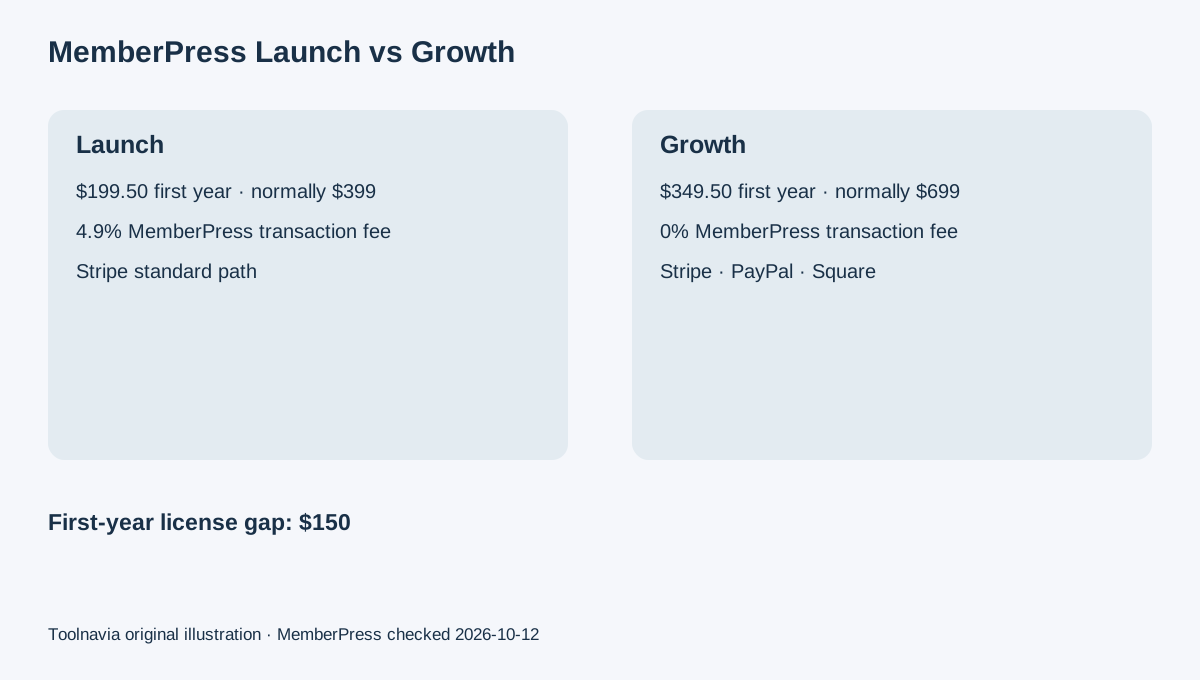
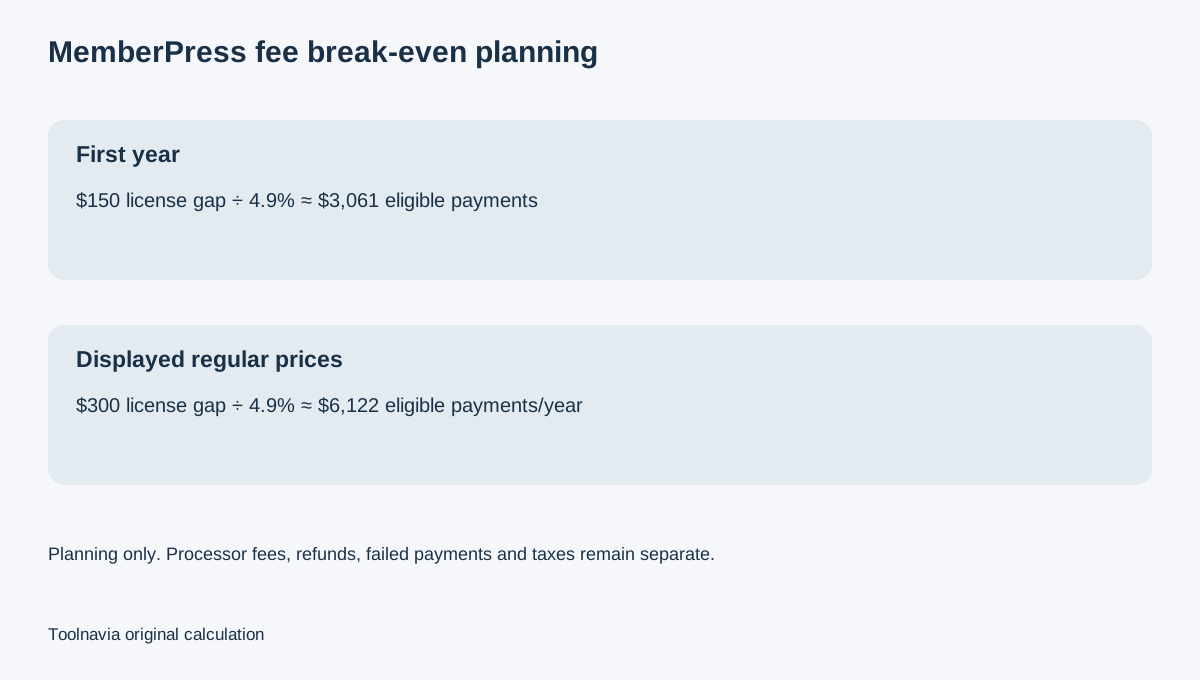
MemberPress Launch is currently $199.50 for the first year and Growth is $349.50, a $150 gap. Launch adds a 4.9% MemberPress transaction fee to successful payments, while Growth and Scale list 0% MemberPress transaction fees. On fee math alone, $150 divided by 4.9% is about $3,061 in annual payments subject to that fee. That does not include Stripe or other processor charges, which still apply. For a membership business already collecting more than a few thousand dollars a year, the lower platform fee can matter more than the headline license price.
At a glance
- Best for
- Membership sites with enough payment volume for Launch's 4.9% fee to matter or sites needing PayPal/Square and broader integrations.
- Price model
- $349.50 first year · normally $699/year · 0% MemberPress transaction fee
- Check first
- Processor fees still apply; regular renewal is higher than first-year pricing; Authorize.net remains Scale-only.
First-year and renewal math tell different stories
The current pricing page shows Launch at $199.50 with a normal price of $399, and Growth at $349.50 with a normal price of $699. That means the first-year gap is $150, while the displayed regular annual gap is $300. At the regular-price gap, the fee-only break-even is about $6,122 in eligible yearly payments: $300 divided by 4.9%. These are planning calculations, not guarantees. Refunds, failed payments, processor fees, taxes and future price changes affect real cost.
Launch is the lower-cost way to start
Launch includes the core membership toolkit, unlimited members, unlimited memberships and subscriptions, ReadyLaunch, course/community capabilities and Stripe setup. Its tradeoff is the 4.9% MemberPress fee on successful Stripe transactions. For a new membership site with little or no revenue, paying the smaller license plus a percentage can be rational because the fee scales with actual sales. It also avoids paying for Growth features before the business needs them.
Growth removes the platform fee and broadens payments
Growth removes the MemberPress transaction fee and adds payment options beyond Launch's Stripe-first path, including PayPal and Square according to current payment documentation. It also adds a broader marketing and integration suite, page-builder integrations, priority support and engagement tools shown on the pricing page. Those features can justify Growth before the pure fee break-even if the business needs them operationally.
The 4.9% fee is not the only payment cost
MemberPress documentation is explicit that standard processor fees from Stripe, PayPal or other gateways still apply. Moving from Launch to Growth removes the MemberPress platform transaction fee; it does not eliminate payment processing. A buyer should therefore compare only the MemberPress-specific percentage when doing the $3,061 or $6,122 break-even math, then add the same processor costs separately.
The affiliate program pays 25% on the first sale
MemberPress' official affiliate program is free to join, uses a 60-day return cookie and advertises a 25% commission on the first sale for each referred customer. The affiliate application is real and subject to approval; program terms say applications can be approved or rejected and commissions are paid monthly after the required holding period. Toolnavia has not applied or been approved, so affiliate tracking remains disabled.
Before choosing a plan, estimate the membership payments you realistically expect over the next year. Below roughly $3,061 of eligible first-year payments, Launch can still be cheaper on license-plus-platform-fee math. Above that level, Growth's 0% MemberPress fee begins to offset the $150 first-year license gap. For renewal years, use the larger $300 regular-price gap and re-run the calculation with your real payment volume.