TOOLNAVIA / BUYING GUIDE
Malwarebytes Plus Renewal Price: Check This 30 Days Before Auto-Renew
The short answer
At a glance
- Best for
- Malwarebytes Plus three-device subscribers evaluating the personalized amount shown 30 days before auto-renewal.
- Price model
- Use personalized renewal amount R; dated 2026 acquisition references place Plus three devices around $79.99/year
- Check first
- No universal public renewal amount exists. Use the official 30-day account quote; refund eligibility and app-store rules require exact-channel confirmation.
Quick verdict
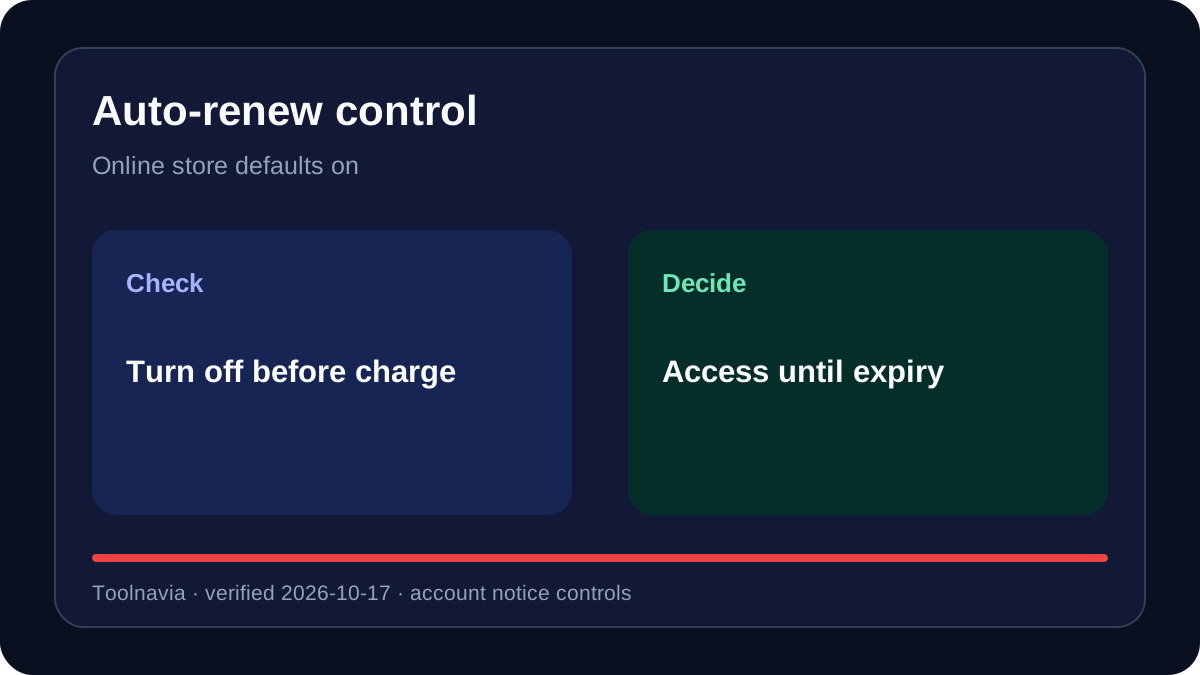
Do not decide whether to renew Malwarebytes Plus from a public headline price. Malwarebytes says yearly subscribers receive a renewal email **30 days before the charge**, and that message includes the actual amount for the account. Online-store subscriptions have auto-renewal enabled by default.
A dated July 29, 2026 US capture and several current independent reviews put the three-device Plus acquisition reference around **$79.99 per year**. That is useful as a comparison point, not a promise about your renewal. The correct decision is to compare the personalized renewal amount with the number of devices actually used, the value of the bundled VPN, and the cost of replacing the subscription before the renewal date.
What the public price does and does not prove
The current official pricing page identifies Plus as device security, Browser Guard and Privacy VPN for three devices. It displays promotional saving and a money-back statement, but its purchase-price fields can vary by session and current customers are sent to MyAccount for personalized offers.
Use **$79.99** only as a dated acquisition snapshot. Do not assume it is the list price, a permanent sale, or the next renewal charge. The independent sources broadly reproduce that acquisition figure, while the official renewal process deliberately supplies the account-specific amount later.
This separation prevents a common mistake: subtracting a sale percentage from an unknown renewal price. Until the 30-day notice arrives, the renewal variable is **R**, not $79.99.
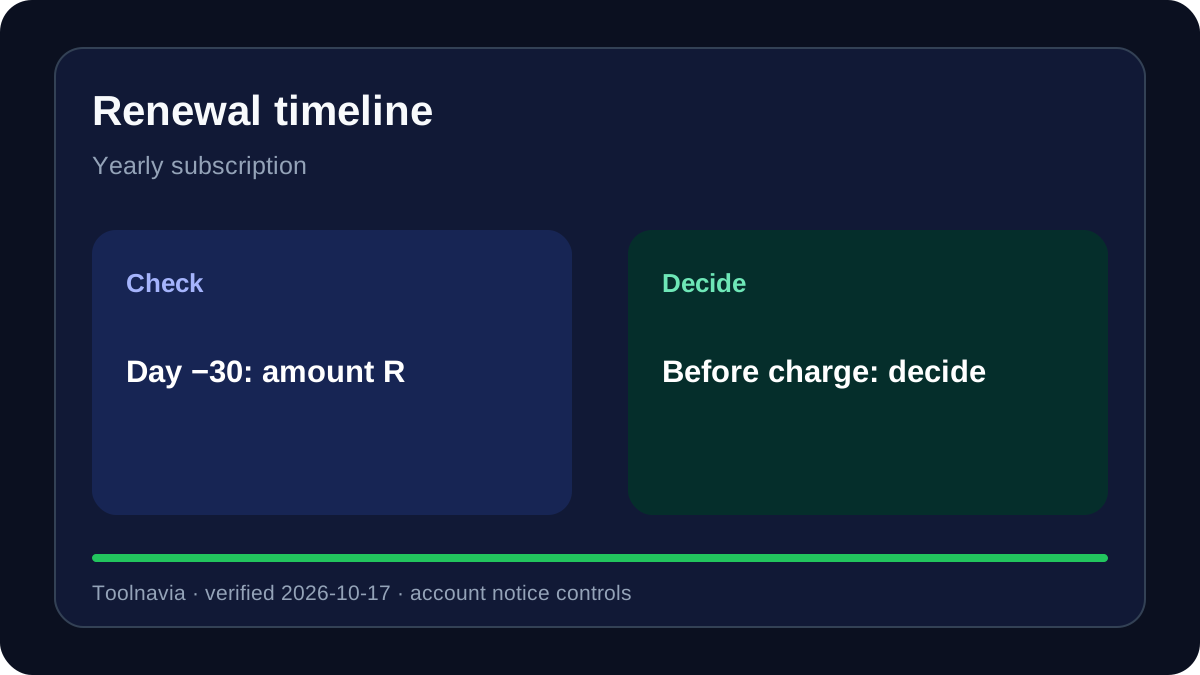
The 30-day renewal timeline
At **day −30**, open the genuine Malwarebytes renewal email or sign in directly to MyAccount and record the amount **R**, renewal date, plan and device count. Malwarebytes says the reminder includes the amount to be charged.
Before the renewal date, decide whether to keep, change or cancel. Turning off auto-renewal ends future charging but keeps the subscription active through its expiration date. If a subscription is renewed manually, automatic renewal is switched back on by default, so verify the setting again after completing a manual renewal.
Avoid links in unexpected renewal messages. Malwarebytes itself has warned about fake antivirus renewal notices; manage the subscription through the official account rather than a phone number or unfamiliar payment page.
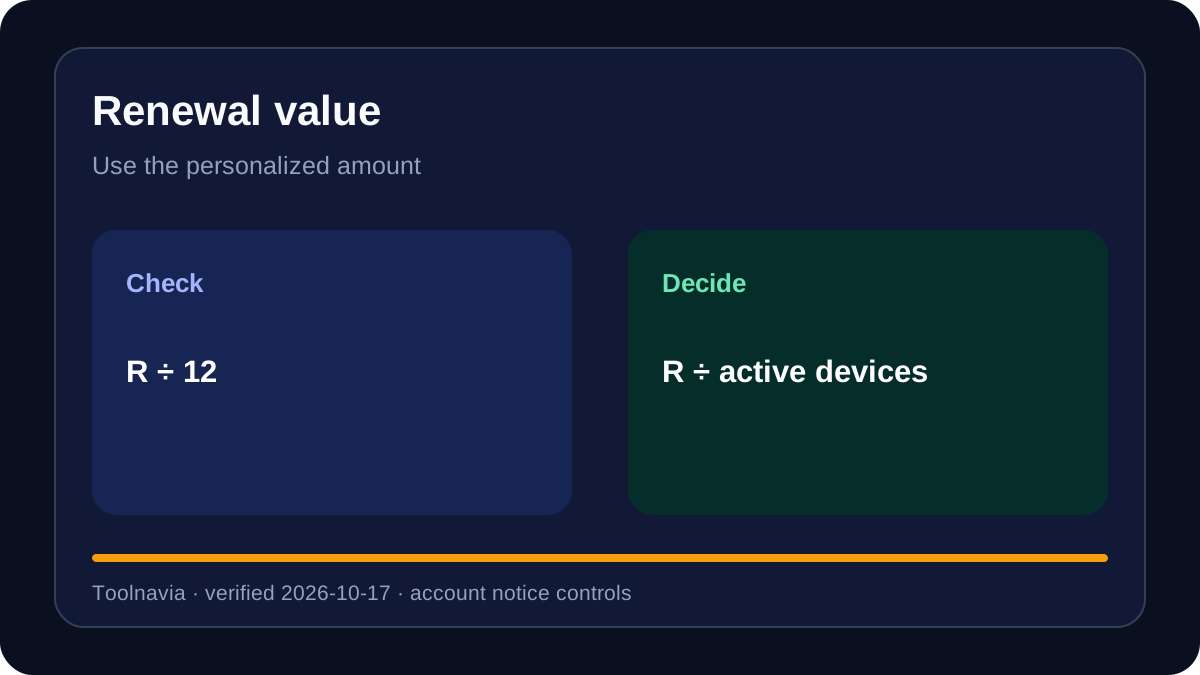
Calculate renewal value with R
Use three simple calculations once the email arrives:
1. **Monthly equivalent:** R ÷ 12. 2. **Cost per protected device:** R ÷ number of devices actually active. 3. **Premium versus a replacement offer:** R − verified live checkout price for the exact same Plus three-device term.
If all three devices are used and R is $79.99, the cost is about **$26.66 per device per year** or **$6.67 per account-month**. If only one device is used, the effective device cost is the full $79.99. Those examples show why occupancy matters more than the headline device limit.
Plus adds Privacy VPN to Malwarebytes' device security package. If the VPN is not used, compare the personalized Plus renewal against the live Standard price rather than renewing a bundle by habit. The existing Toolnavia Plus-versus-Standard guide covers that feature decision; this page is specifically about the renewal event and its cash controls.
Device count can change the right answer
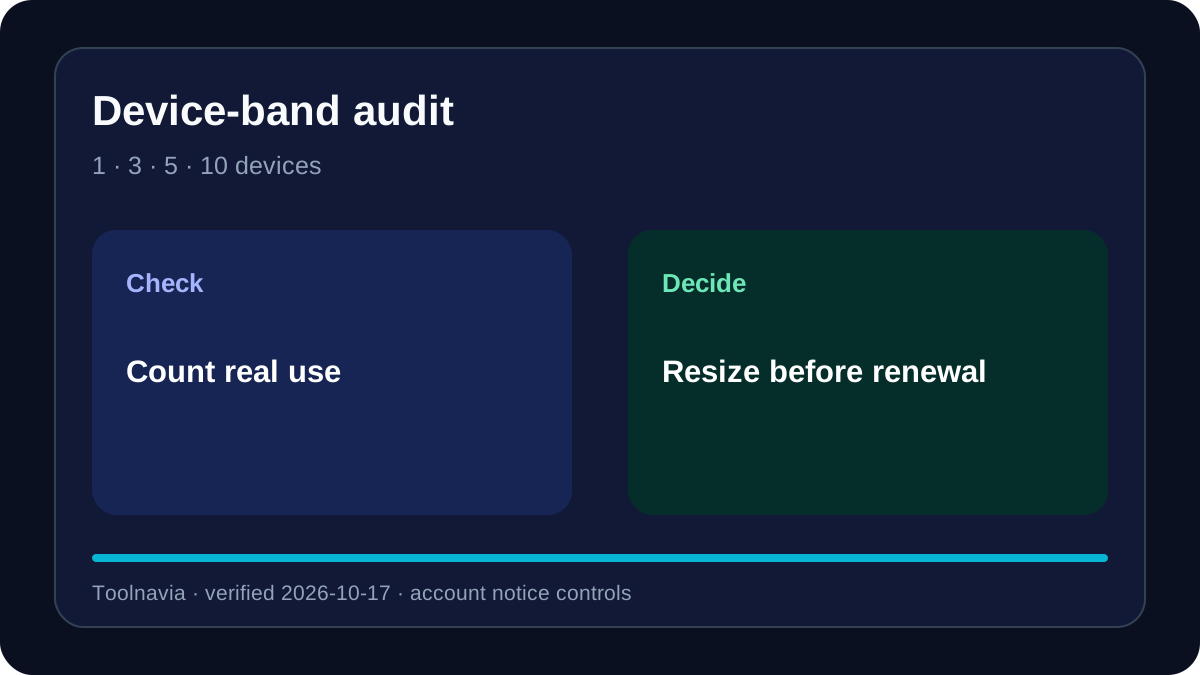
Malwarebytes personal subscriptions use **1, 3, 5 and 10-device bands**. The company says reducing device coverage requires turning off auto-renewal on the old subscription and purchasing the appropriate new subscription.
That makes the renewal checkpoint a capacity audit. Count devices that have actually been protected in the last 60–90 days. If only one device remains, a three-device renewal can be poor value even when the price itself did not increase. If more devices are needed, obtain the exact upgrade price in the account before comparing alternatives.
Do not treat unused device slots as stored value. A three-device entitlement only pays off when the extra coverage is needed during the term.
Cancellation and refund boundaries
Cancellation is clearest **before** the renewal charge: turn off auto-renewal, save the confirmation, and keep access until expiration. Malwarebytes' public pricing page advertises a 60-day money-back guarantee, but the official refund help page sends buyers to the license agreement or Support for exact eligibility and applies different rules to Google Play and Apple App Store purchases.
Therefore, do not assume that every automatic renewal can be reversed in full under the headline guarantee. If the renewal has already charged, contact official Support promptly and ask for a written eligibility decision. App-store subscribers must follow the store's own cancellation and refund path.
Renewal checklist
1. Verify the email sender, then sign in directly to the official account. 2. Record R, renewal date, Plus plan and three-device scope. 3. Compute R ÷ 12 and R ÷ active devices. 4. Compare the bundled VPN's real use with the live Standard alternative. 5. Check whether a lower device band requires a replacement subscription. 6. If cancelling, turn off auto-renewal and save confirmation before the charge. 7. If renewing manually, re-check the auto-renew setting afterward. 8. Confirm refund terms for the exact sales channel.
Toolnavia's exact Malwarebytes Plus offer is market-confirmed, but affiliate approval has not been obtained, so commercial CTA and tracking remain hidden.
**Bottom line:** the universal renewal price is not public. Wait for the official 30-day amount, calculate its per-month and per-active-device cost, and make the keep/cancel decision before the charge rather than guessing from a promotional acquisition card.