TOOLNAVIA / BUYING GUIDE
ClickFunnels Launch Email Limit: Will 50K Sends Force a $100 Upgrade?
The short answer
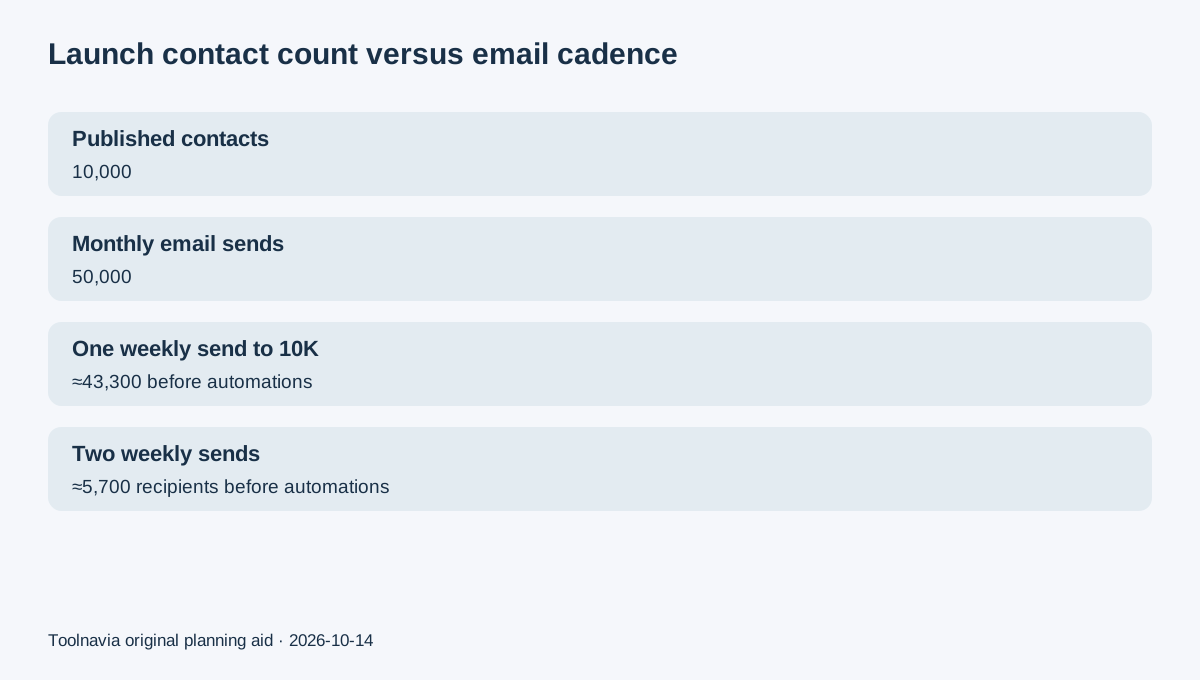
ClickFunnels Launch can hold 10,000 contacts but includes 50,000 email sends per month. Those numbers are not equivalent. A full 10,000-contact list can receive about five messages in a 30-day month before the send allowance is used. If you plan two broadcasts a week, the practical audience ceiling is closer to 5,700 recipients before automations, confirmations and retries are counted.
At a glance
- Best for
- Teams that can forecast recipients and cadence before choosing a tier.
- Price model
- Launch $97/month or $970/year; Scale $197/month or $1,970/year
- Check first
- No deliverability benchmark; limits can change; other Scale features may drive an upgrade.
Do the cadence math before choosing the plan
Use this planning formula: monthly recipients × planned messages per recipient, then add automated sends. At 10,000 recipients, one weekly broadcast is roughly 43,300 sends in an average month; that fits under 50,000 only if other emails use fewer than about 6,700 sends. Two weekly broadcasts are roughly 86,600 sends, so the email allowance—not the contact database—becomes the likely constraint.
At 6,000 recipients, two weekly broadcasts are about 52,000 sends before automations. A safer working ceiling is lower. These are planning calculations, not a statement about deliverability, billing enforcement or how ClickFunnels counts every message. Confirm live usage definitions and handling in your account before a large campaign.
Separate contacts from active recipients
A contact database can include leads who should not receive every campaign. Segment by consent, relevance and recent engagement. Do not send extra messages merely to use an allowance, and do not treat a software limit as permission to ignore anti-spam law or provider rules.
Create three rows in your worksheet: regular broadcasts, automated sequences and operational messages. If a person can enter a five-message welcome sequence and also receive weekly newsletters, reserve both. Add a buffer for retries, month length and campaign changes rather than budgeting to exactly 50,000.
Measure the $100 monthly upgrade decision
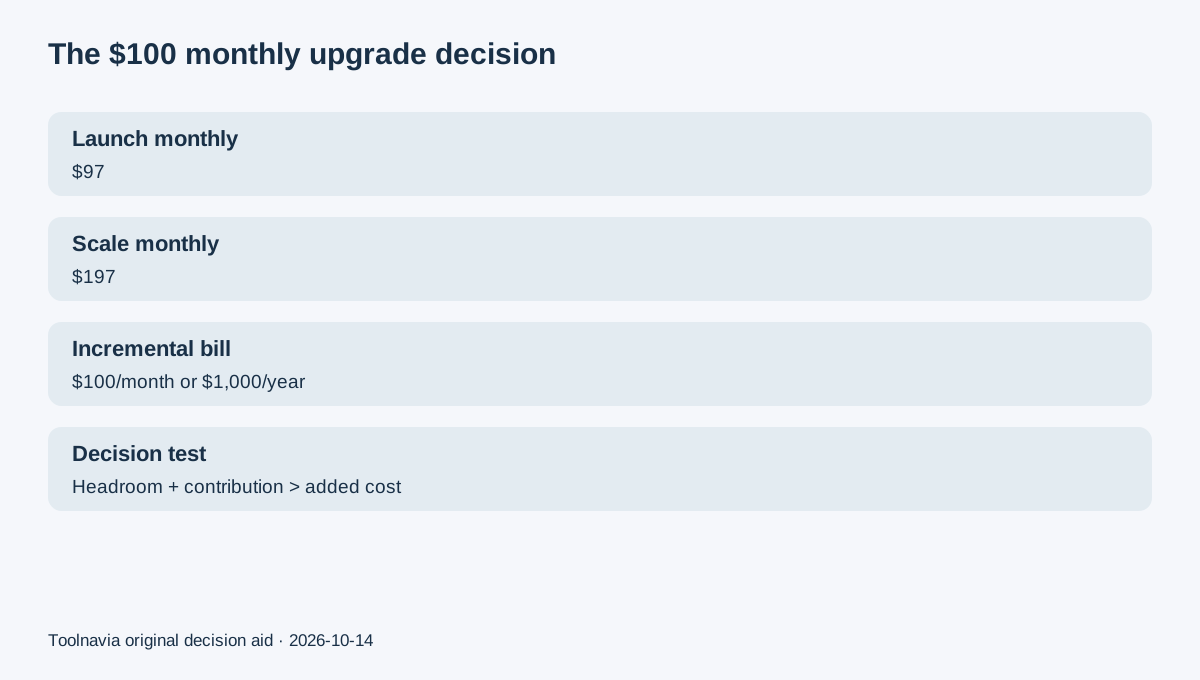
Current public support pricing lists Launch at $97 monthly and Scale at $197 monthly. Annual totals are $970 and $1,970. The incremental commitment is $100 for a monthly subscription or $1,000 for a year, before tax or other services.
Translate that delta into contribution, not revenue. If one additional sale contributes $50 after variable costs, the monthly upgrade needs two incremental sales to cover $100; an annual commitment needs 20 such sales to cover $1,000. This is a break-even model, not a conversion forecast. If the larger allowance does not support a real campaign plan, upgrading early buys unused capacity.
Inspect the other Scale differences on the live matrix. A buyer may need more workspaces, team members, contacts or technical access even when email volume fits Launch. Conversely, email volume alone may be cheaper to redesign through segmentation or a separate tool, depending on migration and integration costs.
Compare the meter, not just the sticker price
Systeme.io publishes contact tiers with unlimited email sends. That can be attractive when cadence is the primary constraint, but it is not proof that its funnel, automation, support or migration workflow matches yours.
Unbounce meters conversions and visitors rather than an included email allowance, and Leadpages emphasizes landing pages and traffic without the same email job. Both can make sense when the real purchase is landing-page experimentation and another service already handles email. They are not one-for-one replacements for an all-in-one funnel, CRM, course and email stack.
Independent ClickFunnels analyses also flag the gap between the contact ceiling and send allowance. Use that observation to test your own list and cadence, while treating official pricing as the authority for the current plan.
Run a 30-day capacity rehearsal
Estimate opted-in recipients for each campaign. List every recurring broadcast and active automation. Multiply recipients by messages, add a 15% planning buffer, and compare the total with 50,000. Then model the same worksheet for a growth month.
If the total stays comfortably below the allowance and Launch's other limits fit, the lower plan is the economical starting point. If the total repeatedly exceeds it, compare the $100 monthly delta with the cost and complexity of another email service. Do not assume a higher plan improves inbox placement; sender reputation, content, consent and configuration still matter.
Buy for the workload you can defend
Choose Launch when its funnel stack is useful and your documented monthly send plan fits with headroom. Choose Scale only when larger capacity or added capabilities justify the incremental bill. Delay either purchase if you cannot yet state who will receive messages, how often, and what outcome will pay for the software.
Toolnavia may earn a commission on qualifying purchases through the ClickFunnels buttons. They use the approved direct referral URL, do not promise a special discount, and do not change the plan price shown by ClickFunnels.