TOOLNAVIA / BUYING GUIDE
ClickFunnels for One Paid Course: What to Prove Before You Subscribe
The short answer
ClickFunnels Launch is worth a trial when you want to sell and deliver one paid course through a connected funnel. Make the trial produce an order you can inspect and a learner journey you can follow. A polished sales page alone is not enough evidence to commit to a subscription.
At a glance
- Best for
- A creator who needs both a selling funnel and course delivery and can validate the full learner journey.
- Price model
- Current USD: $97/month or $970/year; annual saves $194
- Check first
- Creators with a working existing stack, unresolved payment eligibility, or an unprepared offer.
Start with one offer and one learner
Write down the course promise, price, delivery date and what a buyer receives. Prepare one sample lesson and an email address you control for the test learner. Keep optional bumps and extra products out of the first exercise so a failure is easier to locate.
Launch currently includes three courses, one workspace and two team members. That can suit a solo creator with a collaborator, but it is not permission to sell content you have not prepared or a promise of learner demand. Check the live limits before building several separate programs.
Four capabilities to put to work
Global Products let you define an offer centrally and attach it to a funnel checkout. That makes repeated offers easier to keep consistent; still compare the displayed price with the intended product after attaching it. Checkout supports optional bumps, but make the basic purchase understandable before adding one.
Workspace Test Purchases allow order-flow evaluation without first connecting a payment gateway. The Team Owner must enable this, and it cannot collect real payments. It helps separate setup work from payment-provider onboarding.
Funnel Test Mode lets you inspect a simulated purchase rather than charge a real card. Its payment-method coverage is limited: the documentation says PayPal checkout has no sandbox mode, while Apple Pay and Link testing require Stripe. A successful test-card order therefore does not validate every payment choice.
The included course capacity lets you evaluate delivery alongside selling. Put a real sample lesson behind the intended access rule and check it from the learner's account. Do not mistake an order confirmation for proof that the learner can reach the correct material.
Run an acceptance exercise, not a design contest
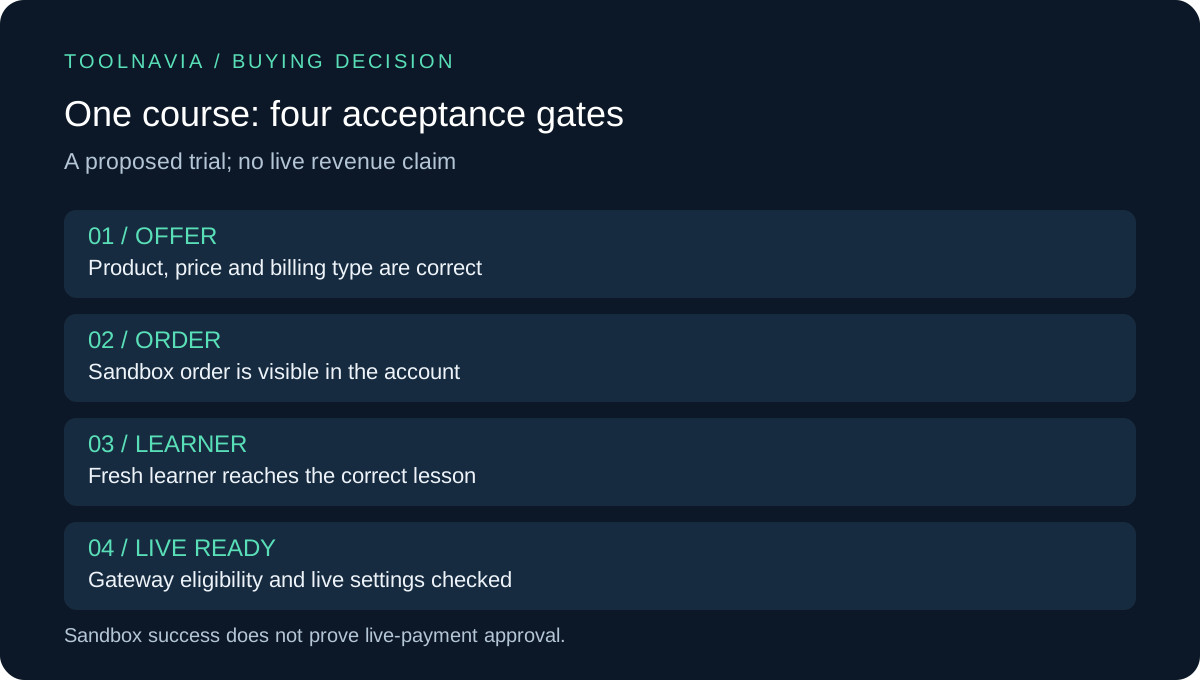
First, create the product and attach it to the checkout page. Check the selected price and billing type. Next, enable the documented workspace test setup if no gateway is connected, then set the funnel to Test and use its displayed sandbox instructions. Confirm the test order appears in the account.
Follow the journey as the learner: open the offer on a phone, complete the simulated order, inspect the confirmation and reach the correct lesson. Record the result of each step. Retry with a fresh test identity if an existing login could conceal an access problem.
Keep a small failure list: wrong amount, unclear recurring billing, missing message, incorrect course access, or unreadable mobile layout. Decide who fixes each item. This is Toolnavia's proposed acceptance checklist, not a test result or a guarantee that every automation runs automatically.
Price the whole selling workflow
Current Launch pricing is $97 monthly or $970 annually. The annual invoice is not an $81 monthly commitment; the displayed figure is rounded. Our separate [billing guide](/en/software/clickfunnels-launch) covers that decision in detail.
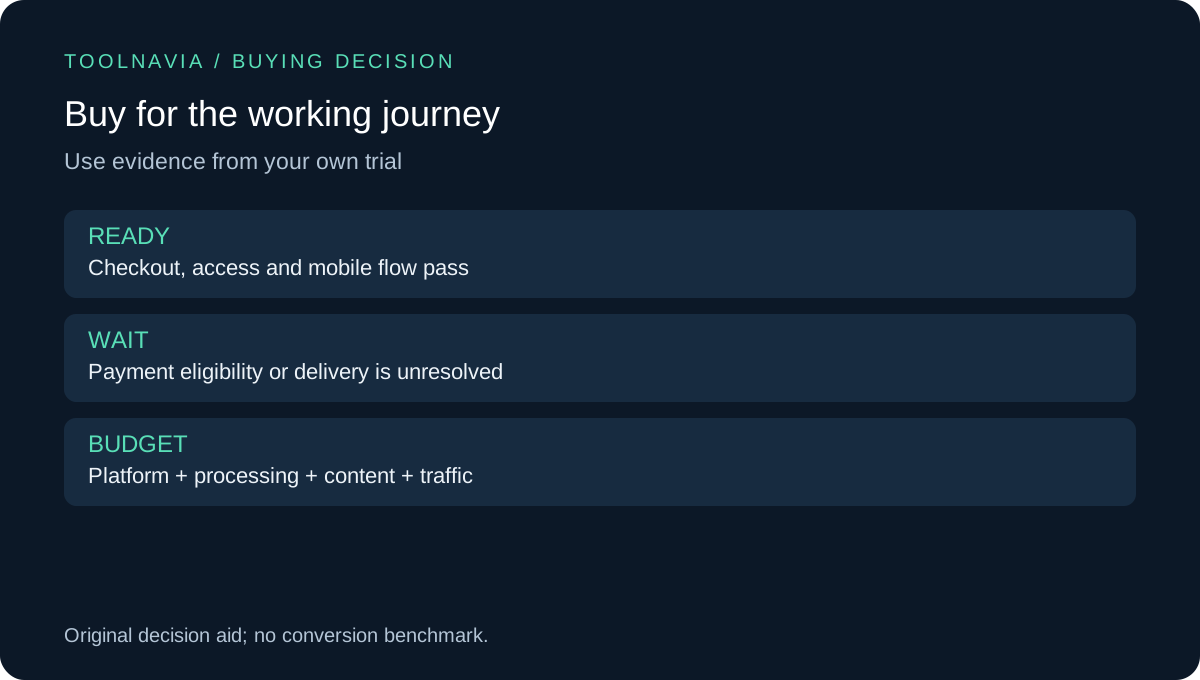
Add your actual payment-processing fees, taxes, domain expenses, content-production cost and advertising budget. Treat these as inputs, not a promised all-in monthly total. A simple planning calculation is monthly fixed costs divided by contribution per sale after variable costs. If the contribution is zero or negative, more sales will not cover the fixed bill.
Confirm the trial end date, first charge and cancellation route in your own signup terms. Testing the platform does not prove that a payment provider will approve your business or settle funds on your preferred schedule.
Keep alternatives tied to the missing job
If your current course platform already handles delivery, buying a whole new stack may add migration work. Kajabi's pricing emphasizes products, contacts and a creator business; HighLevel's Starter emphasizes subaccounts and CRM capacity. Compare the job you need rather than assuming similarly priced plans are interchangeable.
For a low-commitment experiment, systeme.io offers a free entry route and documents course and email features. Its dynamically rendered plan cells were not readable during this check, so this guide does not assert a current paid price or exact free-plan capacity. Confirm those on the live page.
Buy when the learner journey passes
Choose Launch when the test demonstrates a manageable selling-and-delivery workflow and the actual bill fits your course economics. Delay the purchase when payment eligibility, delivery access or the offer itself remains unresolved. Before real sales, connect the appropriate live gateway and deliberately verify the live setup; a sandbox success is not live-payment approval.
Toolnavia may earn a commission on qualifying purchases through the ClickFunnels buttons. They use our approved original referral URL and do not promise a special discount. Check the plan and billing term on the destination page.