TOOLNAVIA / BUYING GUIDE
InterServer 1-Slice Linux VPS: $3 Compute, Backups Not Included
The short answer
InterServer’s 1-slice Linux VPS is worth considering for a small service whose owner can administer Linux. The current $3 monthly plan buys server resources, not an automatic recovery routine. This document-based guide focuses on the two decisions a low starting price hides: which resource an upgrade adds, and who keeps the application recoverable.
At a glance
- Best for
- A small measured Linux service with a technical owner who values root control and will operate independent recovery copies.
- Price model
- $3/month compute; optional $3 ST100 storage target; tax/licenses/extras separate
- Check first
- A buyer requiring confirmed one-slice managed application support, a refundable trial, bundled commercial panel or a CPU upgrade merely by doubling slices.
What the $3 slice actually contains
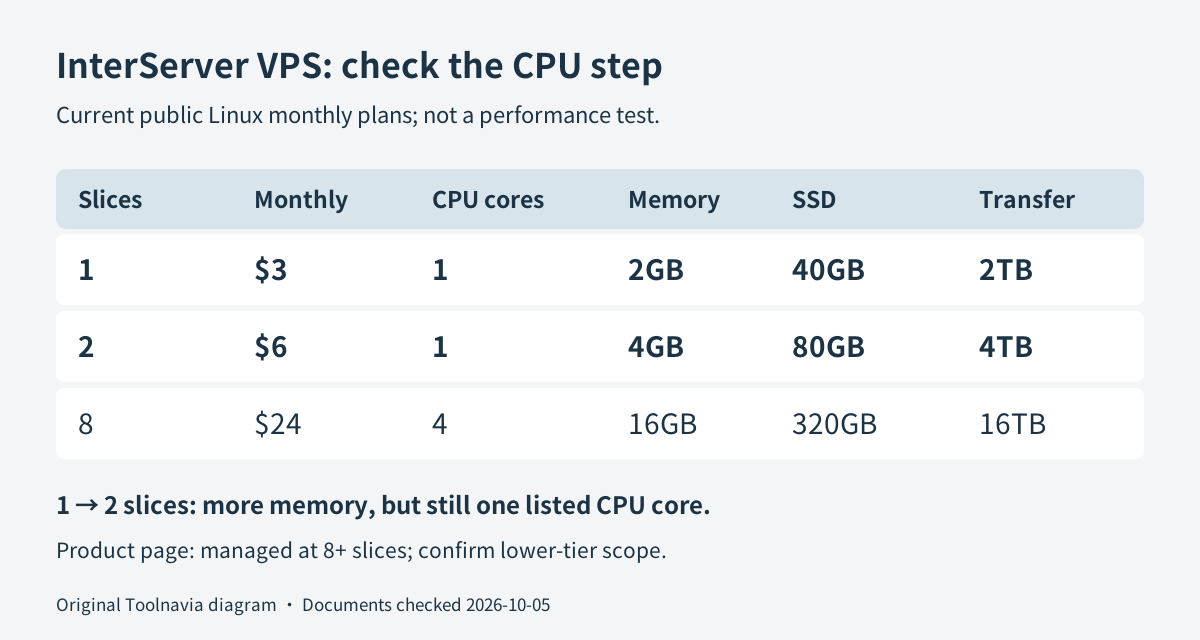
The current allocation is one CPU core, 2GB memory, 40GB SSD storage and 2TB transfer. Its advertised 10Gbps connection is a shared port, not dedicated bandwidth. Leave room for the operating system, logs and maintenance before deciding whether the application fits. These figures cannot establish response time or a safe visitor count.
An included public IP helps plan an endpoint, but does not prove email deliverability or application reachability. Check the exact Linux template and available location in the order; this review did not capture a personalized cart.
Four reasons to consider it—and the second-slice trap
Root access lets you install the runtime a custom application needs rather than adapt it to a shared-hosting panel. Explicit memory, disk and transfer allocations make a small deployment budget easier to inspect. Slice upgrades provide a documented way to add capacity when measurements justify it. Monthly billing avoids committing to a multiyear hosting purchase. Each benefit still requires someone to maintain the application, track usage and complete cancellation properly.
Importantly, the current two-slice configuration costs $6 and lists one core, 4GB memory, 80GB SSD and 4TB transfer. The additional slice increases those allowances but not the displayed core count. Diagnose whether memory, disk or CPU is the bottleneck before paying more. A memory-constrained service and a CPU-constrained service do not have the same upgrade decision.
Do not buy one slice assuming managed application support
The product page repeatedly limits included managed support to eight or more slices, starting at the displayed $24 monthly configuration. Yet the separate FAQ broadly describes VPS management of software InterServer installs, without stating that threshold. These official descriptions leave the lower-tier support scope unresolved.
Budget one slice as an operator-managed service unless support confirms the exact duties in writing. Ask who handles operating-system patches, a failed database and an application-specific error. The FAQ excludes third-party scripts from its stated support scope. A support contact is not a substitute for a responsible administrator.
A control panel is another purchasing decision. Free installation does not mean a free license. Verify the panel’s eligibility on the selected VPS, its recurring license charge and its memory requirement; this guide does not promise a bundled panel at $3.
$6 can buy compute plus storage—not an automatic backup
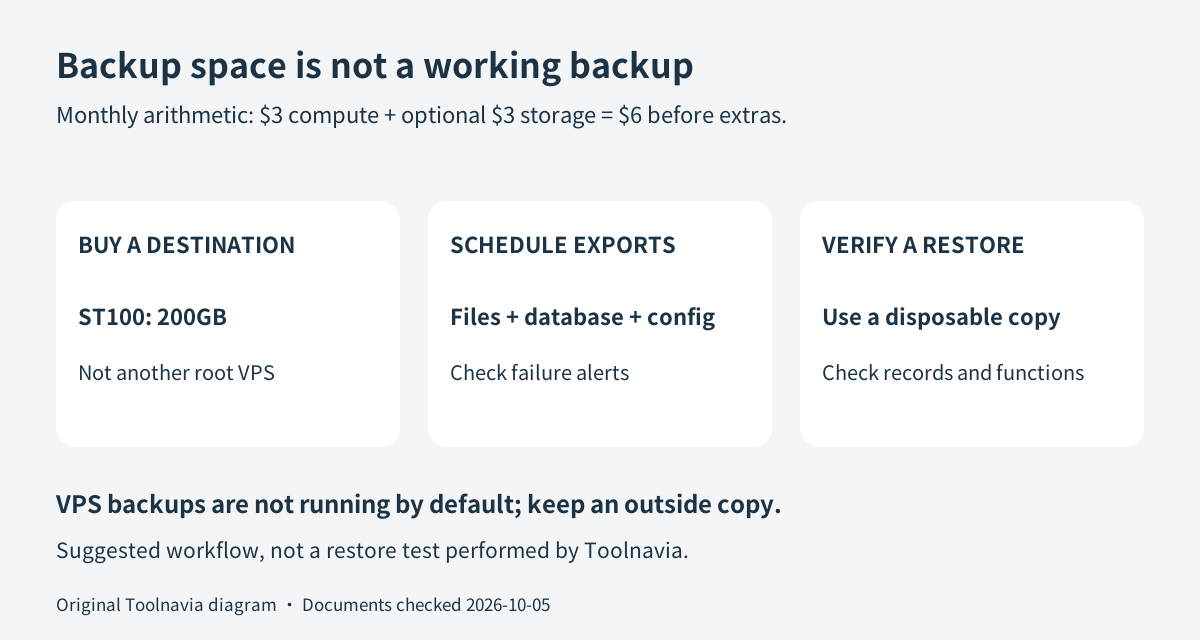
The service terms say VPS backups are not running by default and place backup responsibility on the customer. InterServer separately advertises its ST100 shared-storage plan at $3 monthly for 200GB and a 1TB transfer allowance, with file-transfer tools including SFTP and rsync. It is a storage destination, not another root-access VPS or proof that backup jobs have been configured.
Choosing both at the displayed rates gives $3 + $3 = $6 per month before tax, licenses and other extras. Twelve unchanged monthly payments would total $72, compared with $36 for compute alone. These are budgeting calculations, not prepaid offers or a price-lock guarantee. The FAQ says advance account credit does not create a quarterly or annual discount.
The two services keep separate transfer allowances. Estimate export size and frequency, check applicable transfer charges, and decide how many older copies to retain. Keep an additional copy outside the hosting account so loss of that account does not remove the only recovery route.
Prove the export and restore before moving production
Use this suggested acceptance workflow: retain the existing host, collect application files, a consistent database export and configuration, then deploy a disposable copy on the VPS. Measure peak memory, CPU and disk use during a representative task. Configure recurring exports to the chosen destination and check that failures produce an alert.
Restore one export into a separate disposable environment. Compare records and files, then verify login, forms and any application-specific function. The deliverable is a working restored copy and a written backup schedule—not merely a successful file upload. Move production only when the result is acceptable. This is an editorial procedure, not a test already performed by Toolnavia.
Monthly flexibility still has an exit deadline
VPS hosting has no trial or money-back guarantee; the terms exclude refunds after VPS service starts. Cancellation must occur at least three days before automatic renewal to avoid entering the next renewal period. Export first, complete the cancellation process and retain confirmation. An idle server is not a canceled service.
Choose one slice when its measured capacity fits and root control is useful. Prefer a confirmed managed service when no one can maintain Linux; keep an adequate existing host rather than migrate just for the headline price. InterServer has an open cash affiliate program covering VPS, but no approved Toolnavia tracking record is evidenced for this offer. Tracking stays disabled.