TOOLNAVIA / BUYING GUIDE
InterServer Standard Resource Limits 2026: What “Unlimited” Really Means
The short answer
**Quick verdict:** InterServer Standard advertises unlimited websites, storage and data transfer, but the current shared-hosting baseline is finite: **1 CPU core, 2GB memory, 1,024 IOPS, 100 processes, 30 entry processes, 200 emails/hour and 400,000 inodes**. The normal monthly offer is **$2.50 for the first month and $7/month at renewal**. Buy it for low-cost managed shared hosting—not for unlimited compute.
At a glance
- Best for
- Budget shared-hosting buyers who can manage a finite 1CPU/2GB/400K-inode resource envelope behind generous unlimited-site/storage policy.
- Price model
- $2.50 first month; $7/mo normal monthly renewal
- Check first
- Unlimited marketing does not mean unlimited CPU/RAM/I/O/inodes; weekly backups may be too coarse; archive/file-hosting use is restricted.
“Unlimited” is a policy, not infinite resources
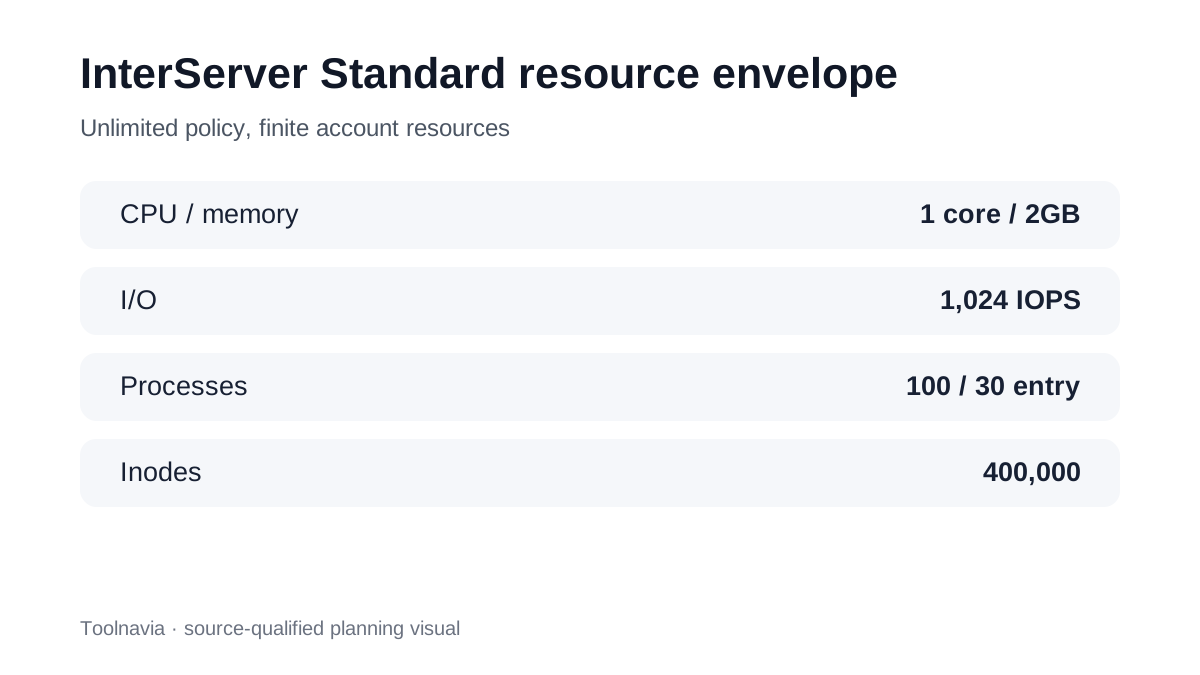
InterServer's current Standard pages still use unlimited language for websites, storage and data transfer. The current Boost comparison makes the account envelope explicit: Standard gets **1 CPU, 2GB memory, 1,024 IOPS, 100 processes, 30 entry processes and 400K inodes**. Its terms also say a shared account cannot use more than **20% of server resources at one time** and can be restricted when an application interferes with normal server operation.
Those statements are compatible only if “unlimited” is read as no simple website/storage quota within acceptable shared use—not as infinite CPU, RAM, I/O or file count.
CPU, memory and 400K inodes: what can fill first?
A cached brochure site may stay comfortably inside 1 CPU and 2GB. A WooCommerce checkout, membership site, import job or poorly cached WordPress stack can create bursts that make CPU, memory or entry-process limits matter long before storage feels “full.” InterServer's own 2026 guidance recommends checking CPU, memory, disk and inode usage and optimizing caching, images, databases and cron jobs before moving off shared hosting. If warnings continue after optimization, that is a stronger upgrade signal than raw traffic alone.
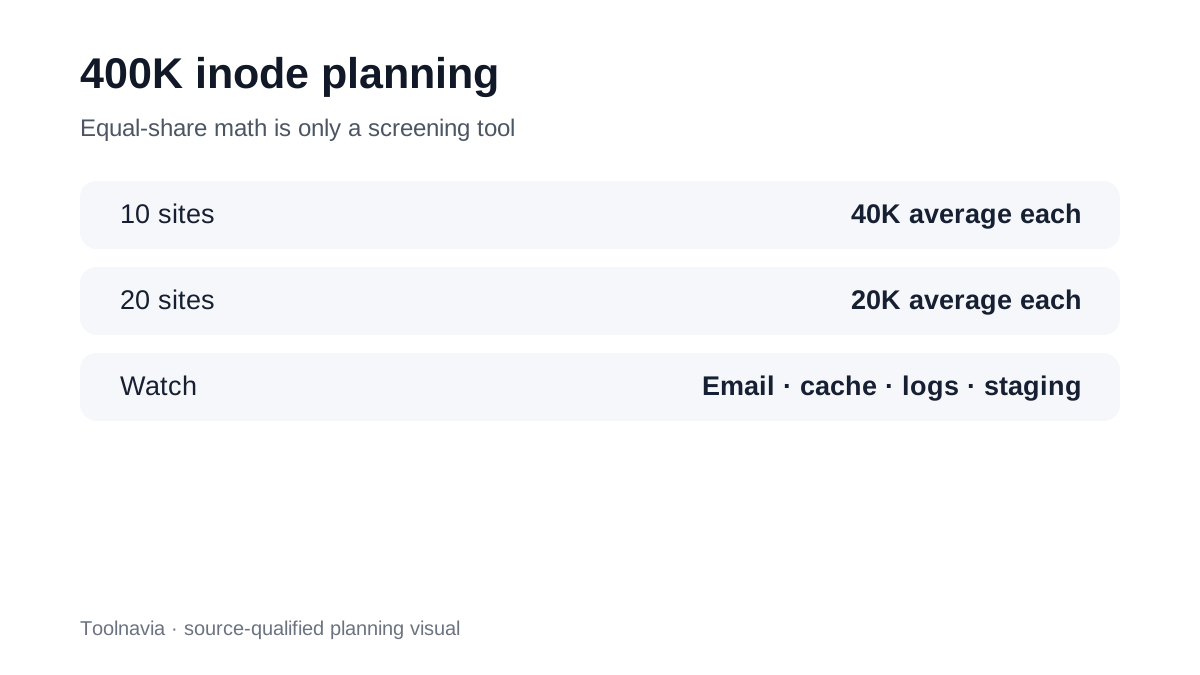
The current Boost table and current public Terms of Service both state **400,000 inodes** for Standard. As rough planning arithmetic, 10 equally sized sites would average **40,000 inodes each**; 20 would average **20,000 each**. Those are not quotas or guarantees. Email, caches, plugins, logs, thumbnails and staging copies can create large file counts even when gigabytes remain low.
An older client-area modal still says **250,000 inodes**, while the current public terms and current Boost table say 400,000. This guide uses the two current public sources and treats the older modal as stale, but buyers near the limit should confirm the live account panel. Do not translate 1 CPU/2GB into a promised visitor count; workload mix matters too much.
Storage and email have acceptable-use ceilings too
InterServer's current web-hosting page says Standard is for websites and email, not backup storage, movie/file storage or reselling. The Terms of Service also prohibit several archive/upload use cases and say unreasonable shared-hosting storage use can trigger a **$0.15/GB storage fee**.
Standard's current baseline is **200 outgoing emails per hour** and **400K inodes**. For a normal small-business site, 200/hour can be generous. It is not a bulk-email platform. A site that sends transactional mail during launches, imports many mailboxes or stores years of attachments should watch both send rate and inode growth.
That means site count alone is a poor capacity metric: ten quiet sites can be easier than one busy store plus heavy email. “Unlimited storage” should not be used to justify parking large backup archives, media mirrors or file-hosting workloads.
Weekly backups still need a recovery plan
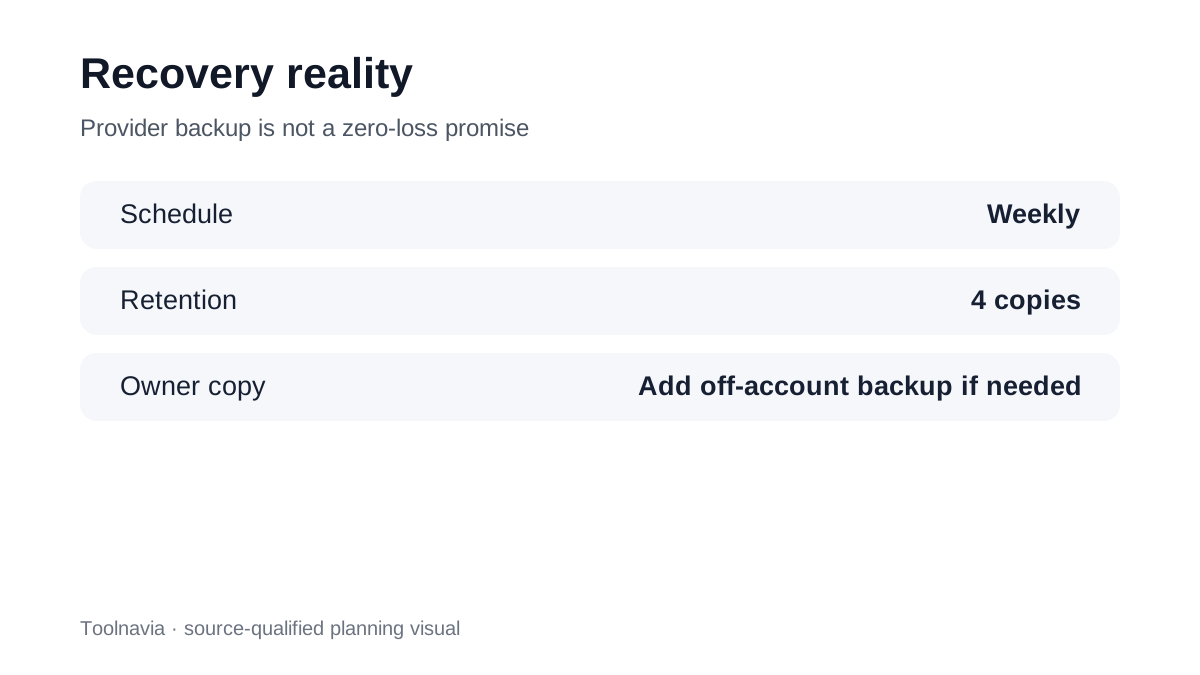
InterServer documents a **weekly JetBackup schedule with four retained copies** for basic shared hosting. If your site changes several times per day, a weekly provider snapshot can leave a large recovery gap. Keep an independent off-account copy at a frequency that matches the business impact of lost orders, posts, form submissions or email.
The published backup exclusions also mean temporary/local backup archives should not be treated as guaranteed provider-protected data.
When Standard stops fitting
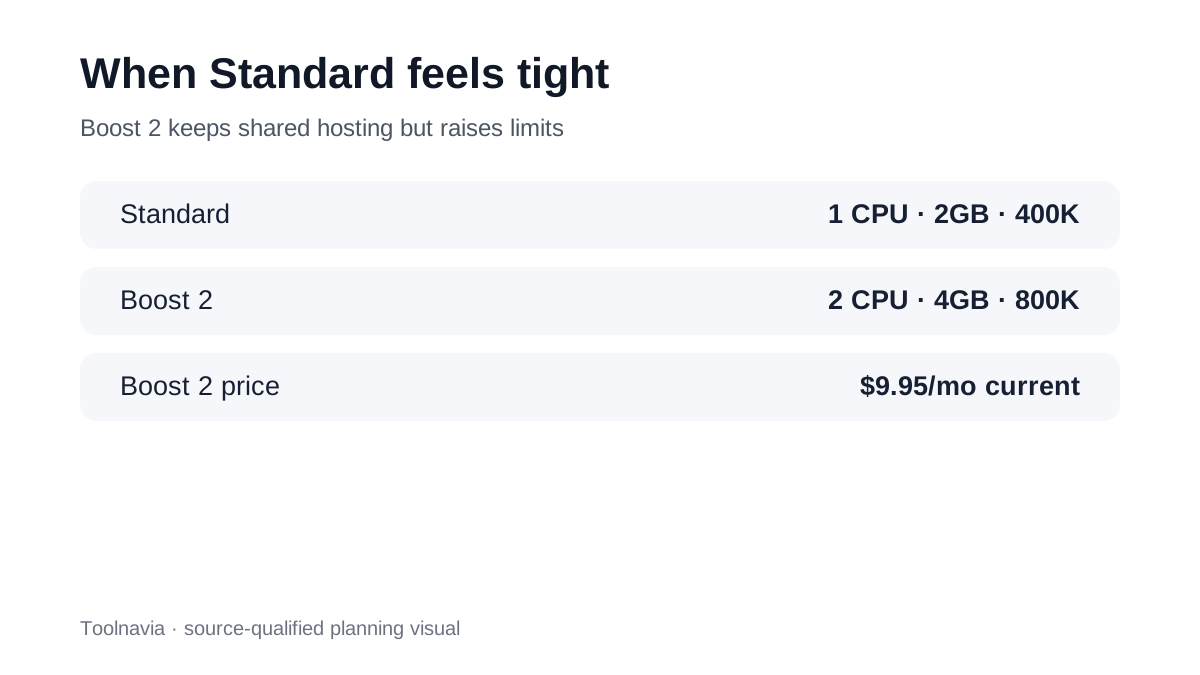
InterServer's current Boost 2 tier starts at **$9.95/month** and doubles several Standard resource limits: **2 CPU, 4GB memory, 2,048 IOPS, 200 processes, 60 entry processes, 400 emails/hour and 800K inodes**.
That provides a clean intermediate step when Standard's shared resource ceiling—not root access—is the problem. If you need server-level customization, isolated resources or a different architecture, a VPS is the more meaningful change. InterServer's 2026 upgrade guidance makes the same distinction: optimize first, then move when the shared ceiling remains the bottleneck.
What independent 2026 reviews get right—and wrong
WebHostWatch correctly separates the normal **$2.50 first month / $7 renewal** Standard offer from the separate Price Lock campaign. iTechGuides also describes Standard as an unlimited-site/storage shared plan with weekly backups, which matches the broad current product positioning.
Some current third-party pages still say the $2.50 rate itself is “locked forever.” Another review focuses on the “true limits” behind unlimited hosting, reinforcing why buyers should read the resource policy rather than the marketing label. For pricing and hard limits, this guide uses InterServer's current first-party pages.
Buyer checklist
Before checkout, confirm the normal Standard offer, renewal line, control panel, **1 CPU / 2GB / 1,024 IOPS / 30 entry processes / 400K inodes / 200 emails-hour** limits, weekly backup cadence and whether your files/email workload fits acceptable shared use.
**Bottom line:** InterServer Standard can be excellent value for ordinary sites because it combines low entry cost with generous website/storage policy. The plan is still a finite shared resource budget. Treat 1 CPU, 2GB memory and 400K inodes as the real capacity conversation—not the word “unlimited.”