TOOLNAVIA / BUYING GUIDE
InterServer Standard Cache Stack: What Is Actually Included?
The short answer
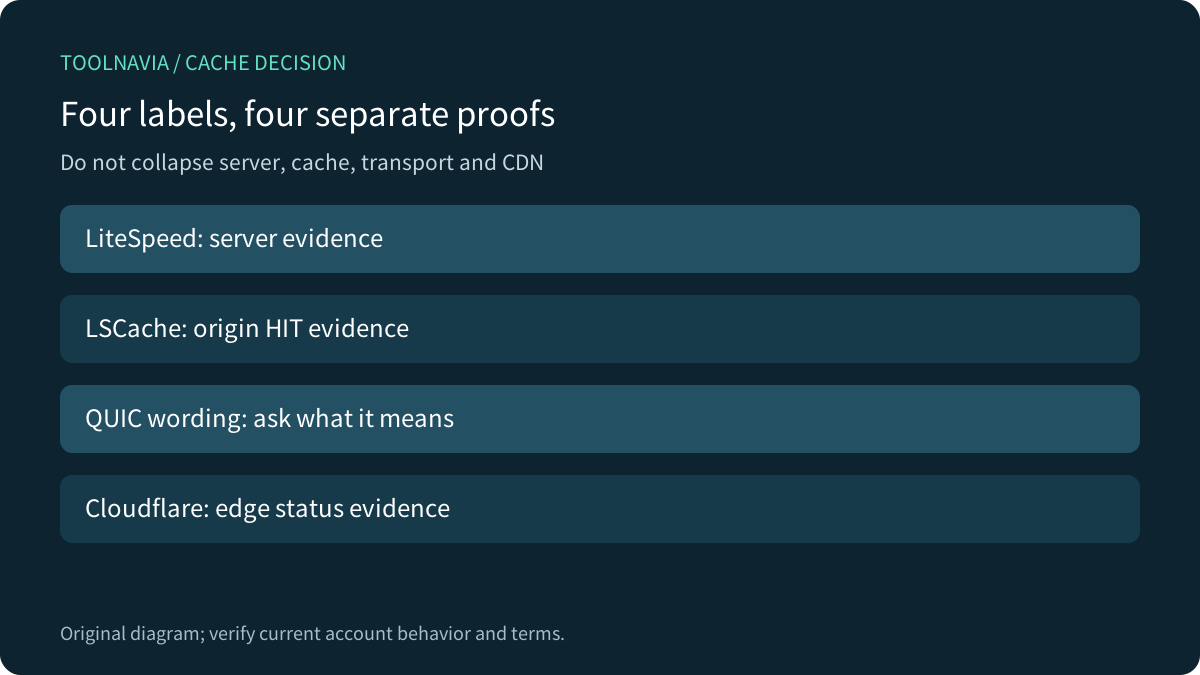
InterServer Standard names four performance components—LiteSpeed, LSCache, QUIC and Cloudflare CDN—but they are not four versions of the same cache. LiteSpeed is the web-server layer; LSCache can cache WordPress pages at the origin; Cloudflare is an edge layer; and “QUIC” is not enough wording to prove that QUIC.cloud CDN is included. Buy only after the exact account produces the headers and purge behavior your site needs.
The current canonical page was opened directly on November 12, 2026. It shows $2.50 for the first month and $7 monthly renewal, with longer terms also listed. Those numbers describe InterServer Standard, not a performance guarantee. This review did not open an account, install a plugin, change DNS, purge a cache or run a speed benchmark.
At a glance
- Best for
- WordPress buyers who can verify the exact origin and edge cache path.
- Price model
- Direct-opened current page: $2.50 first month, $7 monthly renewal.
- Check first
- No live benchmark; QUIC wording does not prove QUIC.cloud or a guaranteed hit rate.
Separate the four labels before checkout
The technical table confirms LiteSpeed as the web server and free Cloudflare CDN. The main plan page separately names LSCache and QUIC. Neither page defines “QUIC” as a paid QUIC.cloud CDN entitlement, so this article does not make that leap. Ask InterServer whether the label means HTTP/3 transport support, QUIC.cloud services, or another implementation on the exact server.
WordPress.org explains the second boundary: the LiteSpeed Cache plugin exposes general optimization features on many servers, but its exclusive full-page cache needs a LiteSpeed server-side cache component or QUIC.cloud. Object-cache support is also not the same as a provider supplying Redis or Memcached. A plugin menu is evidence of software, not evidence that every backend service is enabled.

Prove the origin page cache with response headers
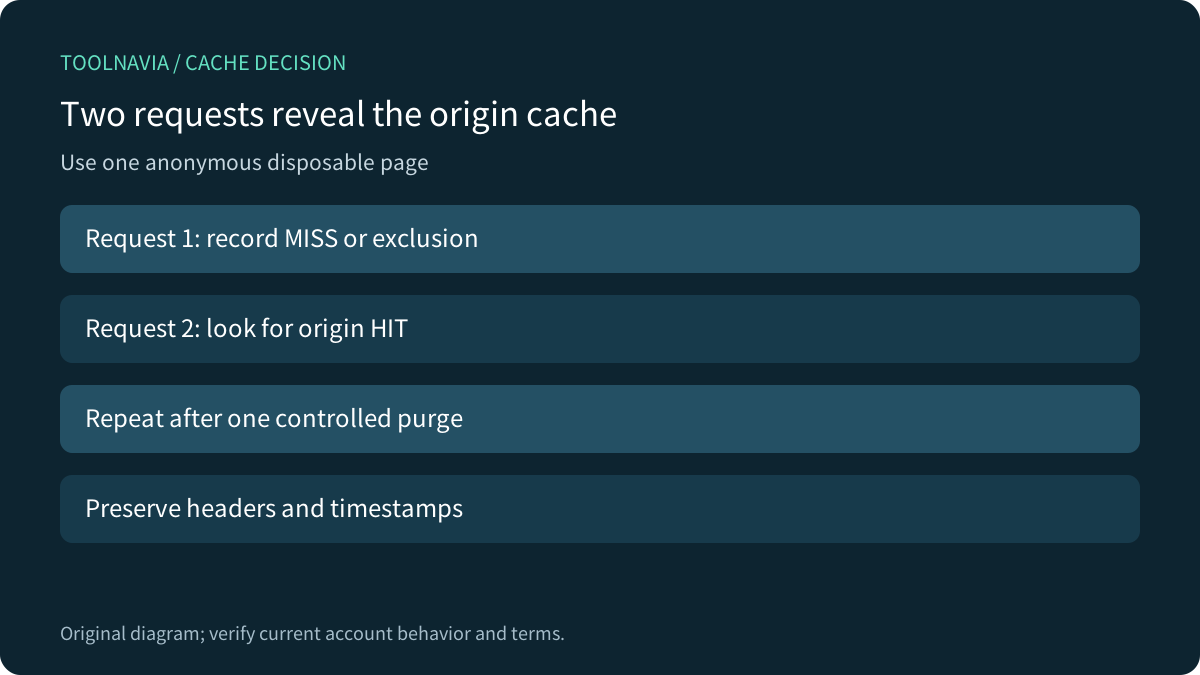
Use an authorized disposable page while logged out. Request the same ordinary public page twice, record status and response headers, and look for the origin evidence LiteSpeed documents. A first MISS followed by HIT is useful; repeated MISS needs investigation. Do not use a cart, checkout, logged-in page or personalized endpoint as the test because those may be intentionally excluded.
Repeat the test through the public hostname and, if support permits, through a route that isolates the origin from the CDN. LiteSpeed warns that some CDN settings can keep the public response at `X-LiteSpeed-Cache: miss` while a direct origin request hits. Record both routes instead of declaring the server cache broken from one edge response.
The acceptance result should state the tested URL, anonymous state, first and second response, purge time and who owns escalation. No live InterServer account was tested here, so the article does not claim a measured hit rate or latency gain.

Read Cloudflare as a second decision layer
Cloudflare’s `CF-Cache-Status` describes the edge, not LSCache at the origin. HIT means the edge served cached content. MISS means an eligible item was fetched and can be stored. BYPASS often follows response directives such as `private` or `no-store`; DYNAMIC can mean Cloudflare did not consider the request cacheable. One Cloudflare status cannot prove the LSCache result underneath it.
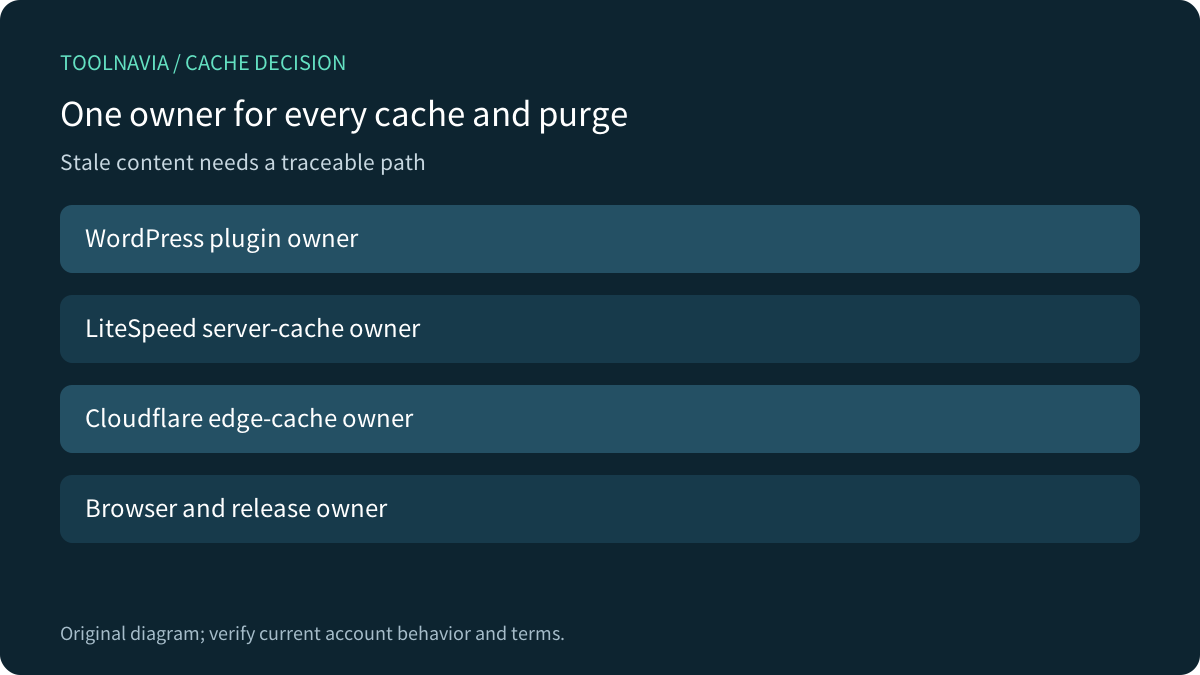
The LSCache plugin can hold a Cloudflare API token and coordinate a Cloudflare purge when LiteSpeed Purge All runs. That is control-plane integration, not a reason to enable every HTML cache. LiteSpeed also warns against duplicating full-page caching with Cloudflare APO. Start with a named owner for each cache and a documented purge sequence.
Hostinger’s same-intent documentation independently separates LiteSpeed server cache, CDN and OPcache and says to use only one WordPress cache plugin. Kinsta likewise tells users to clear plugin, server, edge and browser layers when stale content persists. These competitors do not define InterServer entitlements, but their operating boundary is relevant: a stack needs ownership, not more overlapping toggles.
Prevent stale content and checkout mistakes
Before going live, publish a harmless marker on a disposable page, confirm it appears after the documented purge, then restore the page. Test one anonymous article, one logged-in session and one WooCommerce cart or comparable personalized path if the application uses them. A public-page HIT is valuable only when private state remains private.
Do not install two page-cache plugins. Do not turn on Cloudflare Cache Everything or APO merely to raise a cache-hit number. Do not purge every layer after every request; that can erase the very evidence being measured. Change one layer, repeat the same two-request matrix, and preserve the before/after headers.

Know when caching is not the buying problem
InterServer describes Standard as shared hosting and recommends moving to VPS or dedicated hosting when a site needs more isolation, custom software or sustained heavy traffic. Caching can reduce repeat work, but it does not create dedicated CPU, memory or worker capacity.
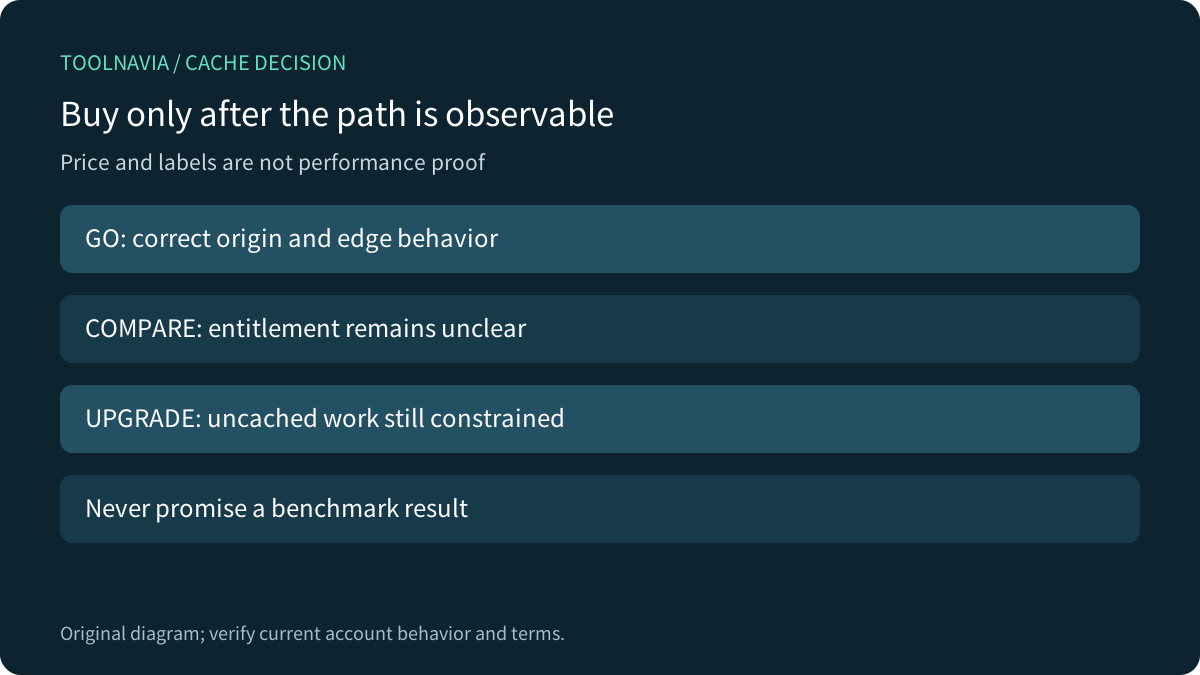
Stay on Standard when the exact account proves origin caching, intended edge behavior and safe personalized-page bypass while real workload remains inside shared-hosting limits. Ask about VPS when uncached requests, PHP workers, database work or custom service requirements remain constrained after the cache path is correct. Do not use a synthetic homepage score as the only upgrade test.
Send a six-question pre-sales script
Ask support to answer against the exact Standard account you would receive: Is LiteSpeed active for the selected virtual host? Is server-side LSCache enabled for WordPress, and which response header proves it? Does “QUIC” mean HTTP/3 transport, QUIC.cloud, or something else? Is Cloudflare merely available, automatically provisioned, or customer-configured? Which purge action clears origin page cache and which clears Cloudflare? Is Redis, Memcached or another persistent object cache included? Save the written answers with the order date.
After provisioning, convert those answers into evidence. Confirm the web server, install only one page-cache plugin, test the anonymous two-request sequence, verify private or cart paths bypass appropriately, and repeat after a controlled content change. If the delivered account differs, escalate before migrating production traffic. A support promise, plugin screen and response header each prove different things; keep all three instead of substituting one for another.
Buying decision
Buy Standard for a normal WordPress site when the $2.50 first-month and $7 monthly-renewal terms fit, support confirms the exact cache services, and your acceptance matrix shows the right origin and edge behavior. Compare another plan when you require a separately guaranteed object cache, a specific QUIC.cloud entitlement, custom server software or dedicated resources.

Then [open the verified InterServer Standard offer](https://www.interserver.net/r/1208224). Toolnavia may earn a commission from an eligible purchase. This is the owner-verified raw HTTPS referral URL; it does not guarantee cache configuration, benchmark results or checkout totals beyond the directly opened current plan terms.