TOOLNAVIA / BUYING GUIDE
InterServer Standard 200 Emails/Hour: Boost 2 or External SMTP?
The short answer
InterServer Standard currently publishes two facts that buyers should not combine into one promise: shared hosting includes email accounts and SMTP features, while the current Boost comparison table lists **200 emails per hour** for Standard. The first describes what you can create; the second describes outbound throughput. For a WooCommerce store, the buying decision is not “Does email exist?” but “Can the busiest order hour stay below the ceiling with enough room for password resets, staff alerts and retries?”
At a glance
- Best for
- Sites whose busiest transactional-mail hour stays well below 200 and is actively monitored.
- Price model
- 200 emails/hour published; checkout price and panel must be verified
- Check first
- Counting unit and exact checkout/panel are not publicly settled; spam policy still applies.
What the official 200/hour number covers
The current first-party Boost table is the strongest available source for the number. It places Standard at 200 emails/hour, Boost 2 at 400, Boost 4 at 800 and Boost X at 2,000. That makes 200 a real plan boundary, not merely an old support-blog figure. The 2017 WHM tutorial is retained only as historical corroboration because Standard users could not change the server-wide limit.
The table does not define whether InterServer counts a submitted message, every recipient, a mailbox, a domain or the entire hosting account. The older quota explainer lists several possible controls but does not resolve the current Standard counting unit. Therefore this guide treats 200 as a conservative account-level planning ceiling until InterServer confirms the exact scope in writing.
Unlimited accounts still share a sending boundary
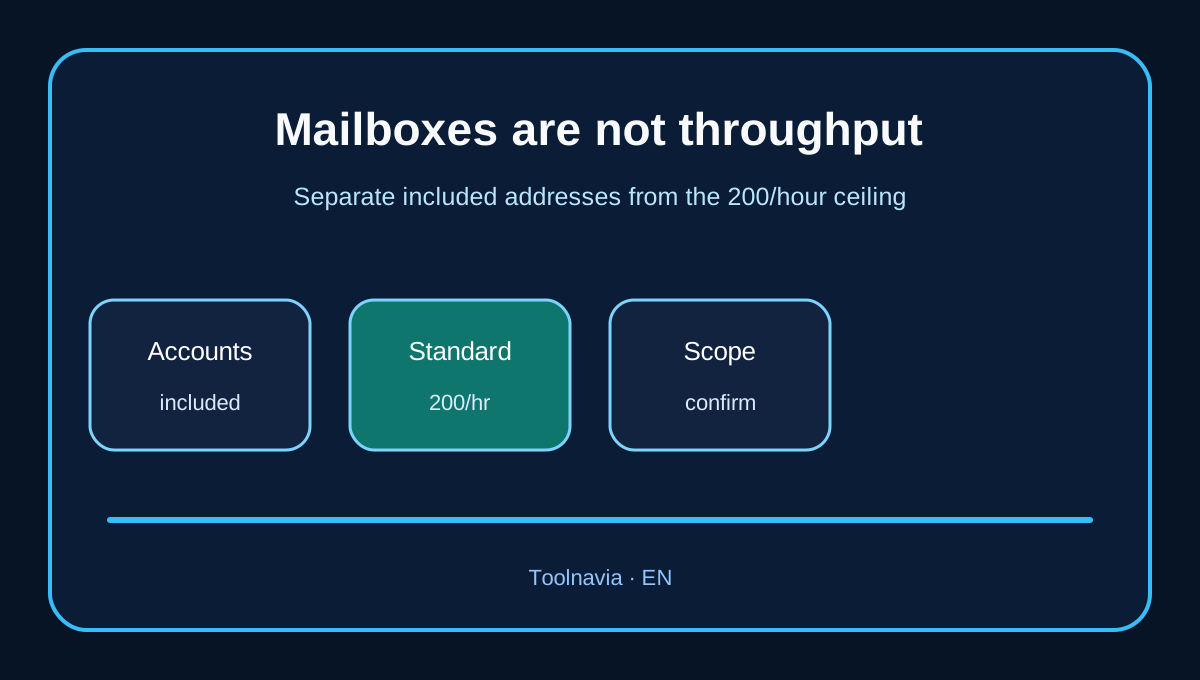
Sales@, support@ and orders@ can keep responsibilities separate, but “unlimited email accounts” does not create unlimited outbound capacity. The current hosting page describes mailboxes, forwarders, webmail and SMTP; the Boost table separately publishes the hourly rate. These are different resource dimensions. An independent buyer guide reaches the same practical distinction, but first-party terms control.
Do not rotate senders or create extra mailboxes to evade the cap. That would not prove extra entitlement and could collide with InterServer’s anti-spam and mailing-list rules.
Model a busy WooCommerce hour
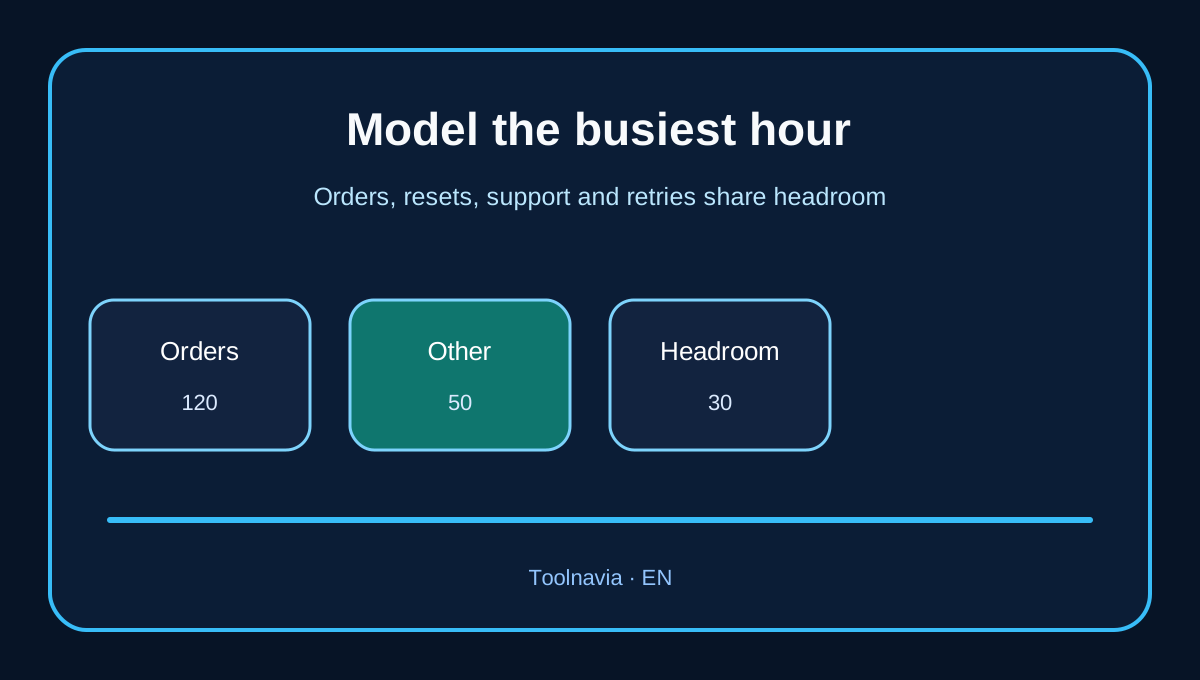
Plan around the busiest hour rather than a daily average. Imagine 60 orders in one hour. If each order triggers a customer confirmation and one administrator alert, that is 120 submissions. Add 20 password resets, 15 support replies and 15 retry attempts and the illustration reaches 170. That leaves only 30 of the published 200 as theoretical headroom.
This is not a measurement of InterServer’s counting system. A message to two recipients might consume one submission or two recipient events. Use the arithmetic as a stress test, then run controlled transactions and inspect logs. WooCommerce’s SMTP logs can record each attempt, connection, timestamp, error and final status, making the first real burst observable.
Compare Standard, Boost 2 and external delivery
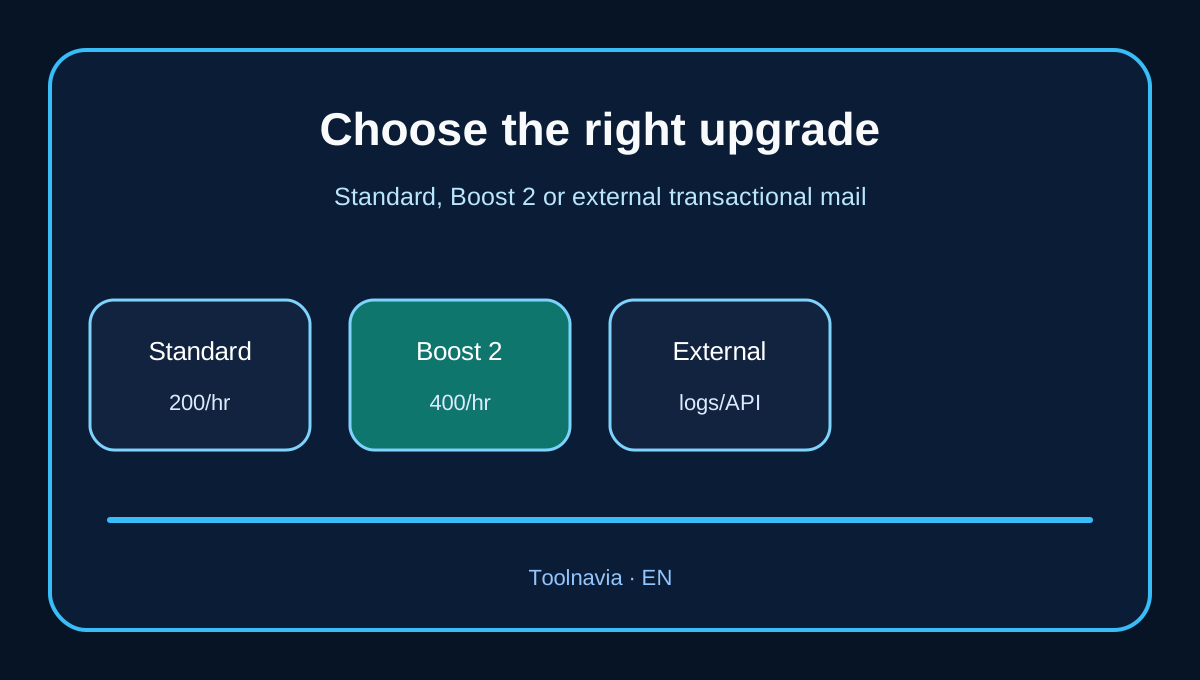
Boost 2 doubles the published email rate from 200 to 400 per hour and adds hosting resources, so it can be a sensible upgrade when the site also needs more CPU or process capacity. It is less convincing when the only business problem is transactional email visibility.
An external transactional provider separates web hosting from message acceptance, retry reporting and suppression handling. WooCommerce documents authenticated SMTP connections for this purpose, while WordPress and hosting guidance recommend a dedicated route when routine transactional volume outgrows the host’s monitored quota. External delivery has its own price, limits and compliance rules and does not guarantee inbox placement.
Price and panel conflict must be disclosed
InterServer’s current Boost page displays Standard at $2.50 for the first month and $7 monthly renewal. Another official package portal has displayed $5 per month and cPanel wording, while Toolnavia’s exact approved registry maps the current offer to Standard DirectAdmin. These presentations cannot safely be blended into one guaranteed checkout price or panel promise.
The final cart, region, billing term and panel shown for your order control. This article therefore uses the official 200/hour table for capacity, discloses the price/panel conflict and avoids a fixed multi-year total. Capture the checkout screen before paying and ask support which panel and renewal apply to the exact offer.
Keep policy and delivery separate
A 200/hour ceiling is not permission to send newsletters, purchased lists or unsolicited bulk mail. InterServer’s current terms prohibit spam and can block SMTP traffic or terminate an account when complaints are not addressed. “Guaranteed delivery” marketing also does not mean guaranteed inbox placement: recipient filtering, domain authentication, content, complaints and reputation still matter.
Keep marketing campaigns on a service built for consent, unsubscribe handling and list hygiene. For order mail, configure the sending domain correctly, test SPF/DKIM/DMARC alignment where supported, retain logs and alert on repeated deferrals or failures. Do not claim success merely because WordPress generated the message.
Buy only after six written answers
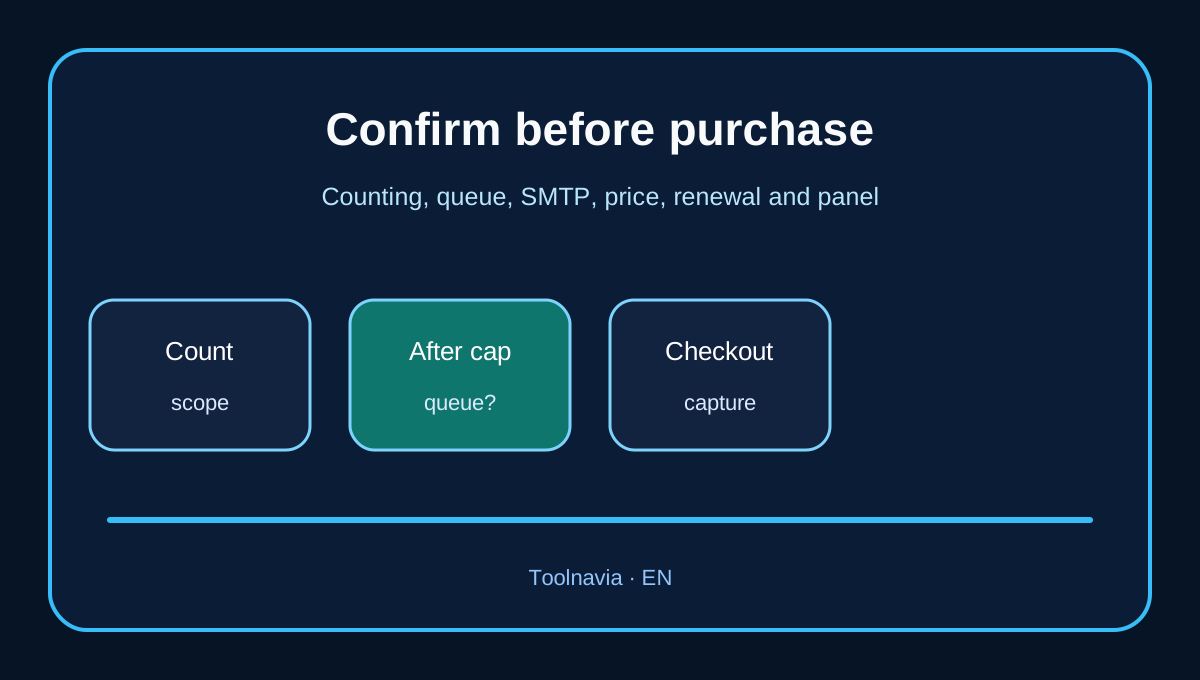
Before choosing Standard for revenue-critical mail, ask InterServer: (1) Is 200/hour counted per hosting account, domain, mailbox, message or recipient? (2) Do PHP mail and authenticated SMTP share the same pool? (3) What response appears after the threshold? (4) Are queued messages retried automatically? (5) Is an external authenticated SMTP/API provider allowed on the exact plan? (6) Which checkout price, renewal and panel apply?
Standard is a reasonable fit when the store’s measured peak stays comfortably below 200, logs are monitored and a delayed message is recoverable. Choose Boost 2 when hosting resources and the published 400/hour tier solve the same bottleneck. Use a dedicated transactional provider when order emails need independent scaling, provider-level logs and clear failure handling.
Affiliate disclosure: Toolnavia may earn a commission through the approved InterServer route. That does not change the conservative reading of the 200/hour limit, the unresolved counting unit or the checkout-price conflict.