TOOLNAVIA / BUYING GUIDE
hosting.com Starter Free .com: What Renews and When to Transfer
The short answer
**Quick answer:** hosting.com Starter can include a free domain for the first year, but “free” is not the same as lifetime ownership. The current cPanel page says the domain renews at the standard rate, while the current .com page ties its free-first-year headline to a two-year purchase. Neither static page gave us one dependable current .com renewal or transfer total, so the safe decision is to save the cart’s domain line items before paying.
At a glance
- Best for
- A one-site buyer who wants consolidated billing, accepts the required hosting term and verifies the exact domain renewal amount before payment.
- Price model
- Free .com for year one on the current offer; two-year purchase required; standard renewal then applies
- Check first
- The first-year credit is not a lifetime domain; year-two renewal and transfer totals must be verified in checkout.
The free year and the hosting term are different clocks
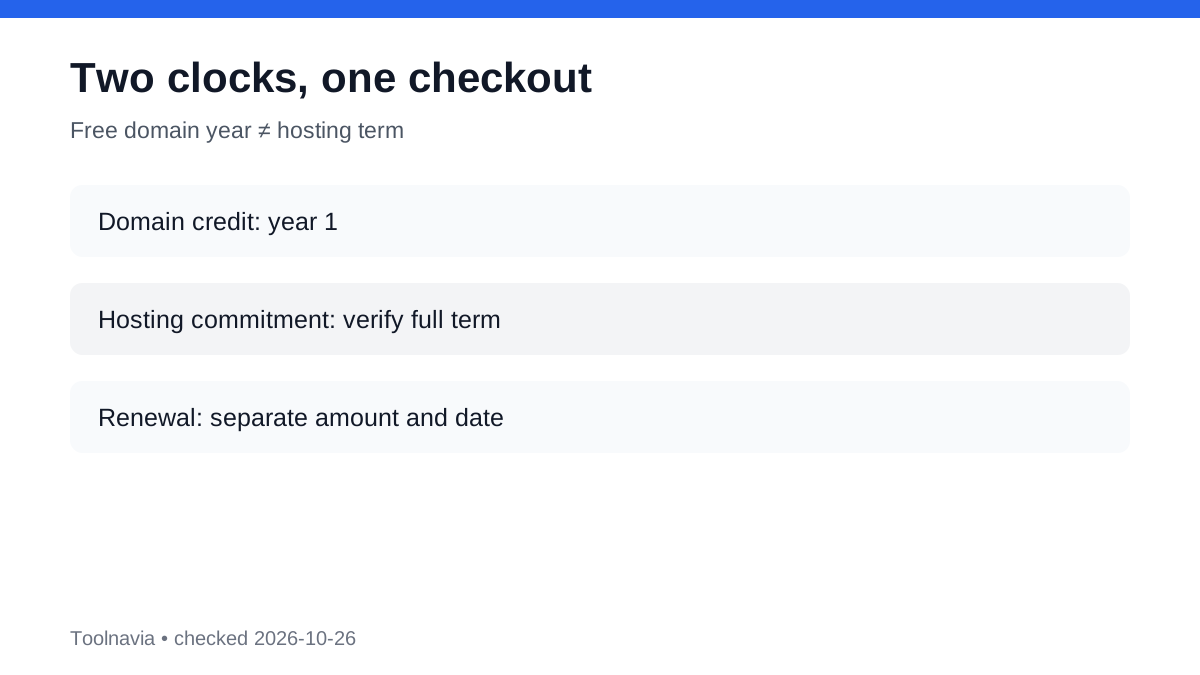
Starter’s cPanel page lists free domain registration for the first year. The separate .com page says “free .com for the first year” and adds a two-year-purchase requirement. That means a buyer may commit to a longer hosting term while the domain benefit covers only year one.
Do not divide the hosting total and assume the domain is free for the same number of years. At checkout, capture four separate values: hosting term, hosting renewal, domain registration credit, and domain renewal date. The public .com page also surfaces a standalone **$11.99 first-year** registration reference, but that is not proof of the bundled domain’s year-two renewal price.
Why this guide does not invent a year-two .com number
hosting.com says its domain table shows registration, renewal and transfer prices, and explains that first-year promotions move to the standard rate. It also says most transfers add a year and taxes are calculated at checkout. In the public static rendering checked for this guide, however, the exact .com renewal and transfer rows were not reliably visible.
That is a price-transparency conflict, not permission to borrow an old A2 Hosting number or a third-party estimate. The defensible rule is simple: the cart and the domain management invoice control. Save a screenshot or PDF of the registration, renewal and transfer values shown for your exact TLD and market.
Renewal risk starts before the expiry date
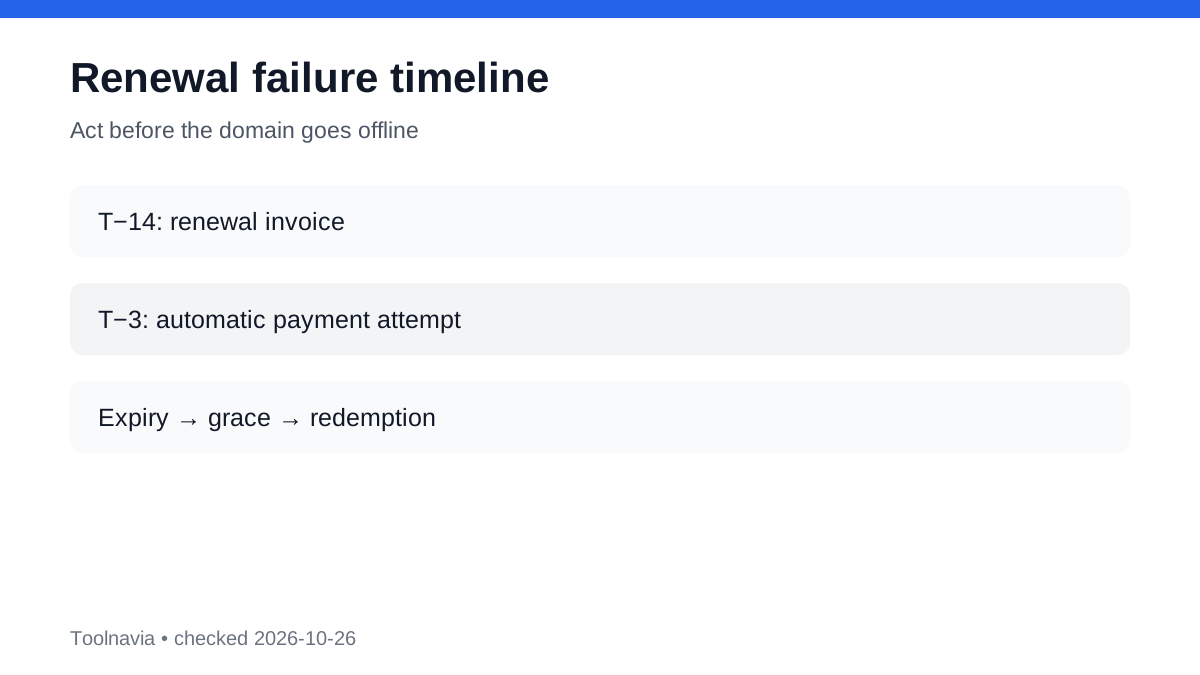
The current renewal documentation says the renewal invoice is issued **14 days before expiry**, automatic payment is attempted **3 days before expiry**, and an unpaid domain expires on the expiry date. Auto-renew can still fail if it is disabled, the stored card expired, or no payment method is saved.
After expiry, the risk escalates. The guide describes roughly 30 days of grace at the normal renewal price, then a redemption period with an additional registry fee, followed by pending delete. Website and email can stop while the domain is on hold. That makes a domain-renewal reminder more important than the first-year saving.
Should you keep the domain at hosting.com or transfer it?
Keeping hosting and registration together is simpler: one billing portal, one support path and fewer account handoffs. Separating them can reduce lock-in and make a future hosting move easier, but it adds another renewal account and another security surface.
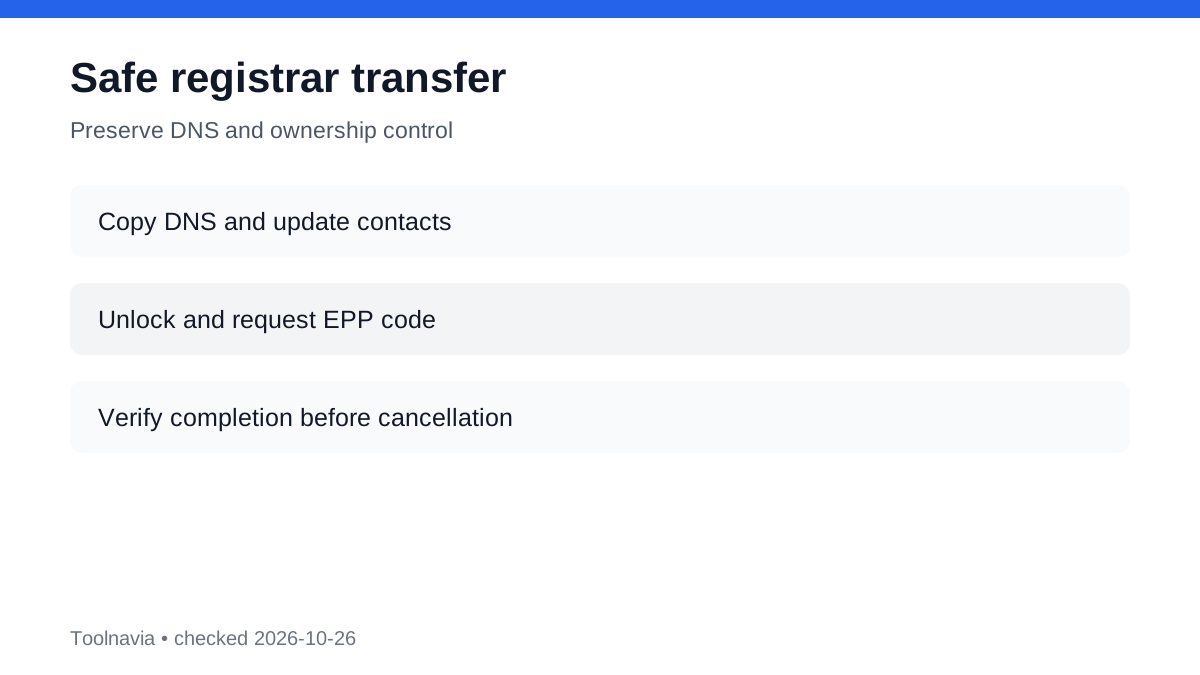
If you transfer, hosting.com’s own flow requires that you own the domain, unlock it, keep registrant contacts current and obtain the EPP authorization code. Checkout then shows the transfer price. Independent transfer guidance adds two prudent steps: copy all DNS records before starting and do not cancel the old registrar until the transfer is complete. Many domains are also subject to a common 60-day transfer restriction after registration or a recent transfer.
A registrar transfer is not a website migration. Moving registration changes who administers the domain; moving a site changes files, databases and often email. Plan DNS and email separately so the website can stay online during the registrar change.
Independent reviews are useful here only as a warning signal, not as price authority. TechRadar notes the first-year free-domain benefit but warns that hosting.com plan details changed quickly after the A2 rebrand; HostingAlmanac likewise says renewal figures were not consistently clear; HostingAdvice shows why a free domain tied to a longer hosting commitment should be evaluated beyond year one.
A three-year cost sheet that avoids the trap
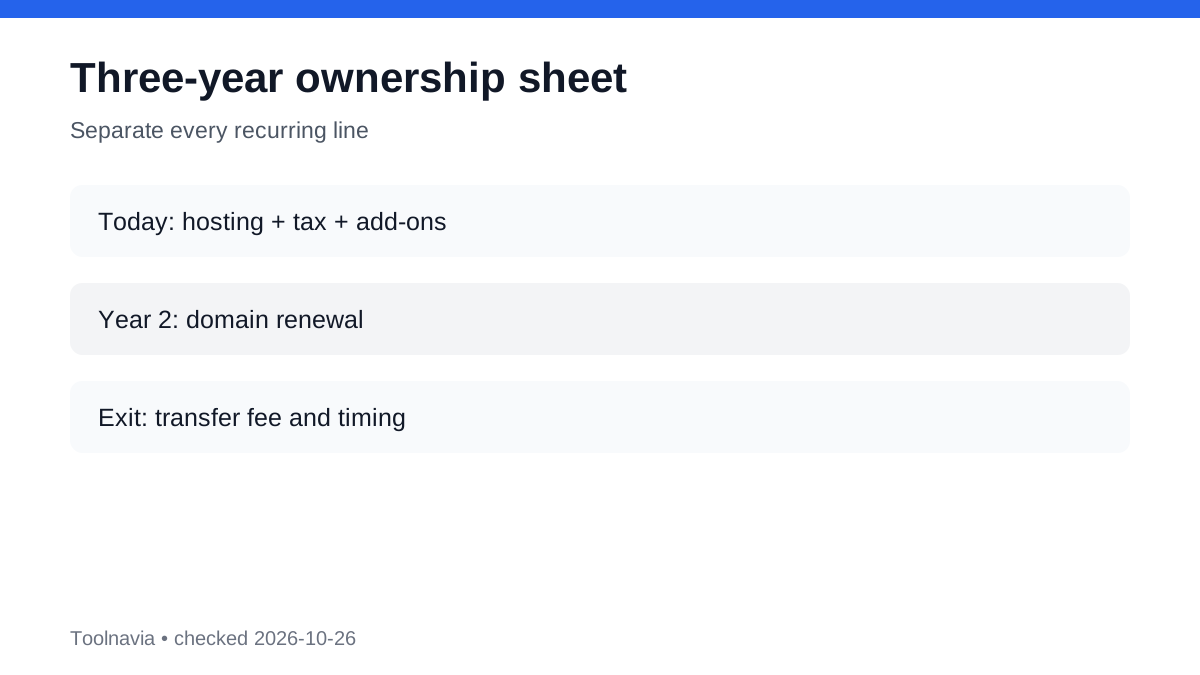
Build the decision sheet with separate rows rather than one “hosting price”:
1. **Today:** prepaid Starter charge, tax and selected add-ons. 2. **Year one:** domain registration credit, privacy or protection add-ons. 3. **Year two:** domain renewal plus the still-active hosting commitment. 4. **Hosting renewal:** the post-intro hosting rate and billing term. 5. **Exit option:** transfer fee, whether a year is added, and any 60-day timing limit. 6. **Failure cost:** redemption fee and downtime risk if renewal fails.
If the cart does not show the year-two domain renewal, ask support to state it in writing before purchase. If the answer changes by TLD, use your exact extension—not a generic .com assumption.
Who should use the bundled domain?
Use the bundled domain when you want one small site, accept the required hosting term, prefer one billing portal and have recorded the standard renewal amount. It is especially convenient for a new project with no registrar history.
Register elsewhere or plan an early transfer when domain independence matters more than first-year savings, you manage several brands, or the renewal and transfer prices are not clear enough for your budget. Start that decision well before expiry, not during the final week.
Checkout and renewal checklist
- Confirm the eligible TLD and exact first-year domain credit. - Confirm whether the free .com requires a two-year hosting purchase. - Save the domain renewal amount, date, currency and tax treatment. - Save the hosting renewal amount separately. - Review privacy and renewal-protection add-ons. - Add a calendar reminder at least 30 days before domain expiry. - If transferring, copy DNS, update contacts, unlock the domain and request the EPP code. - Keep the old registrar active until transfer and DNS checks finish.
**Bottom line:** the bundle can be useful, but the first-year saving is the smallest part of the ownership decision. Buy only after the cart makes the year-two domain cost and the hosting commitment independently clear.
Affiliate disclosure: Toolnavia may earn a commission from an eligible hosting.com purchase. This does not change the renewal and transfer analysis.