TOOLNAVIA / BUYING GUIDE
HostArmada Web Warp vs Speed Reaper: Is $23.76 More Worth It?
The short answer
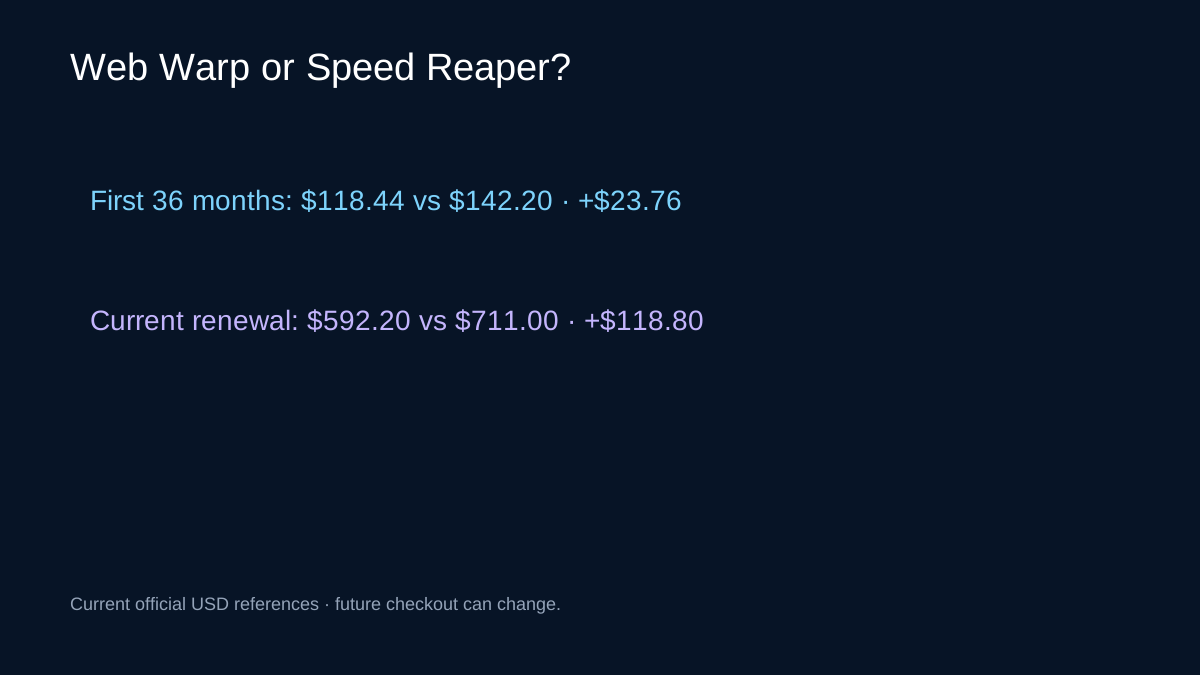
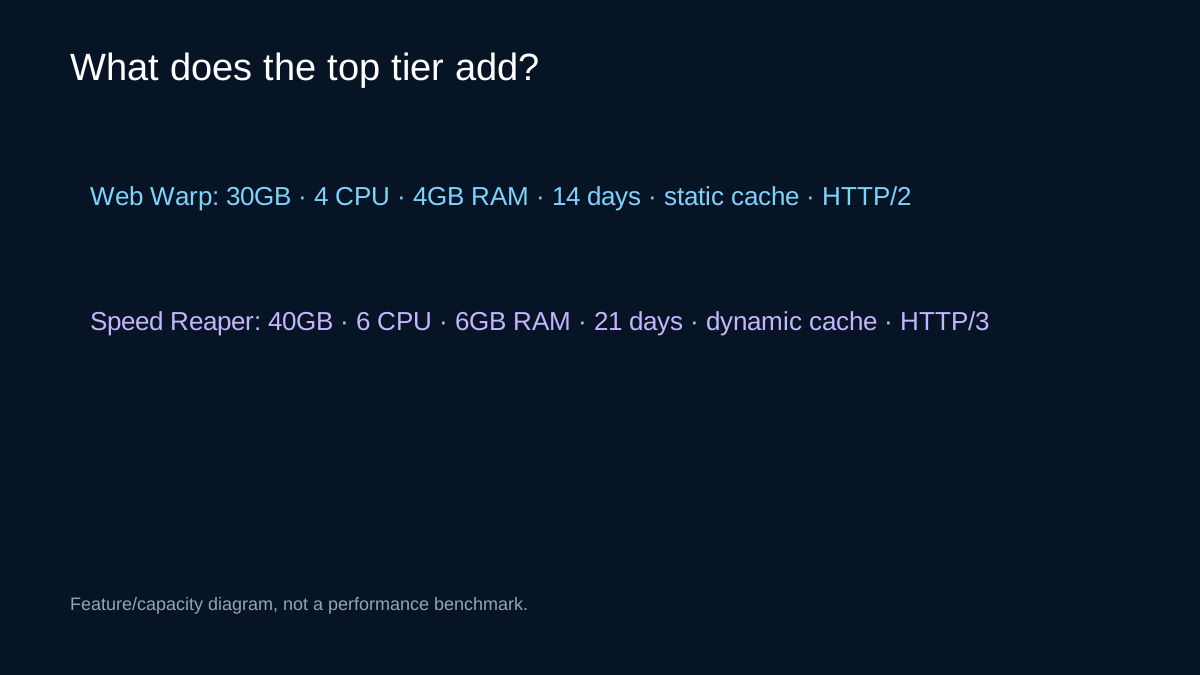
HostArmada Speed Reaper costs only $23.76 more than Web Warp over the first 36 months at today's published prices. Web Warp is $3.29/month equivalent, or $118.44 for 36 months; Speed Reaper is $3.95/month, or $142.20. The top tier adds 10GB storage, 2 CPU cores, 2GB RAM, another week of daily backup history, two more assisted transfers, and the dynamic-cache/HTTP/3 stack.
Affiliate disclosure: Toolnavia may earn a commission from qualifying HostArmada purchases through the approved affiliate links on this page.
At a glance
- Best for
- HostArmada multi-site buyers deciding whether extra resources, dynamic caching/HTTP3, longer backups or more migrations justify Speed Reaper.
- Price model
- $118.44 vs $142.20 first 36 months; current 36-month regular/renewal $592.20 vs $711.00
- Check first
- No Toolnavia speed benchmark; unlimited sites still share finite resources; future prices can change.
The first-term premium is tiny; renewal makes the decision real
Web Warp costs $118.44 over the first 36 months. Speed Reaper costs $142.20, a difference of just $23.76 across three years.
At today's regular/renewal references, Web Warp is $16.45/month, or $592.20 over 36 months. Speed Reaper is $19.75/month, or $711.00. The current three-year renewal premium is therefore $118.80.
That makes Speed Reaper easy to justify during the promotional term when its extra capabilities are useful, but vague future-proofing is not enough reason to keep paying the higher renewal.
Both plans already solve the multi-site problem
HostArmada's KB documents both Web Warp and Speed Reaper as unlimited-site plans. Site count therefore does not decide this upgrade.
The difference is the resource pool: Web Warp provides 30GB NVMe, 4 CPU cores and 4GB RAM; Speed Reaper provides 40GB, 6 cores and 6GB.
Unlimited sites remain bounded by storage, CPU, RAM and application behavior. Ten small brochure sites and three dynamic stores do not impose the same load. The top tier provides more headroom, not unlimited capacity.
Speed Reaper adds 50% more CPU and RAM
Moving from 4 cores/4GB to 6 cores/6GB is a 50% increase in the published CPU and RAM allocation. Storage rises from 30GB to 40GB.
HostArmada's planning guidance also rises from roughly 60GB acceptable bandwidth and about 60K estimated monthly visitors on Web Warp to roughly 90GB and about 120K on Speed Reaper. Those figures are planning estimates, not hard traffic caps or performance guarantees.
The upgrade is easier to defend when the account is already using Web Warp heavily, not simply because the top tier sounds faster.
Dynamic caching and HTTP/3 are the functional differentiators
The current comparison table lists static-file server caching and HTTP/2 for Web Warp, while Speed Reaper lists static plus dynamic server caching and HTTP/3 over QUIC.
This can matter for dynamic WordPress or WooCommerce workloads where page generation and repeat requests are important. It is still not a Toolnavia speed benchmark. Plugins, database behavior, region and cache configuration can dominate real results.
If Web Warp is already stable for the actual workload, do not upgrade solely because HTTP/3 appears on the feature table.
Backup history rises from 14 to 21 days
HostArmada's backup KB documents fourteen days of daily backups for Web Warp and twenty-one days for Speed Reaper.
The extra week can matter when a content, plugin or data problem is discovered late. It buys a longer provider-side recovery history, but a business-critical site should still keep an independent off-provider backup.
Five transfers matter only when you actually have five sites to move
HostArmada's current plan table lists three free website transfers on Web Warp and five on Speed Reaper, while its migration documentation describes source-access and compatibility requirements.
A buyer moving four or five existing sites can turn those additional assisted transfers into real labor saved. If only one or two sites need moving, the transfer count alone is not a reason to upgrade.
When Web Warp is already enough
Choose Web Warp when 30GB storage, 4 CPU cores, 4GB RAM, fourteen days of backups and its static-cache/HTTP2 stack comfortably fit the sites you actually run.
It is the better long-term value when the extra 2 cores/2GB, longer recovery history or Speed Reaper caching stack would remain unused, especially because the current renewal gap is much larger than the first-term gap.
When Speed Reaper earns the extra $23.76
Choose Speed Reaper when the account is approaching Web Warp's storage or CPU/RAM envelope, a dynamic WordPress/WooCommerce workload can use the top-tier caching stack, you want twenty-one days of provider backup history, or you need four to five assisted migrations.
The first-term premium is so small that one real top-tier requirement can justify it. The renewal premium is large enough that vague future-proofing is not a sufficient reason.
Bottom line
For the first 36 months, Speed Reaper is a compelling upgrade: only $23.76 more for 10GB extra storage, 2 more CPU cores, 2GB more RAM, another week of daily backup history, two more transfers and the dynamic-cache/HTTP3 stack.
Web Warp remains the better buy when its 4-core/4GB envelope already fits. Speed Reaper is worth it when you can identify a real resource, caching, recovery or migration need before checkout.