TOOLNAVIA / BUYING GUIDE
HostArmada Flux VPS: 4GB RAM, One Monthly Backup and the Annual Bill
The short answer
HostArmada Flux is a candidate for a small Linux workload whose owner can administer the server. Its 4GB memory allocation offers more room than entry-level Spark, but the included remote backup is only monthly. This document-based guide asks whether that resource step and recovery arrangement justify an annual commitment; it is not a hosting benchmark.
At a glance
- Best for
- A measured small Linux workload with an administrator who values root access and will operate independent, verified backups.
- Price model
- Annual display $5.18/month equivalent; base arithmetic $62.16/year. Currency, tax and exact checkout unverified.
- Check first
- Outsourced software management, assumed daily provider backups, an unverified monthly-payment price or a buyer relying on post-cancellation data recovery.
Compare the resource step, not a speed promise
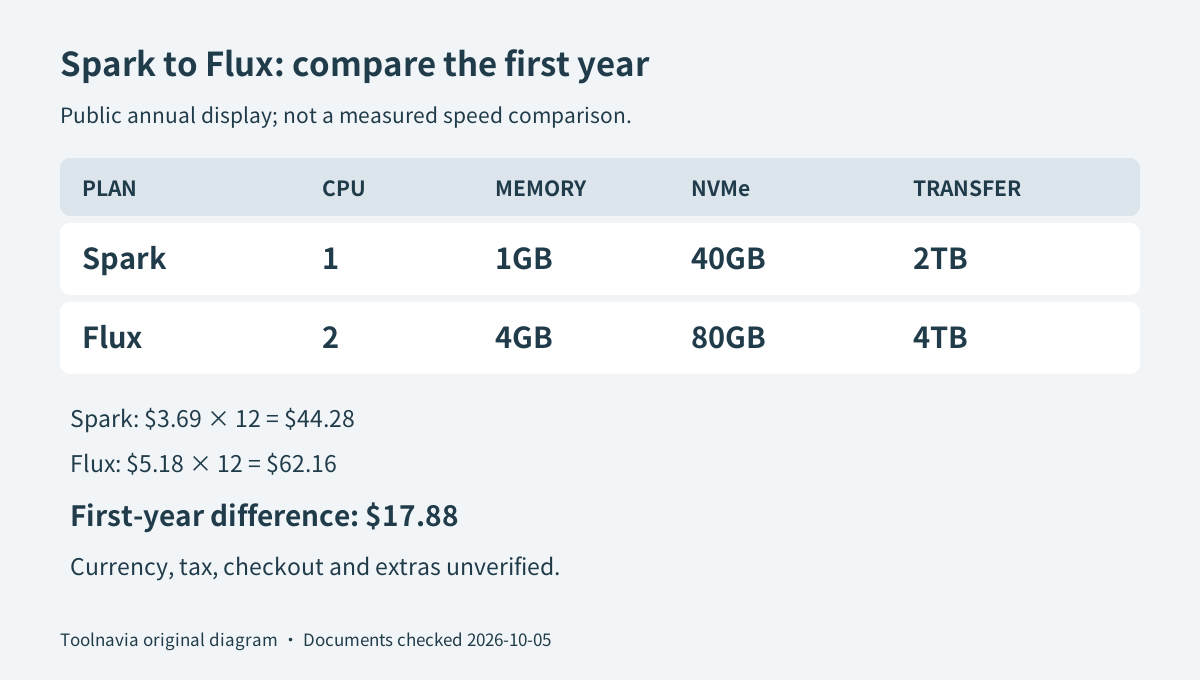
The annual-plan table lists Flux with two CPU cores, 4GB RAM, 80GB NVMe storage and 4TB transfer. Spark lists one core, 1GB RAM, 40GB and 2TB. For a modest application, the extra memory may accommodate services that leave too little headroom on a 1GB machine. It does not prove four times the performance.
Measure memory, disk and CPU during a representative task, including maintenance. A larger allocation and the documented upgrade path are useful for capacity planning, but an application bottleneck may require configuration work rather than another plan. Confirm the selected location and the treatment of excess transfer; neither a global location count nor an overage charge is established here.
Four controls do not make the software managed
Beyond a defined allocation and upgrade path, full root access lets an administrator choose a compatible Linux stack. An included dedicated IPv4 address with reverse-DNS control helps manage the server's network identity; it does not guarantee email delivery. Manual snapshots provide a checkpoint before changes. These are four practical benefits, not evidence of measured reliability.
The exact unmanaged-support FAQ covers hardware, networking and virtualization. Installation, configuration and troubleshooting inside the server remain your responsibility unless a paid technical-support add-on is purchased. A general support headline should not be read as outsourced application management.
cPanel and Plesk are paid options; CyberPanel and aaPanel are listed as free, and a clean operating system is available. Confirm the supported version and any license or assistance charges before ordering. A graphical panel does not remove the need to patch the stack.
One monthly backup can leave a large recovery gap
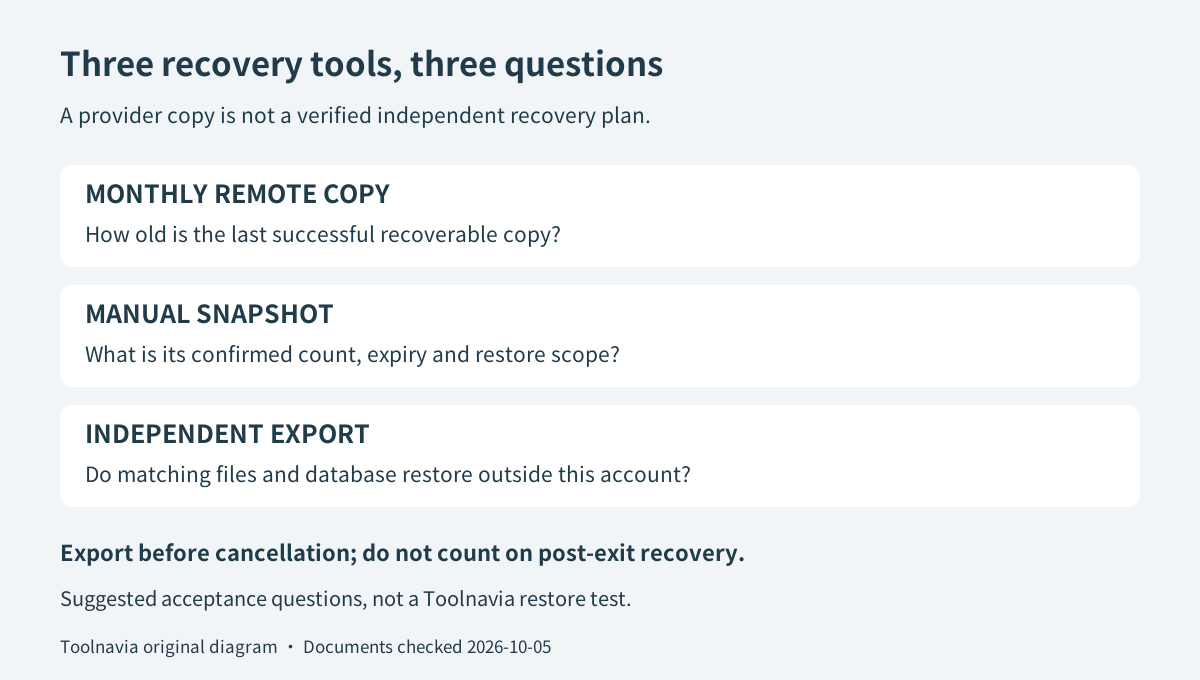
The current FAQ specifies one monthly backup on a remote server. Additional backup slots can be added during ordering, but their prices and exact retention were not captured. The page also describes manual snapshots without establishing a guaranteed snapshot count or retention period. Do not turn those statements into a daily version-history promise.
Ask a practical question: how much content changes between recoverable copies? A recent configuration snapshot and a month-old provider copy solve different problems. For WordPress, a complete recovery normally needs matched files and database content. Schedule independent exports according to acceptable data loss, verify failures and keep copies outside the hosting account. Remote provider storage is not independence from that provider account.
Calculate the year and the extras separately
The displayed annual Flux rate is $5.18 per month, giving $62.16 for twelve months of base hosting. Its regular-price reference is $11.52, or $138.24 for another twelve months if unchanged. Spark's corresponding first-term arithmetic is $44.28, so the Flux resource step adds $17.88 in that initial year. These are calculations, not captured invoices.
The retrieved table uses a dollar symbol; exact billing currency, tax and the personalized checkout remain unverified. Do not present $5.18 as a cancel-anytime monthly payment. Budget optional panel licenses, software assistance, extra backup slots and domains separately. The renewal policy normally uses the regular price unless the promotion says otherwise. Save the chosen term, complete amount due and recurring extras together.
Validate a disposable copy during the first week
Use this suggested task before moving production. Keep the old host, inventory the application and export its data. Deploy a disposable copy on a supported operating system, record resource use and configure independent backups. Create a permitted snapshot before a harmless change, then test restoration only on that disposable copy.
Compare files and database records, login, forms and scheduled jobs. Also restore an independent export so the procedure does not depend on one provider checkpoint. The deliverable is a working recovered copy and a written schedule with a known last-successful-copy date—not merely a green backup icon. Toolnavia has not performed this test.
The product and initial-order policy state a seven-day VPS refund window. The policy also contains a later 45-day exclusion sentence; that does not establish a 45-day VPS trial. Confirm order-specific eligibility, especially for nonrefundable add-ons and third-party services.
Export before cancellation, not afterward
Saved payment methods can be charged seven days before renewal. Use the dashboard or Billing cancellation process and retain confirmation. For customer-canceled VPS service, the policy says data is kept for no more than 24 hours after cancellation takes effect. That is not a guaranteed grace period for recovering forgotten files.
Choose Flux when measured capacity and root control are useful and someone will maintain the software and backups. Keep a satisfactory existing host when those duties outweigh the benefit. HostArmada's public cash affiliate table explicitly includes unmanaged VPS, but Toolnavia approval for this offer is not evidenced; tracking remains disabled.