TOOLNAVIA / BUYING GUIDE
HostArmada Speed Reaper vs ScalaHosting Build #1: Is Managed Cloud Worth $936 More?
The short answer
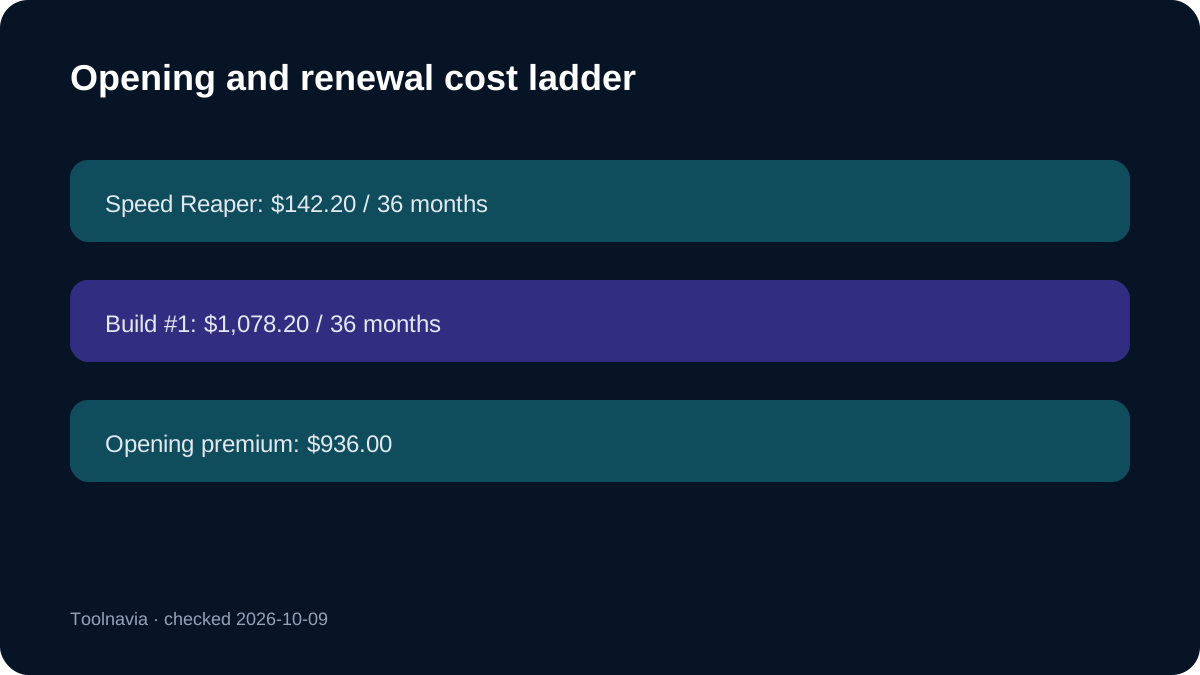
Speed Reaper and ScalaHosting Build #1 are not two versions of the same product. One is a high-end shared account; the other is a fully managed cloud VPS. That distinction explains the extraordinary price gap: at the current references, Speed Reaper costs $142.20 for 36 opening months, while Build #1 costs $1,078.20 for the same 36-month period. The managed-cloud premium is $936 before tax, add-ons or future price changes. Fresh search results mostly split into broad provider comparisons, standalone Build #1 reviews and isolated Speed Reaper tests; none resolves this exact category-and-horizon decision, so those pages inform intent rather than plan facts.
At a glance
- Best for
- Sites still fitting shared hosting, unless managed isolation and server ownership solve a measured business problem.
- Price model
- $142.20 vs $1,078.20 over opening 36 months
- Check first
- Current prices are volatile; CPU/RAM labels use different resource semantics; neither backup layer is a sole-copy guarantee.
The $936 question
If you are buying for a brochure site, portfolio, modest content property or several predictable WordPress sites, Speed Reaper is the default value choice. Its current offer publishes unlimited websites, 40GB NVMe, 6 CPU cores, 6GB RAM, dynamic caching and 21 daily backup points. Paying $936 more only makes sense when the cloud boundary solves a costly problem: isolated resources, server-level management, a dedicated IP, vertical scaling or clearer incident ownership.
Build #1 is not an upgrade for someone who merely wants “more hosting.” It is an operating model. ScalaHosting publishes 2 CPU cores, 4GB RAM, 50GB NVMe, unmetered bandwidth, automatic offsite backups and a dedicated IP, then bundles server setup, patching, security, configuration and troubleshooting into the managed service.
Why the CPU numbers are not comparable
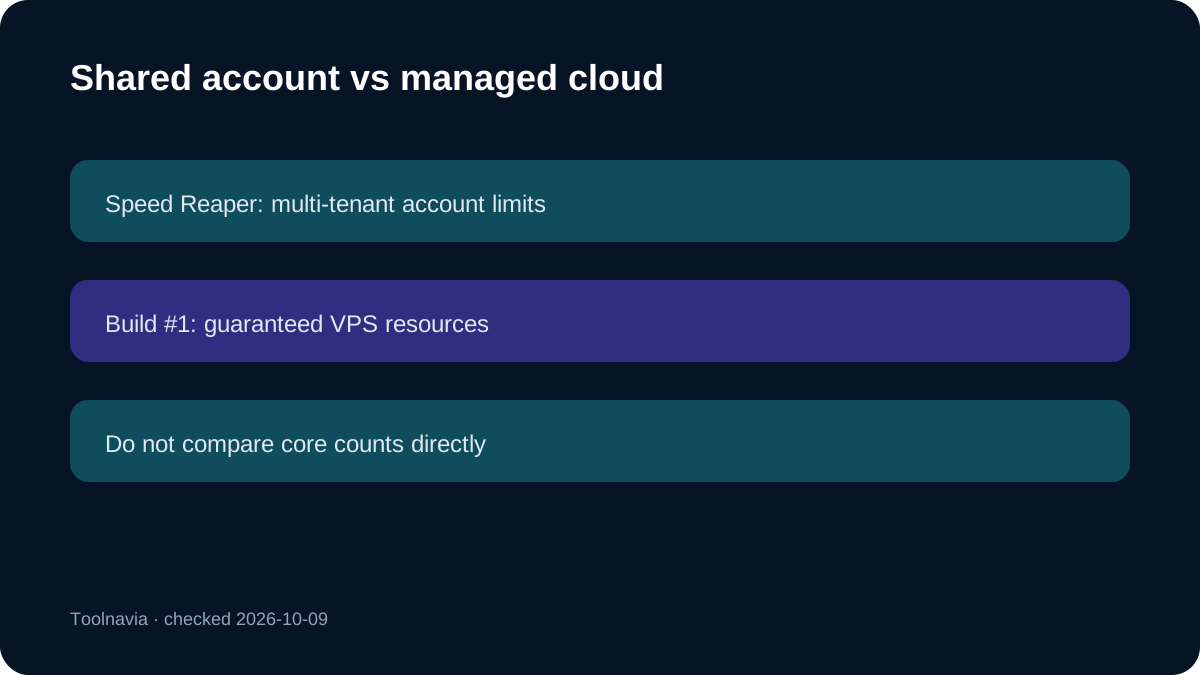
A tempting shortcut is to say that 6 cores beats 2 cores. Do not make that purchase from the labels alone. Speed Reaper's 6 CPU and 6GB are shared-account limits inside a multi-tenant service. ScalaHosting describes Build #1's CPU, RAM, storage and network as dedicated or guaranteed VPS resources. They differ in tenancy, scheduling and administrative scope, so the counts are not an apples-to-apples benchmark.
The correct question is whether your workload needs a predictable isolated envelope. Persistent PHP workers, busy databases, long-running jobs, custom services and multiple revenue sites can make that boundary valuable. A cached marketing site with occasional edits may never exploit it. Neither provider's specification proves a specific page-load time, concurrency level or uptime for your site.
Workload fit before infrastructure
Choose Speed Reaper when your problems can still be solved inside a shared account: caching is effective, background tasks are light, storage remains below 40GB, and you do not need server-level software changes. Five free website transfers, cPanel familiarity and 24/7 support reduce migration friction. This plan is particularly rational when the project has a fixed three-year budget and no one has demonstrated a resource bottleneck.
Choose Build #1 when the business already has evidence: repeated resource throttling, a plugin stack that needs server tuning, database-heavy commerce, many client sites that share operational risk, or downtime whose cost exceeds the premium. Managed service matters most when nobody internally owns patching, security updates and incident triage. Buying it for projected traffic alone is speculation; buying it to remove a measured constraint is a decision.
Management, SPanel and control
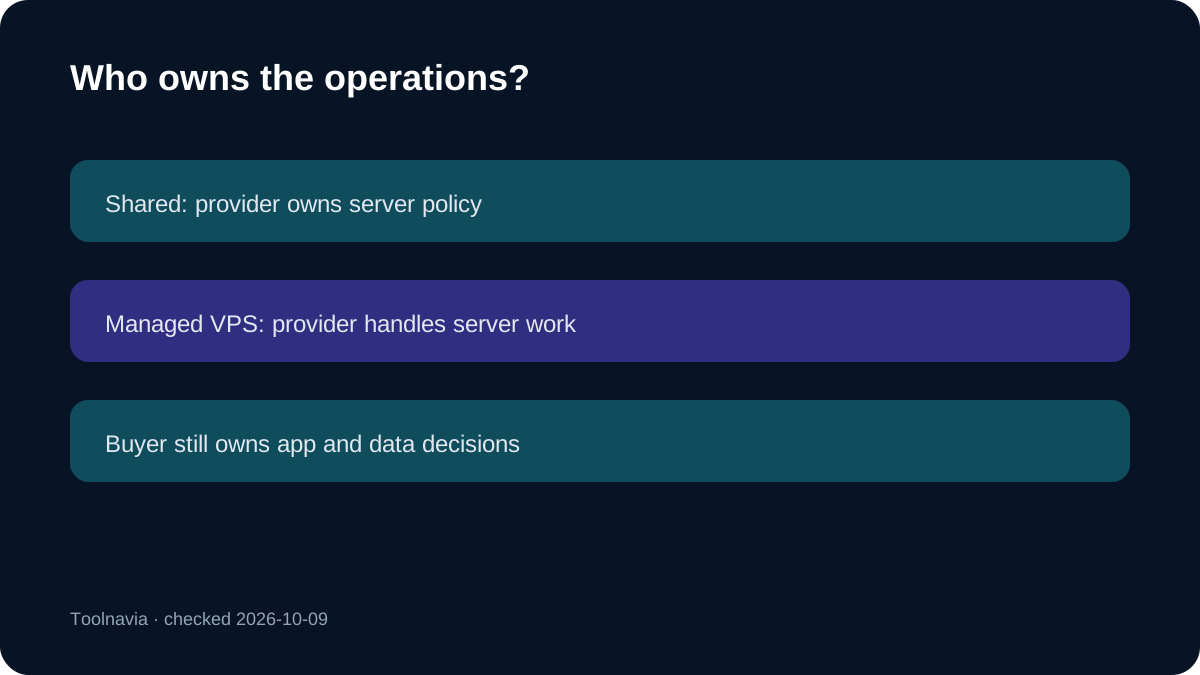
Speed Reaper keeps the conventional shared-hosting bargain. The provider controls the server, while you operate sites through cPanel and application tools. That is simple and inexpensive, but server configuration and installed services stay within the host's shared policy.
Build #1 moves the boundary. SPanel is included, the VPS can host multiple websites, and the provider says management includes setup, configuration, security, updates and supported software installation. A dedicated IP may also matter for access rules, reputation separation or applications that require one. This is meaningful control, yet it is not unlimited control: support scope, acceptable use and compatible software still govern what the managed team will do.
Backups are not a purchase guarantee
HostArmada advertises 21 daily backup points for Speed Reaper. Its service-level language, however, treats backups as best effort/as-is and tells customers to maintain independent copies. The practical reading is “useful provider recovery layer,” not “guaranteed disaster recovery.”
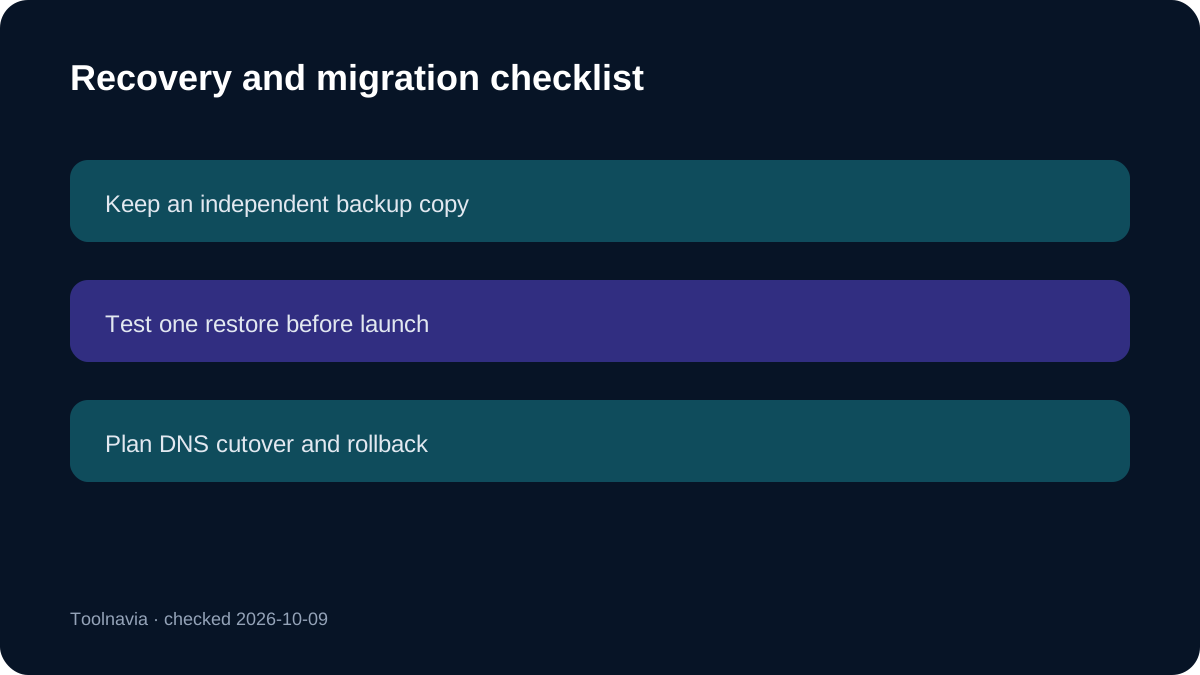
ScalaHosting advertises automatic offsite backups and provides control-panel recovery features, but its terms also disclaim guaranteed backup availability. That leaves the same buyer duty on both products: define recovery point and recovery time objectives, export a separate copy to storage controlled outside the hosting account, and test a restore. Build #1 may reduce the operational work, but neither plan transfers ownership of your only copy.
Six-year cost under today's references
The opening 36-month model is straightforward: Speed Reaper is $3.95 × 36 = $142.20; Build #1 is $29.95 × 36 = $1,078.20. Difference: $936.00. For a following 36 months at today's published renewal references, Speed Reaper is $19.75 × 36 = $711.00 and Build #1 is $54.95 × 36 = $1,978.20. Difference: $1,267.20.
A six-year current-reference model totals $853.20 for Speed Reaper and $3,056.40 for Build #1, a $2,203.20 gap. That is a planning scenario, not a quote: renewal prices, taxes, optional licenses and add-ons can change, and ScalaHosting's terms say the current renewal price controls the invoice. The gap is large enough that Build #1 should have a business case measured in avoided downtime, staff time or revenue risk.
Which one should you buy?
Buy Speed Reaper if the site is stable on shared hosting, the 40GB ceiling is sufficient, caching handles normal demand and the project benefits more from budget certainty than infrastructure control. Its higher printed CPU/RAM figures should be treated as account capacity, not proof that it will outperform an isolated VPS.
Buy Build #1 if you need guaranteed resources, a managed server boundary, a dedicated IP, server-level intervention or vertical scaling without becoming your own system administrator. The entry configuration has less printed CPU and RAM than Speed Reaper, but its isolation and management are the product. A business that can assign even a few hours of monthly technical work or one material incident to the managed provider may rationalize part of the premium; a hobby site usually cannot.
Migration checklist before paying
First, collect 30 days of CPU, memory, I/O, entry-process and database evidence from the current host. Second, inventory cron jobs, PHP workers, mail, DNS, SSL, staging and custom services. Third, ask both providers who performs the migration and what is excluded. Fourth, confirm checkout term, prepaid total and renewal reference. Fifth, schedule DNS cutover and a rollback window. Finally, run a real restore test after migration.
For Build #1, also confirm that SPanel supports every workflow you depend on and whether any cPanel-specific tooling must change. For Speed Reaper, confirm shared-account limits beyond the headline CPU/RAM. Refund policies can reduce trial risk, but ScalaHosting excludes renewals and software licenses from its stated 30-day policy.
Bottom line
Speed Reaper wins the price decision by an enormous margin and is the sensible default for sites that still fit shared hosting. Build #1 wins only when managed isolation changes the economics of the business: more predictable resource ownership, deeper server help, a dedicated IP or reduced operational risk. The decision is not 6 cores versus 2. It is $936 over the first 36 months for a different responsibility boundary.