TOOLNAVIA / BUYING GUIDE
GoDaddy Economy vs Bluehost Starter: 1 Year or 36 Months?
The short answer
GoDaddy Economy is the shorter one-site commitment with daily previous-day recovery; Bluehost Starter is the lower effective monthly rate for up to ten sites, but requires 36 months and uses weekly backups.
**Quick verdict:** choose by commitment, actual site count and recovery cadence—not the displayed monthly rate.
At a glance
- Best for
- Buyers deciding between GoDaddy's shorter one-year commitment and daily backup path versus Bluehost's ten-site allowance and lower 36-month effective price.
- Price model
- GoDaddy $83.88 first year; Bluehost $143.64 first 36 months and $359.64/36-month renewal observed
- Check first
- Different commitment lengths; GoDaddy renewal needs live-cart confirmation; both need external backups.
The first invoice is not the monthly headline
[Check GoDaddy Economy](/go/godaddy-web-hosting-economy-official-usd) or [check Bluehost Starter](/go/bluehost-shared-hosting-starter-official-usd). The selected cart, market and tax treatment control.
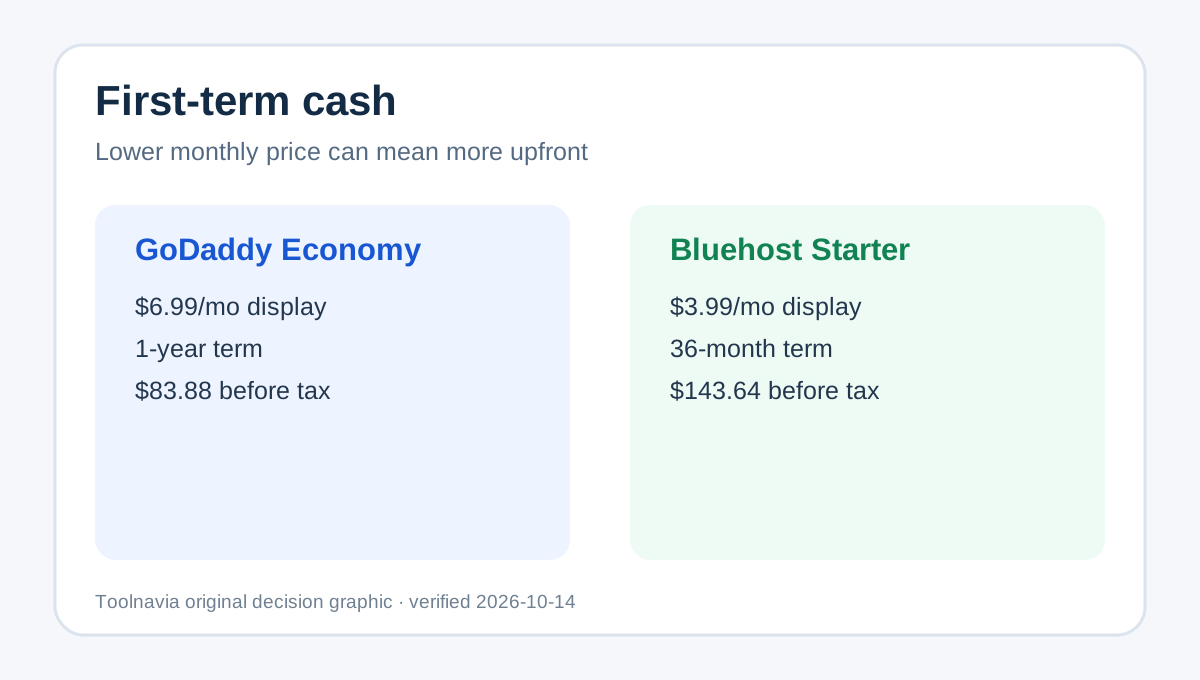
GoDaddy's observed Economy card shows $6.99 per month for the first one-year term, or $83.88 before tax. Bluehost Starter shows $3.99 per month for 36 months, or $143.64 before tax. Bluehost has the lower effective monthly rate, but GoDaddy requires less cash and less time up front.
That difference changes the cancellation decision. A buyer who is unsure about the project may value a one-year checkpoint more than a lower three-year rate. A buyer with several established sites may accept the longer term to spread the cost across more properties.
Do not compare $6.99 with $3.99 as if both were month-to-month. Record the total charged today, the commitment end date and the renewal choice before paying.
Renewal needs a term-matched worksheet
Bluehost publishes Starter renewal options: $15.99 month-to-month, $11.99 per month on a 12-month renewal and $9.99 per month on a 36-month renewal. Renewing for another 36 months at $9.99 would total $359.64 before tax.
GoDaddy's current one-year card does not show one universal Economy renewal total in the same result. A separate official three-year landing page shows a materially different promotional path and renewal example. That is evidence that term, campaign and cart selection matter—not permission to attach the three-year renewal to the one-year offer.
For a fair three-year model, use the live Economy renewal quote after selecting the one-year offer. For Bluehost, compare the 36-month renewal with shorter renewal options instead of assuming $9.99 applies without another long commitment.
One website versus ten
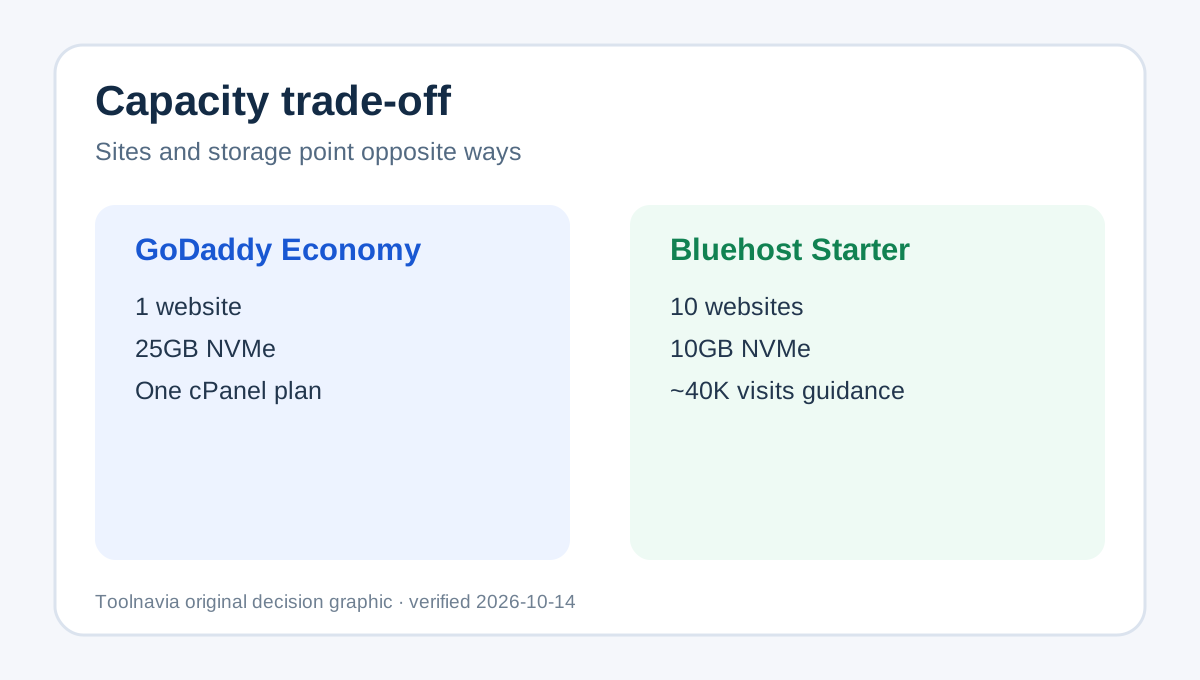
Economy includes one website and 25GB NVMe storage. Starter includes ten websites and 10GB NVMe storage. Site count and storage point in opposite directions.
Bluehost fits a buyer with several lightweight brochure, portfolio or content sites. But the 10GB allowance is shared across the account, so ten sites do not each receive 10GB. Measure current files, databases, email usage and staging copies before migration.
GoDaddy fits a buyer with one media-heavier site that values a larger published storage allowance. The extra 15GB has no value if the buyer actually needs a second production site; Economy would then require an upgrade or another plan.
Bluehost also describes Starter as suitable for roughly 40,000 visits per month. Treat this as provider guidance, not a performance guarantee. Plugins, caching, database activity and concurrent traffic can change the real result.
GoDaddy's official shared-hosting limits list Economy with one accessible CPU core, 512MB RAM, 10,240 KB/s I/O and 20 entry processes. These are account ceilings, not dedicated hardware. A comparison article also frames both providers around renewal, SSL and domain inclusion; its figures are used only as a search-intent check, while official pages control every exact claim.
Daily versus weekly backups
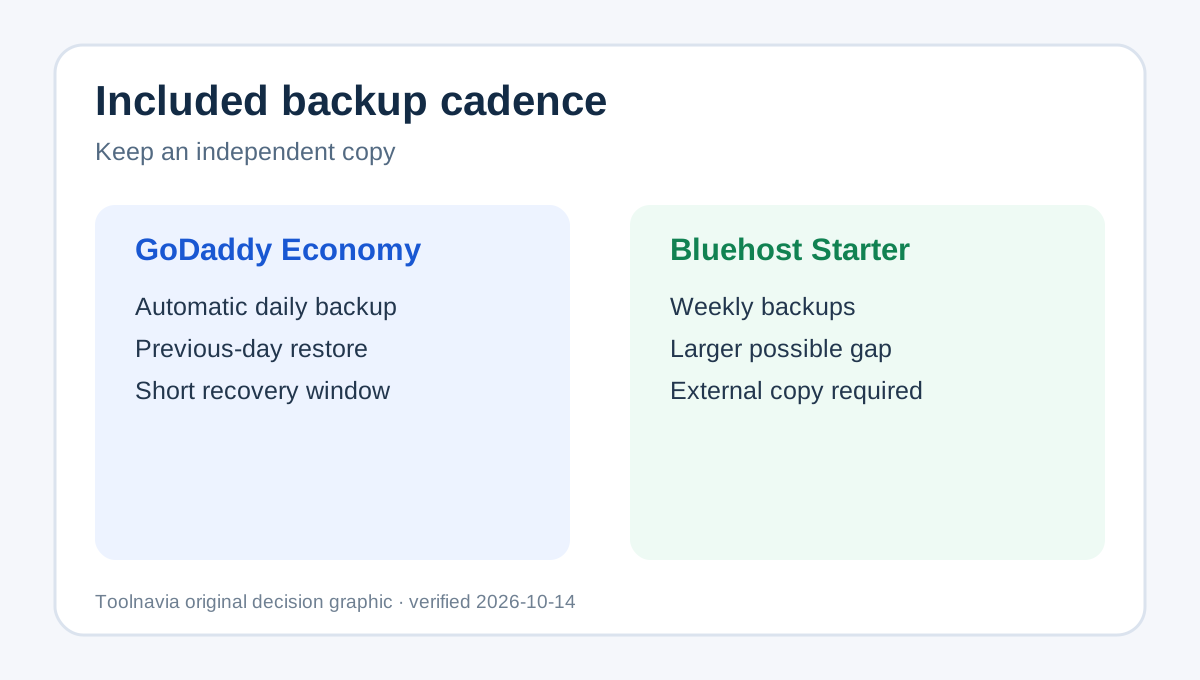
GoDaddy says all Web Hosting plans include automatic daily backups and recovery of the hosting account from the previous day. This is a clearer short-window rollback path for yesterday's failed update.
Bluehost Starter lists weekly website backups. A weekly copy may leave a larger gap between the last backup and an incident. It can still be useful, but a frequently changing store, membership site or daily publisher should not rely on that cadence alone.
Neither backup label defines a complete disaster-recovery plan. Keep an independent copy outside the hosting account, document database and file restoration, and test recovery. Buyers needing several restore points or a defined recovery objective should price a stronger backup service or higher plan.
Domains, SSL and email need expiry dates
Both providers advertise a free first-year domain on the observed entry offer. GoDaddy Economy also labels free email and a one-year SSL certificate. Bluehost Starter lists free SSL and a Pro Email free-trial context across its pricing surfaces.
These are plan inclusions, not coupons and not lifetime-value promises. Before checkout, record when hosting, domain, SSL and email each renew. The full stack can cost more than the hosting line alone.
Bluehost includes free CDN, a migration tool and managed WordPress updates. GoDaddy provides cPanel and a familiar domain-hosting workflow. These differences matter when they replace a tool or reduce migration effort; they should not be converted into invented performance savings.
Support and operational fit
Bluehost Starter lists 24/7 chat support but no phone support on the detailed Starter card. GoDaddy promotes 24/7 support for web hosting. A buyer who specifically needs phone escalation should verify the channel for the selected region and account before treating it as guaranteed.
Bluehost's own direct comparison is useful for categories such as uptime, backups, support and migration, but it compares Bluehost Business with GoDaddy WordPress Deluxe—not Starter with Economy. This article therefore takes exact plan facts from the current plan pages and uses comparison pages only to check decision structure.
Who should choose GoDaddy Economy
Choose Economy when:
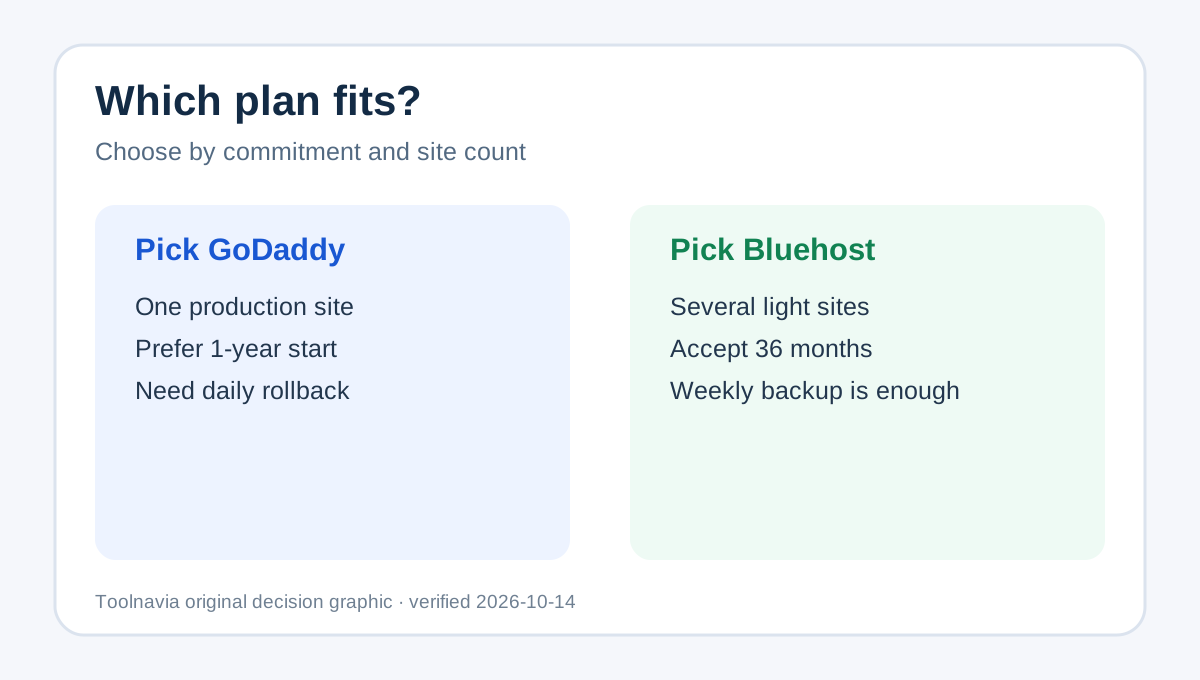
- one production website is enough; - paying $83.88 before tax for the first year is preferable to a 36-month commitment; - daily previous-day recovery matters; - 25GB storage is more valuable than extra site slots; - the live renewal and bundled-service expiries fit the budget.
Economy is weaker for multi-site buyers and anyone who needs a published cross-term renewal table before purchase.
Who should choose Bluehost Starter
Choose Starter when:
- two to ten lightweight sites are planned; - paying $143.64 before tax for 36 months is acceptable; - the published $9.99 monthly rate on another 36-month renewal fits the long-term model; - weekly backups are acceptable because independent backups are already configured; - chat support, CDN and migration tools cover the launch workflow.
Starter is weaker for buyers who want phone support on the entry plan, a short commitment, or daily included backups.
Final choice
GoDaddy Economy is the more flexible first commitment for one site and offers a clearer previous-day recovery path. Bluehost Starter has the lower effective introductory rate and far more site slots, but only when the buyer accepts a three-year prepayment and weekly included backups.
Use [GoDaddy Economy](/go/godaddy-web-hosting-economy-official-usd) for one-site simplicity or [Bluehost Starter](/go/bluehost-shared-hosting-starter-official-usd) for multi-site capacity. Confirm the exact invoice, renewal term, tax, domain, SSL, email and backup access in the live cart.