TOOLNAVIA / BUYING GUIDE
Unbounce Build Annual vs Monthly: $888 Upfront or $99 at a Time?
The short answer
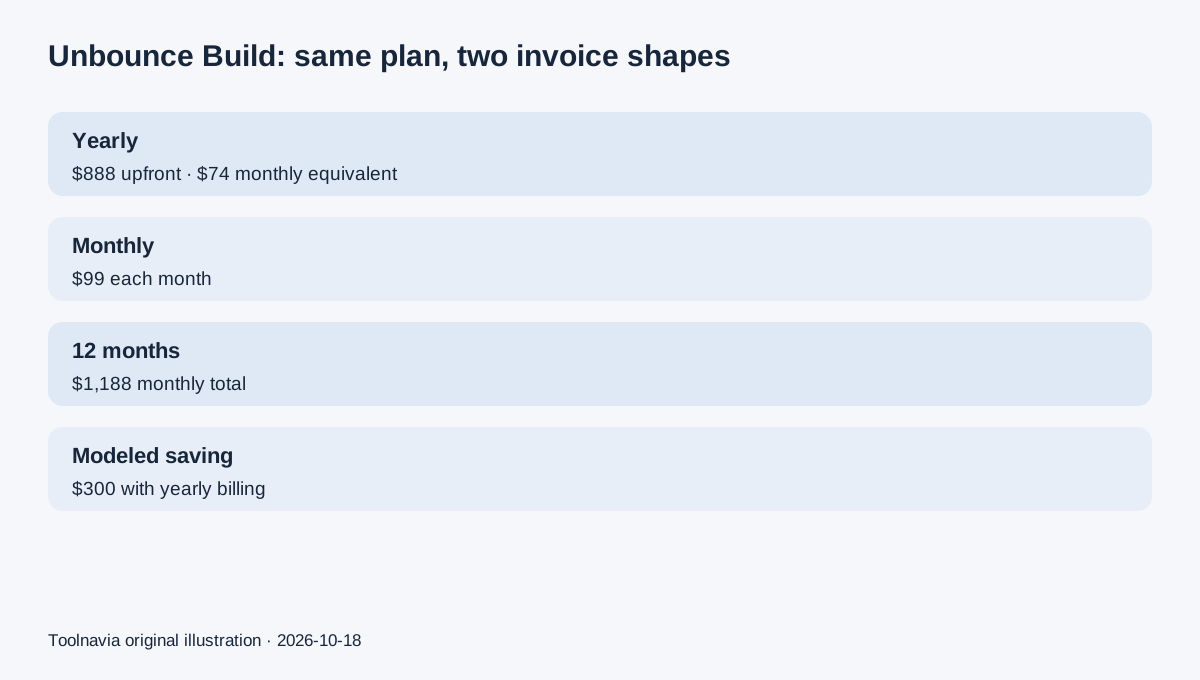
Unbounce Build currently displays **US$74 a month billed yearly** or **US$99 paid month to month**. The yearly label is a monthly equivalent: the base annual commitment is **US$888 upfront**, while twelve monthly payments total **US$1,188**. The modeled full-year difference is **US$300**.
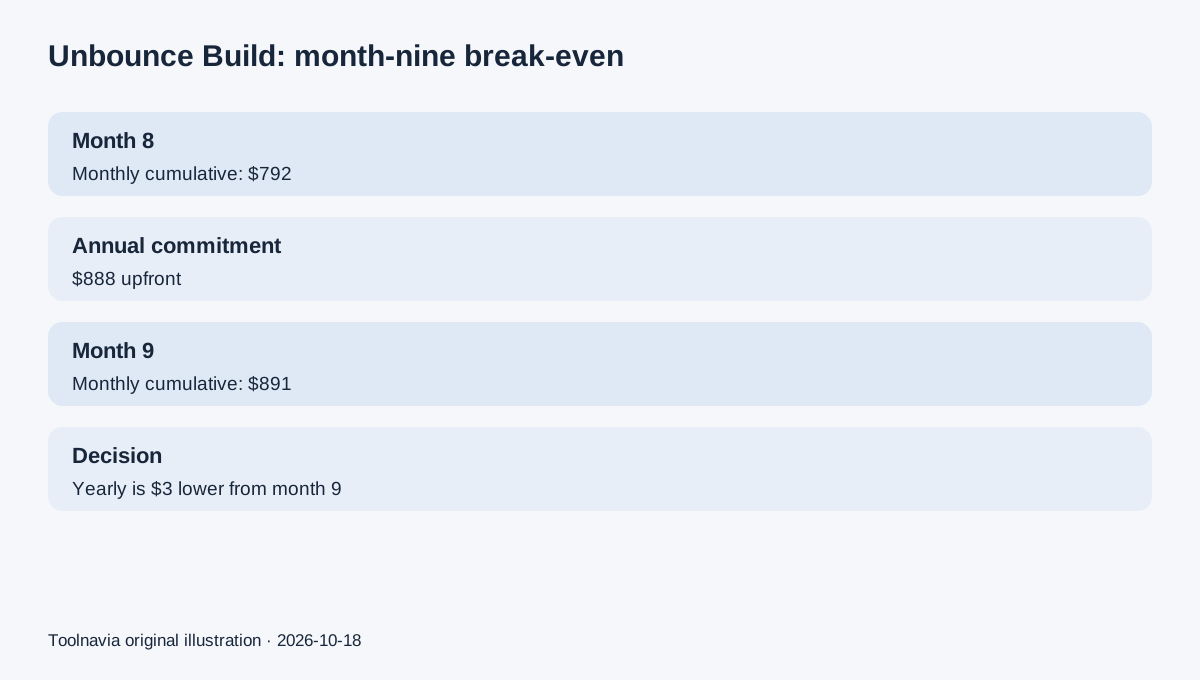
The cash crossover is 8.97 monthly payments: US$888 ÷ US$99. Monthly remains cheaper through month eight at US$792; the ninth payment brings the cumulative total to US$891, US$3 above the annual charge. The real decision is whether Build will still be useful in month nine and whether US$888 can be committed today.
At a glance
- Best for
- Validated Build users expecting at least nine paid months and able to absorb a non-refundable US$888 annual commitment.
- Price model
- US$888 upfront yearly or US$99 monthly; US$300 modeled full-year difference.
- Check first
- US pricing, tax and checkout can change; annual fees are non-refundable and traffic can add overage cost.
The same-plan cost table
This model fixes the product at Unbounce Build, uses current public US pricing and excludes tax, currency conversion and account-specific changes. It does not compare Build with Starter or Experiment.
| Billing choice | Invoice pattern | Base cost | |---|---:|---:| | Yearly | US$74 × 12, paid in advance | US$888 | | Monthly | US$99 each month | US$99–US$1,188 | | Full-year difference | US$1,188 − US$888 | US$300 |
Unbounce advertises “save 25%” for yearly billing. The visible rates imply US$300 ÷ US$1,188 = **25.25%**; that tiny mismatch is normal rounding, not extra cash back. Budget from the displayed invoice totals, not the rounded percentage.
Month nine is the practical break-even
| Expected paid use | Monthly cumulative | Annual commitment | Lower base cash cost | |---|---:|---:|---| | 1–8 months | US$99–US$792 | US$888 | Monthly | | 9 months | US$891 | US$888 | Annual by US$3 | | 12 months | US$1,188 | US$888 | Annual by US$300 |
A buyer unsure about campaign duration is paying for an exit option. Leaving after six months costs US$594 on monthly billing but still leaves the full US$888 annual charge committed. A stable program that reaches month twelve pays US$300 more on monthly billing.
The 14-day trial can answer basic workflow questions before either commitment, but it cannot prove nine months of traffic quality, campaign volume or team adoption.
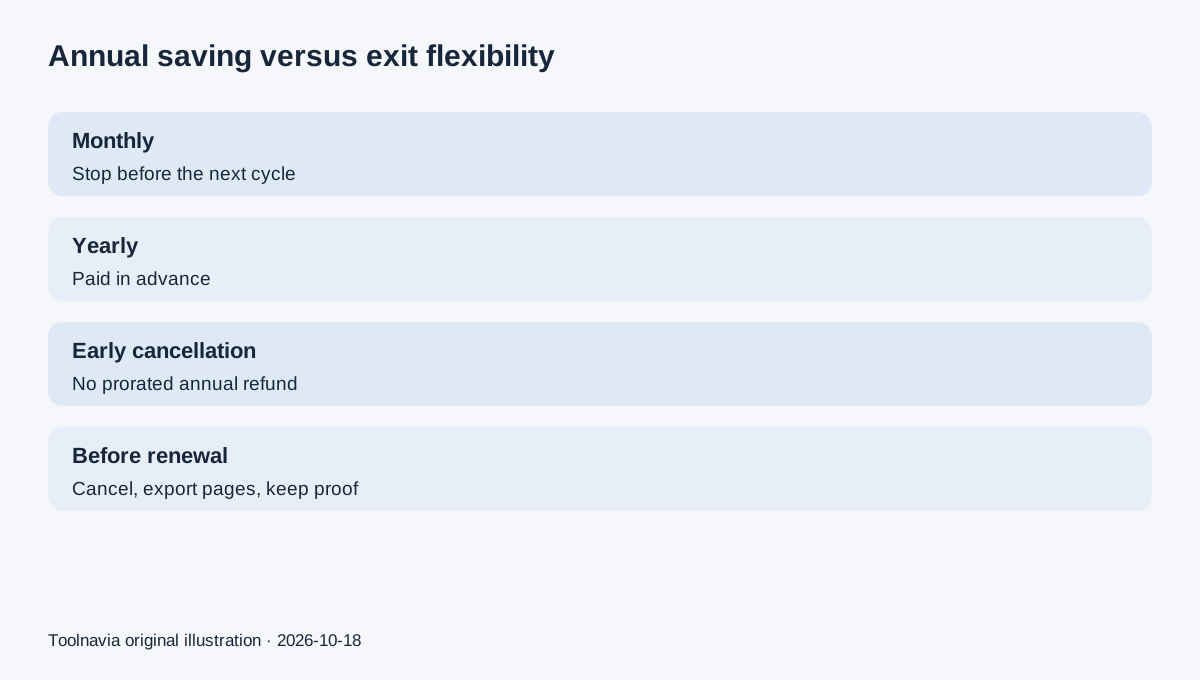
Annual savings come with a no-refund boundary
Unbounce's terms say fees are billed in advance and are strictly non-refundable. Annual cancellation or a switch from annual to monthly takes effect at the end of the term, without a refund or credit for the unused portion. That makes US$888 a commitment, not a month-by-month cap.
Cancel at least one day before renewal and keep proof. Unbounce's cancellation guide says paid access continues until the next billing cycle; content remains with feature changes, and account data may be deleted after 90 days. Export pages and assets before the paid term ends.
Traffic overage does not favor either billing cycle
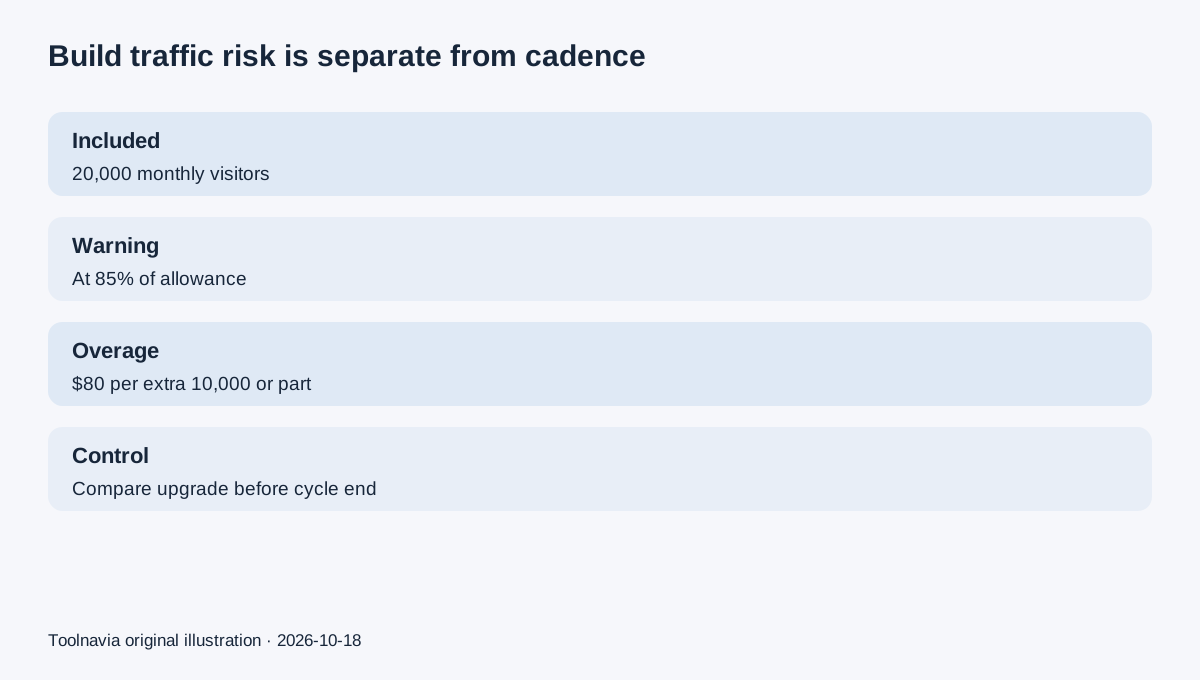
Build includes 20,000 monthly visitors under both billing choices. At 85% usage Unbounce warns the account; after the limit it charges **US$80 per extra 10,000 visitors or any part of a block** while pages continue running.
One 20,001-visitor month therefore models to US$179 on monthly Build before tax (US$99 + US$80). The same US$80 can land on a yearly account, so overage is not a reason to call monthly or annual cheaper. It is a separate capacity risk.
When traffic approaches 20,000, compare the upgrade price before the cycle ends. Repeated US$80 blocks can erase the US$300 yearly saving, but the real fix may be a higher plan—not a different billing cadence.
A monthly pilot can switch later
Unbounce documents a monthly-to-yearly switch: it issues an annual invoice, deducts unused monthly balance and makes the switch date the new annual billing date. This supports a controlled pilot: start monthly, define success evidence, then switch only when the remaining horizon still exceeds nine months.
Do not assume the reverse is equally flexible. The terms state that annual-to-monthly changes take effect at term end and do not refund unused annual time.
What independent pricing pages add
Lander Report, AgentSite, We.Inc and DearConvert independently reproduce the current US$74/US$99 Build prices and the 20,000-visitor boundary. They triangulate the buyer decision but do not override Unbounce's live checkout, terms or support pages.
Build still lacks A/B testing; DearConvert notes testing starts on Experiment. A buyer who needs native experiments should compare plans before comparing billing cycles, because a cheaper cadence on the wrong plan is false savings.
Who should choose each option?
Choose **monthly** when the campaign is a pilot, demand may end within eight months, cash preservation matters, or the team has not validated Build's limits and feature set. The premium buys reversibility.
Choose **yearly** when Build is already validated, the same plan is likely to remain active for at least nine paid months, the US$888 invoice is acceptable, and the account owner can control renewal. At twelve months, the public base-price model saves US$300.
Checkout checklist
1. Confirm the cart says **Build**, not Starter or Experiment. 2. Confirm the same USD market, tax treatment and feature bundle for both cycles. 3. Treat US$74 as an annual monthly-equivalent and record the actual annual invoice. 4. Verify the 20,000-visitor allowance and current US$80 overage rule. 5. Export pages and record the cancellation deadline before annual renewal. 6. If piloting monthly, define the switch trigger before month nine. 7. Save the dated checkout and terms because public pricing can change.
**Buying rule:** stay monthly while uncertainty is worth more than US$3 at month nine; prepay only when the plan is validated, the nine-month horizon is credible and the non-refundable US$888 commitment is affordable.