TOOLNAVIA / BUYING GUIDE
Rytr Premium Annual vs Monthly: Does Month 10 Break Even?
The short answer
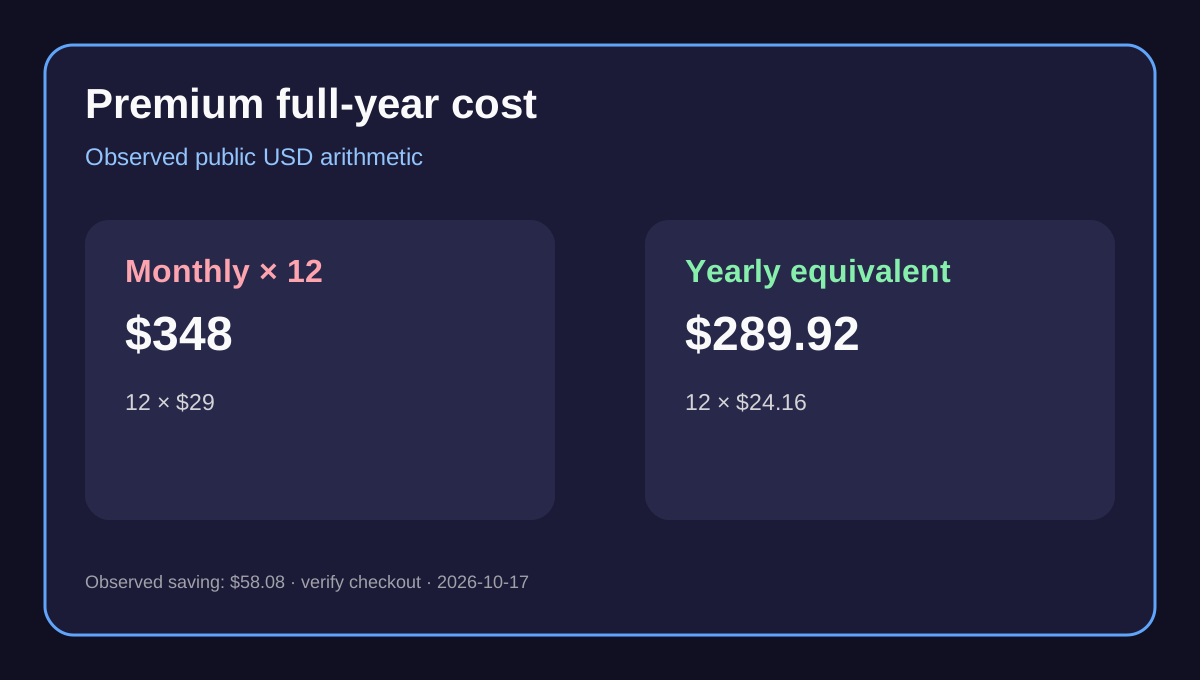
Rytr Premium is currently shown at **US$29 when billed month to month** and **US$24.16 per month when billed yearly**. The annual display is an equivalent monthly rate, not a month-to-month contract: multiplying it by 12 gives **US$289.92**, commonly rounded to about **US$290 paid for the year**. Twelve monthly payments cost **US$348**, so the observed annual advantage is **US$58.08** before tax, currency conversion or a checkout change.
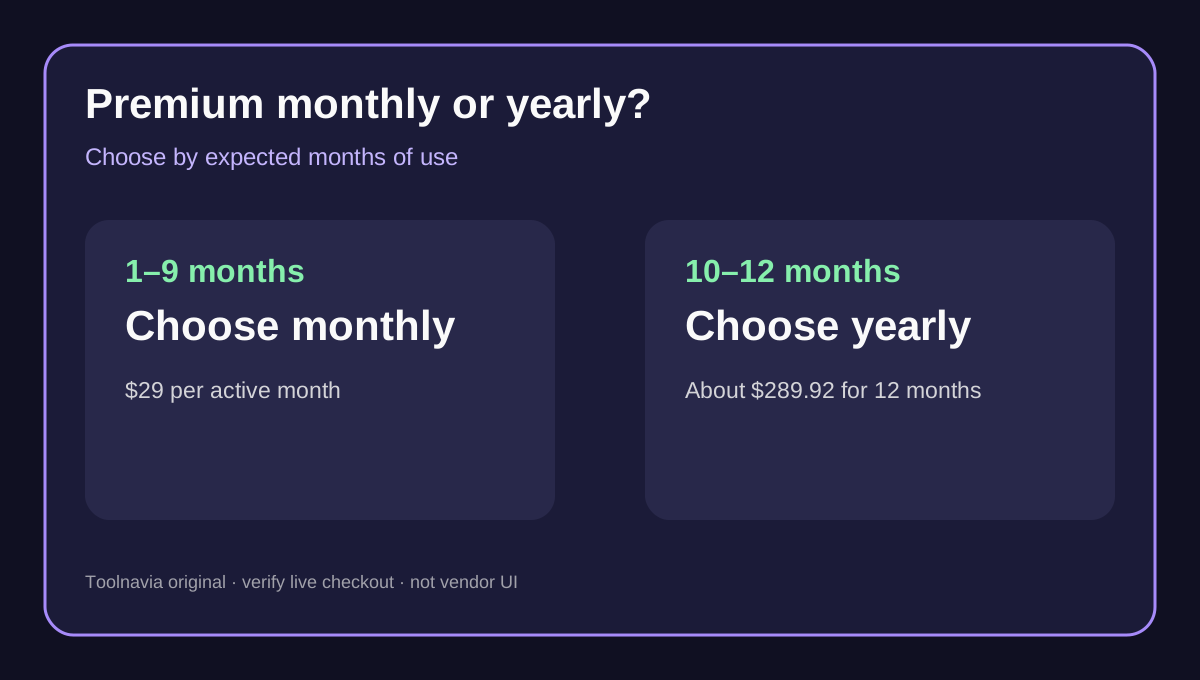
That makes the practical break-even the **tenth billed month**. Nine monthly payments total US$261, still below the annual charge. Ten payments total US$290, fractionally above US$289.92. The annual plan therefore makes sense only when you are comfortable committing for roughly ten to twelve months and the final checkout still matches the observed rate.
At a glance
- Best for
- Rytr Premium buyers choosing between monthly flexibility and a lower yearly total.
- Price model
- Current reference: US$29 monthly or US$24.16 monthly equivalent billed yearly
- Check first
- Yearly billing is a twelve-month paid commitment; verify checkout, tax, currency, renewal and non-refund boundaries.
Full-year cost at a glance
| Premium billing | Displayed rate | 12-month cash cost | Commitment | |---|---:|---:|---| | Monthly | US$29/month | US$348 | Stop before the next renewal | | Yearly | US$24.16/month equivalent | US$289.92 | 12-month paid term | | Difference | — | **US$58.08 less yearly** | Flexibility is reduced |
Chapter, YourAIsoft and VettedSaaS independently corroborate the two displayed Premium prices. StackLighthouse also places Premium at US$29 monthly with a lower annualized rate. These pages are secondary evidence; Rytr's live checkout remains the controlling amount.
The decision changes at month ten
The cleanest way to compare the cycles is to multiply the monthly price by the number of months you realistically expect to keep Premium:
- **1–9 months:** monthly is cheaper in total. At nine months, US$261 is US$28.92 below the observed annual charge. - **10 months:** monthly reaches US$290, effectively matching and slightly exceeding US$289.92 yearly. - **11–12 months:** yearly wins. At 12 months, it saves US$58.08. - **Uncertain adoption:** monthly can still be the better purchase even if it eventually costs more, because it limits the amount committed before you have proven the workflow.
This comparison assumes the same Premium features under both cycles. It does not assign a cash value to the ability to exit early, and it does not assume a prorated annual refund.
Cancellation is not the same as a refund
Rytr says monthly subscriptions can be cancelled anytime, while annual billing requires a 12-month commitment. Its terms add the details that matter at purchase: subscriptions are charged in advance, renew automatically, cancellation stops the next renewal, access continues until the end of the paid period, and fees for the current period are not refunded.
For a monthly buyer, the maximum extra exposure is normally the next monthly renewal if cancellation is missed. For an annual buyer, cancelling after two or three months does not mean the unused portion is returned; it generally prevents the next annual renewal while access remains until the paid term ends. That makes annual billing a commitment decision, not just a discount selection.
“Two months free” and “20% off” do not match exactly
Rytr's pricing page labels yearly billing as **two months free**, and the observed price math supports that framing: US$348 minus US$289.92 equals US$58.08, or about **16.7%** of the 12-month monthly total. The same pricing material has also used a **20% annual savings** statement, a discrepancy noted by YourAIsoft.
Toolnavia does not resolve that conflict by rounding or guessing. Use the checkout amount, not the headline percentage. If checkout charges about US$289.92 or US$290 for the year, the saving versus twelve US$29 payments is about 16.7%. If a different annual amount appears, recalculate before paying.
When monthly is worth the premium
Choose monthly when you are still testing output quality, brand voice, team adoption or the number of documents you will actually produce. Techpresso's evaluation and Arvow's review both treat plan value as dependent on workflow fit rather than price alone. A low annual equivalent does not create value if Premium becomes shelfware.
Monthly is also rational for a defined project shorter than ten months. A six-month campaign costs US$174 monthly, far below an approximately US$290 annual prepayment. The buyer pays more per active month but avoids buying unused months.
When annual is the better buy
Choose annual when Premium has already survived a real trial, you expect at least ten billed months of use, and the upfront charge does not create a cash-flow problem. ToolFinderLab's 2026 analysis similarly frames annual billing as a fit question rather than an automatic default.
The US$58.08 full-year saving is meaningful but modest. It should not outweigh uncertainty about adoption, cancellation, or the final checkout. Annual becomes strongest when all three are true: the workflow is proven, use will continue for ten to twelve months, and the observed yearly total is confirmed before payment.
Checkout checklist
1. Switch between monthly and yearly on Rytr's live pricing page. 2. Confirm that Premium—not Unlimited or another tier—is selected. 3. Record the final annual charge and whether tax or currency conversion is added. 4. Compare that charge with US$29 multiplied by your expected months of use. 5. Read the renewal date and cancellation terms before paying. 6. Choose monthly for one to nine expected months; choose yearly at ten to twelve months only if the live arithmetic still holds. 7. Set a calendar reminder before renewal, especially for a yearly term.
**Buying rule**
Buy **Rytr Premium monthly** when expected use is nine months or less, adoption is uncertain, or keeping the exit option matters more than the discount. Buy **Rytr Premium yearly** when you have validated the product, expect ten to twelve months of use, and checkout confirms an annual charge around US$289.92–US$290. Treat “two months free” and “20% off” as conflicting marketing language; the final charge and your own month-count are the reliable decision tools.