TOOLNAVIA / BUYING GUIDE
Proton VPN Plus for 10 Devices: One Account or Separate Family Users?
The short answer
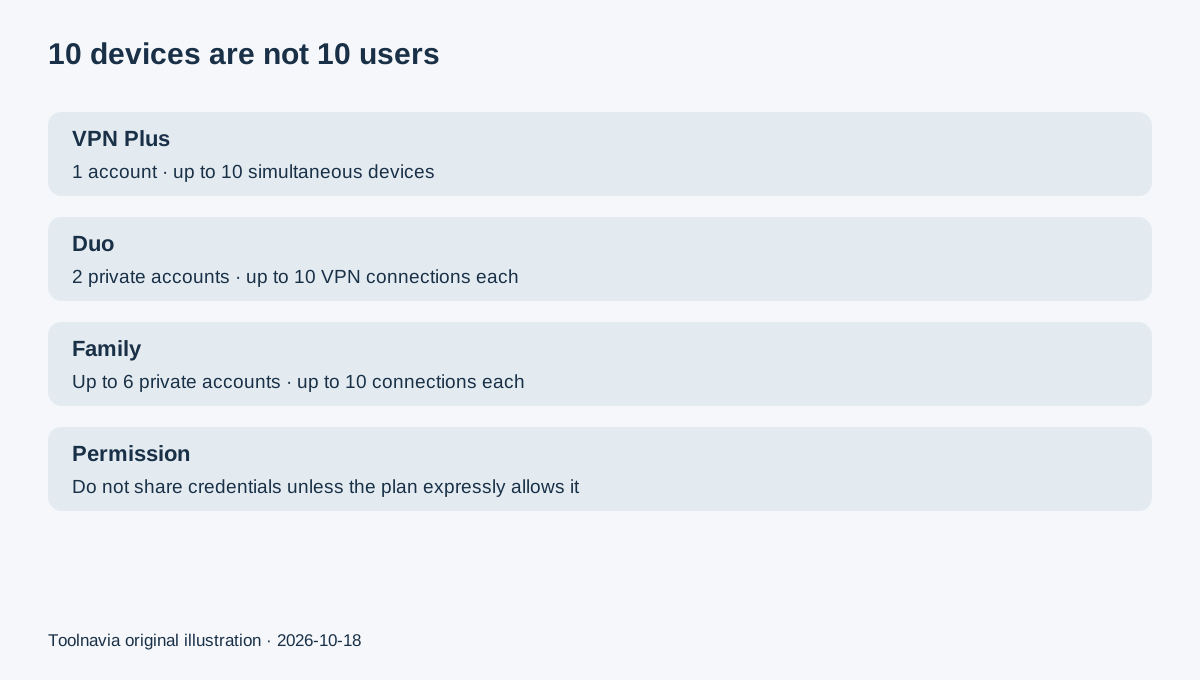
Proton VPN Plus supports up to 10 simultaneous devices, but that does not mean it includes 10 independent users. The allowance belongs to one Proton account. Proton's current terms prohibit sharing an account or login credentials unless the subscription plan expressly permits it. For two people with separate sign-ins, Proton Duo is the documented route; for up to six, Proton Family is the documented route.
This is a documentation-based account-and-device decision, not a VPN speed, privacy, streaming or security test.
At a glance
- Best for
- One account holder with up to ten simultaneous devices who does not need to share Proton credentials.
- Price model
- Verify live checkout; article focuses on account and device limits, not a fixed price.
- Check first
- Ten device connections are not ten users; live plan prices can change, and Toolnavia did not test VPN performance.
Ten devices answer a hardware question, not an identity question
VPN Plus currently says it can secure 10 devices at the same time. The supported-device list spans Windows, macOS, Linux, iPhone, Android, Chromebook, TVs and other clients. That is useful when one person regularly moves among a phone, work laptop, personal computer, tablet and living-room devices.
The limit is concurrent connections. Owning 12 devices is not automatically a problem if no more than 10 connect at once. Conversely, a household with only four devices can still have an account-design problem if four people require independent credentials, private Proton data and their own recovery or two-factor authentication.
Treat "10 devices" as a connection ceiling for one account—not a bundle of 10 seats.
Do not solve a family-account problem by sharing the master password
Proton's Terms of Service, last modified October 9, 2026, list sharing an account or login credentials as unauthorized unless the subscription plan expressly permits the sharing or Proton authorizes it in writing. The same terms separately prohibit reselling or sublicensing the service unless expressly allowed.
That boundary matters because a Proton Account can cover more than the VPN. The credentials used to sign in to Proton VPN are the same Proton Account credentials used across Proton services. A shared password can therefore create access, recovery and two-factor-authentication dependencies beyond a single VPN app.
A buyer should not infer permission from the device count. If another person needs routine independent access, use a plan that explicitly creates a separate member account.
Duo and Family change the unit from devices to people
Proton Duo is designed for two people. Each person has separate sign-in details, and neither can see the other's data. Proton describes it as premium Mail, Calendar, VPN, Drive, Pass and Wallet for two accounts, with shared storage allocation at the plan level.
Proton Family supports up to six members. Each invited member uses a separate Proton Account, remains a private user by default, and receives premium access to Proton Mail, Drive, Calendar and VPN. The family administrator manages billing and membership but does not automatically gain access to a member's encrypted email, files or events.
For Duo, Family and eligible organization accounts, Proton states that every member with VPN enabled receives 10 VPN connections. The allowance is per user: Duo can therefore represent up to 20 simultaneous VPN connections across two members, while Family can represent up to 60 across six, subject to the plan and each user's enabled status. This arithmetic describes the documented ceiling, not a promise that a household will need or sustain that many active sessions.
Choose by credentials before counting devices
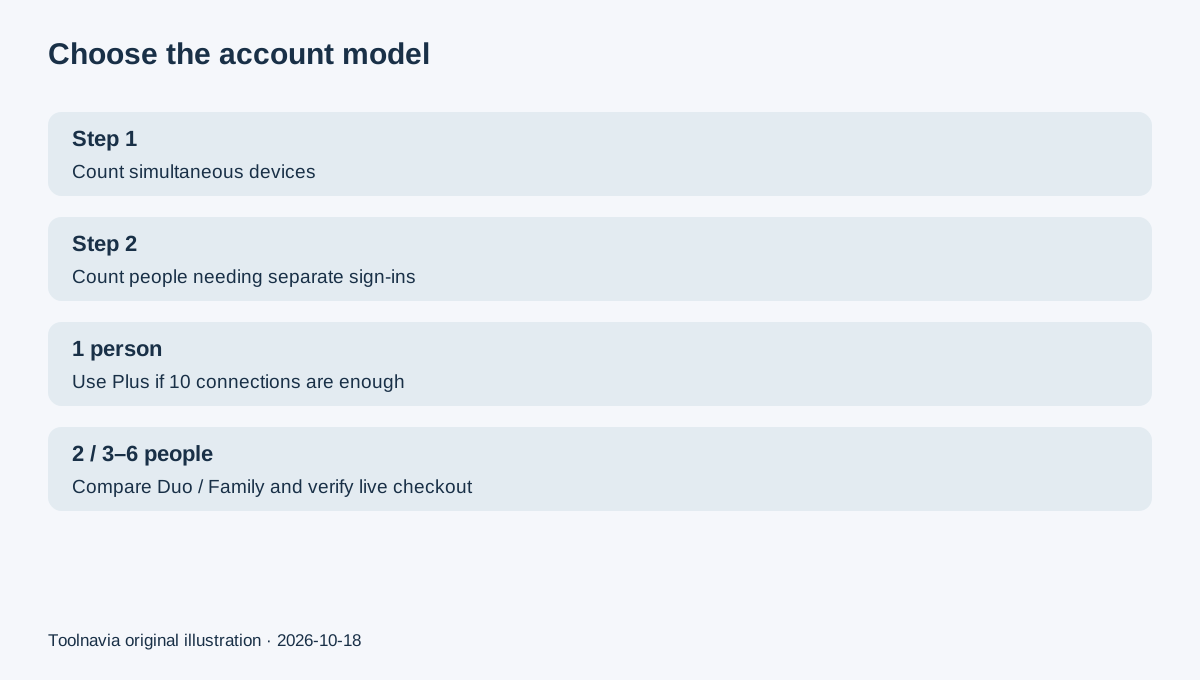
Choose VPN Plus when one account holder controls the devices, can handle sign-in and recovery centrally, and stays within 10 simultaneous connections.
Choose Duo when two people need separate identities, their own credentials and private Proton data. The second account—not a larger raw device total—is the decisive feature.
Choose Family when three to six members need independent accounts and the broader Proton bundle is useful. Because Family includes services and storage beyond VPN, compare its full live price and bundle value rather than dividing the price only by VPN devices.
If the household only needs a VPN on devices connected to one home network, also test whether a supported router setup can simplify connection management. That does not create separate Proton identities and should not be used to bypass a plan's account or credential rules.
The market uses different meanings for “multi-device”
NordVPN also documents 10 simultaneous devices under one subscription and explains that a configured router can protect a network while consuming one device slot. Its public account guidance expressly discusses sharing with trusted close contacts, which differs from Proton's plan-specific credential rule.
Surfshark officially allows unlimited simultaneous connections and explicitly permits sharing a subscription with family members, while warning against abuse and unauthorized resale. ExpressVPN currently varies the simultaneous-device limit by tier: 10 for Basic, 12 for Advanced and 14 for Express Pro.
An independent RTINGS review also reported successfully testing 10 simultaneous Proton VPN connections; that confirms the connection ceiling in one test but does not change Proton's account-sharing terms.
Those comparisons show why a number alone is insufficient. Ask three questions: How many concurrent devices? How many independent people? Does the provider explicitly permit the account-sharing model you intend? This article does not rank privacy or performance.
A five-minute buying checklist
List every device that may connect at the same time. Then list every person who needs an independent sign-in. If the first list is at most 10 and the second list is one, VPN Plus fits the documented account model.
If two people need separate credentials, price Duo. If three to six do, price Family. Confirm the live checkout, renewal date, refund path and included non-VPN services before paying because Proton's public pricing page currently foregrounds a promotional two-year VPN Plus term, while Toolnavia's exact indexed offer is a separate one-year market identity whose live JavaScript checkout must be confirmed.
Keep Toolnavia's existing [Proton VPN Plus renewal guide](/en/software/proton-vpn) for the first-charge and renewal decision. Use this page only for the device-versus-user decision.
Proton's affiliate program is publicly open, but Toolnavia has no verified approved tracking link for this exact offer. The CTA therefore remains hidden.