TOOLNAVIA / BUYING GUIDE
Omnisend Standard Starter Discount: US$33.60 Now, Then What?
The short answer
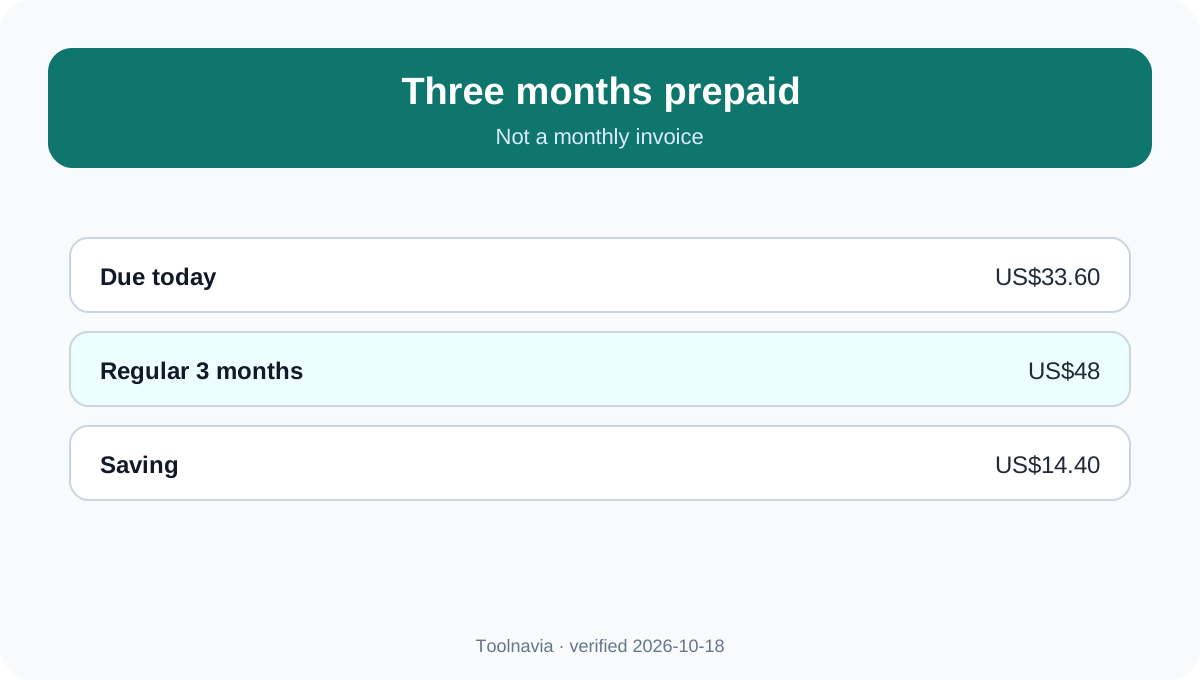
Omnisend Standard for up to 500 billable contacts currently asks a new paid subscriber for **US$33.60 today** to cover the first three months. The page expresses that as **US$11.20 per month**, but it is not an US$11.20 monthly invoice: the three-month amount is prepaid. After the discount ends, the same entry tier returns to the regular **US$16 every 30 days** unless you choose another available plan.
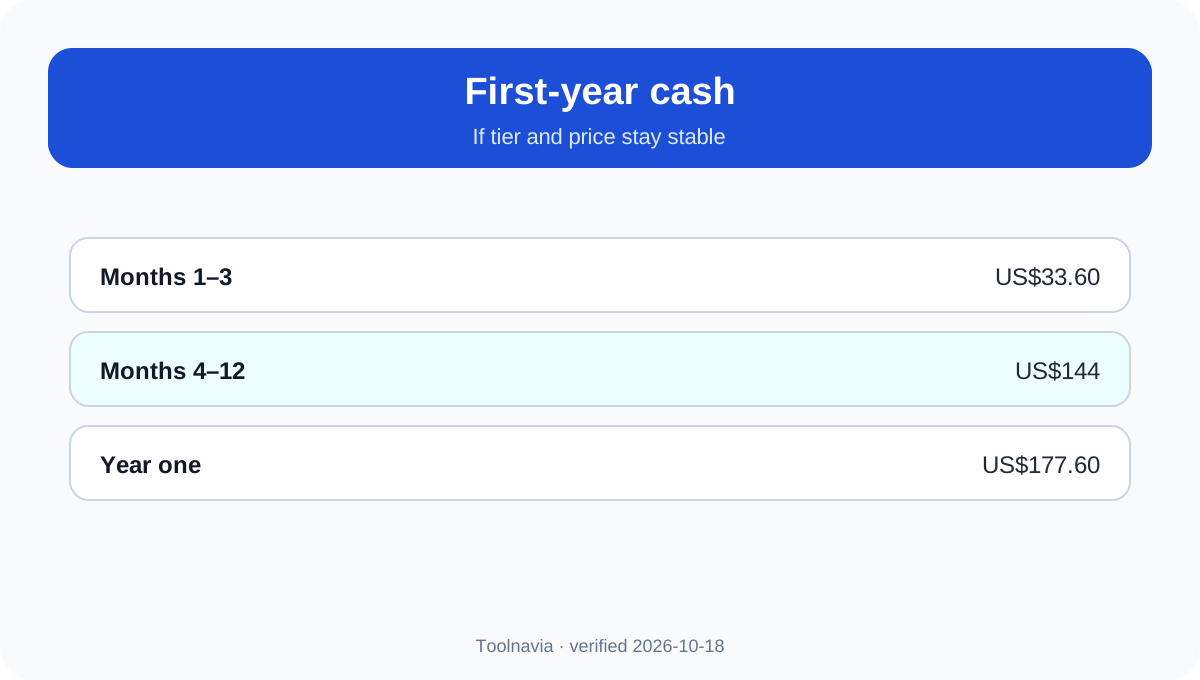
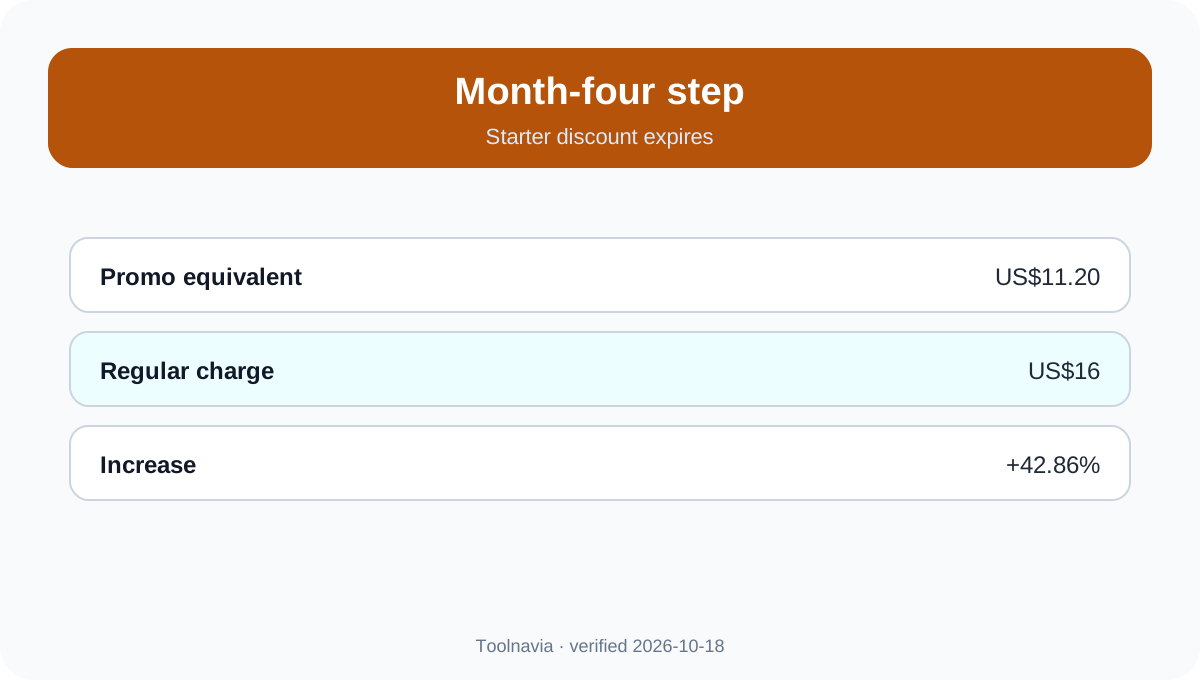
If the contact tier and public rate stay unchanged, the first 12 months model to **US$177.60**: US$33.60 upfront plus nine regular US$16 charges. Paying the regular rate from day one would total US$192, so the starter discount saves **US$14.40**, or **7.5% of the first-year baseline**. The visible month-four price rises US$4.80 from the promotional monthly equivalent, a **42.86% step-up**.
**Quick verdict**
The starter discount is useful when Standard is already the right plan and US$33.60 upfront is comfortable. It is not an annual plan, an evergreen coupon or a locked US$11.20 renewal rate. Treat it as a short acquisition discount followed by ordinary 30-day billing.
Choose it when your store can validate the product inside three months, expects to remain at or below 500 billable contacts, and can accept that paid charges are normally non-refundable. Skip or delay the upgrade when list cleanup is unfinished, product fit is uncertain, or a month-four US$16 charge would surprise the budget.
At a glance
- Best for
- A store that has already selected Standard, can validate it within three months and expects to remain at or below 500 billable contacts.
- Price model
- US$33.60 upfront for months 1–3, then US$16 every 30 days at the current 500-contact tier.
- Check first
- First-paid eligibility, tax, exchange rate, billable-contact growth and future pricing can change; paid charges are normally non-refundable.
What is charged today
For a first paid Standard subscription at the 500-contact tier, Omnisend's current help article gives the arithmetic directly: regular three-month total **US$48**, starter total **US$33.60**, saving **US$14.40**. The live pricing page also labels US$33.60 as due today.
The advertised US$11.20 is therefore a monthly equivalent used to describe the three-month package. It does not mean three separate US$11.20 card charges. That distinction matters for cash planning and cancellation: the commitment at checkout is three paid months upfront.
Tax, currency conversion, account history and a different contact tier can change the checkout total. Use the itemized invoice as the final authority.
Month four is the renewal shock
After the three-month starter period, the current documented path is ordinary monthly billing at the regular plan price. At the 500-contact Standard tier, that regular public price is US$16. Recent independent pricing and marketplace checks corroborate either the US$16 regular rate or the three-month promotional presentation, but first-party billing terms control.
The step is: - Promotional monthly equivalent: US$11.20. - Regular 30-day charge: US$16. - Cash increase: US$4.80. - Percentage increase: US$4.80 ÷ US$11.20 = 42.86%.
This is not a hidden fee; it is the end of an explicitly temporary discount. But it is easy to miss when the pricing card emphasizes the lower monthly equivalent. Put a reminder before the fourth billing event and review both contact count and plan fit.
First-year cash model
Assuming the account stays in the 500-contact tier and Omnisend leaves the US$16 regular rate unchanged:
- Today: US$33.60 for months 1–3. - Months 4–12: nine × US$16 = US$144. - Modeled first year: US$177.60. - Regular-rate baseline: twelve × US$16 = US$192. - First-year saving: US$14.40.
The starter discount does not compound. It removes US$14.40 once, during the first three months. By month 12 the percentage saving has diluted from 30% for the promotional block to 7.5% for the year.
This model deliberately excludes tax, SMS charges, contact-tier growth and future price changes. It is a planning model, not a promise of a fixed twelve-month invoice.
The 500-contact boundary controls the model
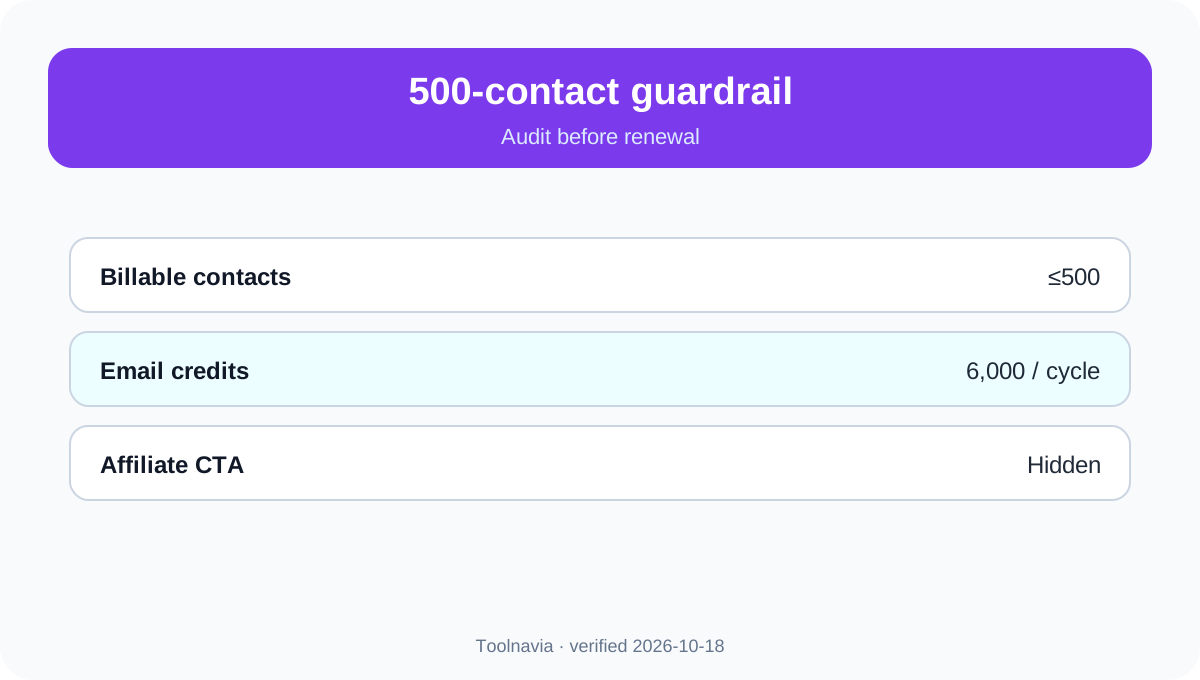
Omnisend prices paid plans by billable contacts, not merely the people you intend to email. Its charge documentation explains that subscribed and some non-subscribed contacts can count toward the billable total. If the account moves beyond the entry band, the US$16 assumption can stop applying.
At 500 billable contacts, Standard currently includes **6,000 email sends per 30-day cycle**, equivalent to twelve sends per billable contact. The existing Toolnavia billable-contacts guide explains who counts; this article does not repeat that identity. Here the contact rule matters only because crossing the tier can erase the US$14.40 acquisition saving.
Before upgrading, export the audience count, remove contacts you are entitled to delete, and project imports, abandoned-cart records and integrations for the next 90 days.
Cancellation, downgrade and refunds
Omnisend describes paid subscriptions as prepaid and normally non-refundable. Cancel before the next billing cycle if you do not want another charge. Cancellation generally moves the account to Free when the paid cycle ends rather than refunding unused days.
A downgrade can apply immediately and unused credit may be carried to the new subscription, but that is not the same as a cash refund. Do not buy the starter block on the assumption that an early exit returns the unused portion.
The practical exit plan is simple: test key automations early, record the end of the starter period, export critical data, and make the keep/downgrade/cancel decision before the next charge.
What Standard includes in this price
At the 500-contact entry point, the current Standard allowance is 6,000 emails each 30-day billing cycle. Standard is designed for ecommerce email automation and web push, with the exact available features shown on the live comparison page.
For new subscribers under the current 2026 rules, SMS access is not generally part of Standard; Omnisend directs SMS-focused buyers to Pro or the applicable current option. Do not value the US$16 Standard price as if it included an SMS subscription.
The decision remains plan-specific: this page models Standard at 500 contacts. It does not compare Pro, custom tiers or rival platforms.
A better three-month validation plan
Use the prepaid period as a deadline rather than passive subscription time.
In week 1, connect the store, confirm sending domain setup and import only the audience needed for the test. In weeks 2–4, launch one revenue flow and one broadcast. In month 2, compare deliverability, attributable sales and workflow maintenance against the current tool. In month 3, audit billable contacts and decide before the regular renewal.
The correct denominator is not “US$11.20 feels cheap.” It is whether the system produces enough incremental contribution during the proof period to justify US$16 every 30 days and any higher tier created by list growth.
Checkout checklist
Confirm all of these before payment: Standard, up to 500 billable contacts, 6,000 emails per cycle, US$33.60 due now, three months prepaid, US$16 regular charge after the promotion, tax, next billing date, refund terms, downgrade timing and whether the account qualifies as a first paid subscriber.
Capture the checkout screen and calendar the decision date. If any number differs, recalculate from the invoice instead of forcing this model onto the account.
**Bottom line:** Omnisend Standard's starter discount is a US$14.40 first-year saving, not a permanently cheap monthly plan. The economically important moment is month four: the cash charge moves from an US$11.20 monthly equivalent to US$16, while contact growth and non-refundable prepayment remain the buyer's risk.