TOOLNAVIA / BUYING GUIDE
monday.com Pro vs Standard: Is 100× More Automation Worth $7 More?
The short answer
monday work management Pro currently costs $19 per seat/month billed annually, versus $12 for Standard. Because paid monday work management plans start at three seats, the minimum annual seat-cost comparison is about $684 for Pro versus $432 for Standard—a $252 yearly increase before tax, AI credits, apps, or other add-ons. The upgrade is easiest to justify when 250 monthly automation/integration actions, five-board Dashboards, or Standard's access controls are already a real bottleneck.
This is a documentation-based buying analysis, not a Toolnavia productivity benchmark.
At a glance
- Best for
- Teams regularly hitting Standard action/reporting/access limits and needing Pro-only time/private-board controls.
- Price model
- Current annual USD: Standard $12/seat/month; Pro $19/seat/month;3-seat nominal annual delta $252
- Check first
- Pro still excludes Enterprise governance; AI credits/add-ons can change checkout and affiliate commission terms are unverified.
The biggest jump is 250 actions to 25,000
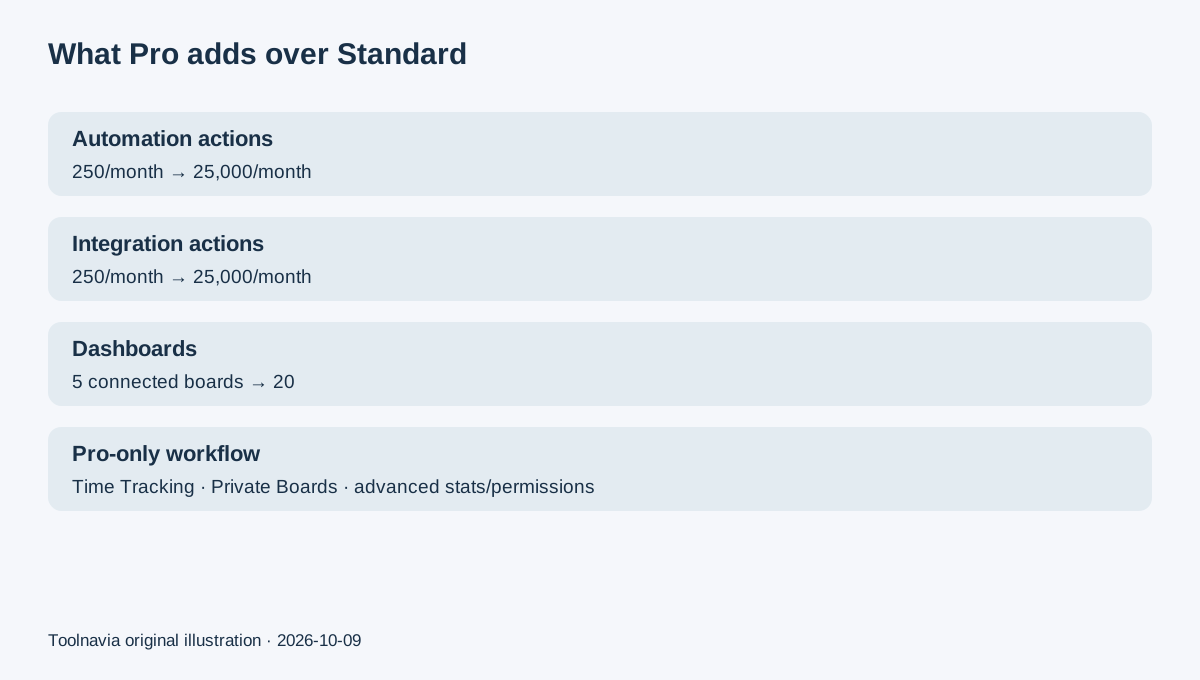
Standard includes 250 Automation actions and 250 Integration actions each month. Pro raises both allowances to 25,000 per month—a 100× increase for each pool. monday.com itself warns that 250 actions can be exhausted within days when recipes notify multiple people, map several columns, or use multi-step integrations.
That makes Pro especially relevant when automations run every day, when Gmail or Outlook integrations are active, or when workflows repeatedly perform several actions from one trigger. If the account uses only a few simple status-change rules each month, 25,000 actions may be unused capacity rather than value.
Four Pro features that can justify the $7 annual-billing gap
**Time Tracking.** monday.com's Time Tracking Column is available only on Pro and Enterprise. Teams that need native task-level time records for client work, capacity reviews, or internal cost analysis can avoid a separate time-tracking tool. If time is already tracked elsewhere, this benefit may duplicate an existing system.
**Private Boards.** Standard provides Shareable boards for guests, but Private Boards are a Pro/Enterprise feature. Private Boards are visible only to invited members, which matters for confidential planning or restricted internal work. Enterprise is still the tier for the strongest organization-wide governance controls.
**Larger Dashboards.** Standard Dashboards can connect up to five boards; Pro raises that to 20. The same 5-versus-20 boundary also appears in Connect Boards limits. Pro becomes easier to justify when managers need a single Dashboard or linked-board workflow spanning several teams or projects.
**More advanced account and permission controls.** Pro includes advanced permission/restriction settings and advanced account statistics that are not available at the same level on Standard. These controls help when a growing team needs finer editing visibility or usage analysis, but they are not a substitute for Enterprise security/governance.
The current minimum annual difference is $252
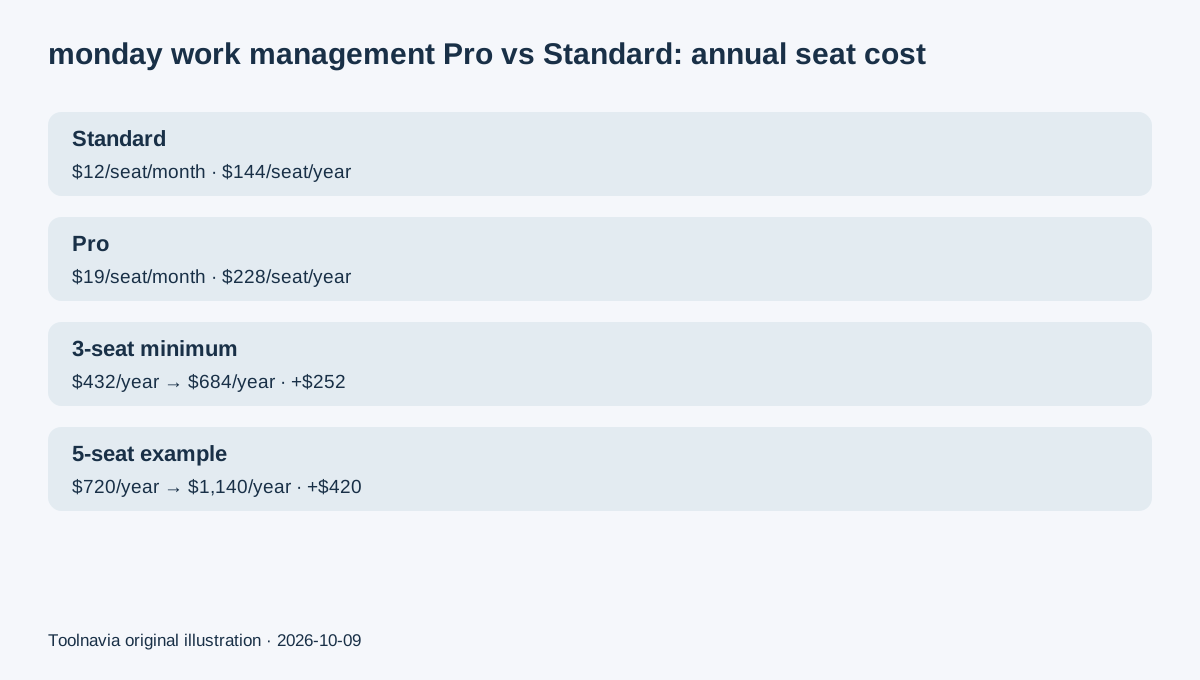
At the current annual seat rates, Standard is $12 per seat/month, or $144 per seat/year. Pro is $19, or $228 per seat/year. With the three-seat paid minimum, Standard is therefore $432/year and Pro $684/year before tax and extras.
That means the team is paying about $252 more per year at the minimum three-seat level. For five paid seats, the same current-rate arithmetic is $720/year for Standard versus $1,140/year for Pro, a $420 annual difference.
monday.com also has AI-credit and other product/add-on pricing layers. The current pricing page can show credits and special discounts separately from the plan seat price. Treat the final Billing page or checkout total—not just $19 × seats—as the buyer-specific all-in amount.
Upgrading is immediate; downgrading is not
Admins can upgrade from Standard to Pro immediately. monday.com says the unused balance from the old plan is applied toward the new plan and a new billing cycle begins at upgrade. A downgrade, including Pro back to Standard, takes effect only at the next renewal date.
The 30-day refund policy is for first-time new-customer purchases. Existing customers upgrading from Standard to Pro should not assume they receive a fresh 30-day refund window. monday.com also currently tells existing customers to give 30 days' cancellation notice before the subscription end date to avoid renewal.
If the team wants to test Pro before an initial purchase, monday.com currently advertises a 14-day Pro trial for work management.
How Pro compares with other work-management plans
ClickUp Business is currently $12 per user/month billed yearly and includes 5,000 Automation Actions plus webhooks and integration automations. Asana Advanced is $24.99 per user/month billed annually with portfolios, goals, workload, time tracking and proofing. Smartsheet Business is $19 per member/month billed yearly with a three-member minimum and unlimited automations. Wrike Business is $25 per user/month billed annually for 5–200 users. These are plan-scope and price references, not productivity rankings.
Upgrade only when Standard's limits are measurable
Stay on Standard when 250 automation/integration actions, five-board Dashboards and shareable-board collaboration remain sufficient. Choose Pro when daily automations, Time Tracking, Private Boards, 20-board reporting or higher permission/statistics controls solve a recurring problem worth at least the current seat-cost delta.
monday.com's public Affiliate Program is open. One current official page says affiliates can earn up to 100% commission on first-year sales, while another monday affiliate surface says 25% on the first sale. Toolnavia's actual approved terms are unverified, so affiliate tracking remains disabled.