TOOLNAVIA / BUYING GUIDE
Pressidium Starter Concurrency: Buy With a Load-Test Plan, Not a PHP-Worker Guess
The short answer
# Pressidium Starter Concurrency: buy with a validation plan, not a worker guess
**Short answer:** Pressidium Starter can be a reasonable managed starting point for a mostly cacheable WordPress site, but Pressidium does not publish a fixed Starter CPU, memory or PHP-worker quota. If checkout, membership, search, LMS, account or API requests matter, do not convert the monthly-visit allowance into a concurrency promise. Define the uncached journeys, inspect cache and request evidence, ask support what can be validated on the named plan, and obtain written authorization before any synthetic load test.
*Disclosure: Toolnavia may earn a commission if you buy through the approved Pressidium link. That does not change the price or the evidence standard. This is a documentation-based buying analysis; we did not provision a Starter account or run a production load test.*
At a glance
- Best for
- Mostly cacheable WordPress sites whose owners will validate critical dynamic paths with support.
- Price model
- Starter: $299 annual reference; capacity must be validated separately.
- Check first
- No fixed Starter PHP-worker quota is published; formal load testing requires authorization and is documented for Enterprise.
1. The missing worker number is the decision, not a detail
Many managed WordPress comparison pages use a simple capacity story: a plan has a stated number of PHP workers or threads, one uncached request occupies one worker, and queued requests wait. Kinsta's current PHP documentation is useful for that general model. It is not evidence that Pressidium Starter has the same count.
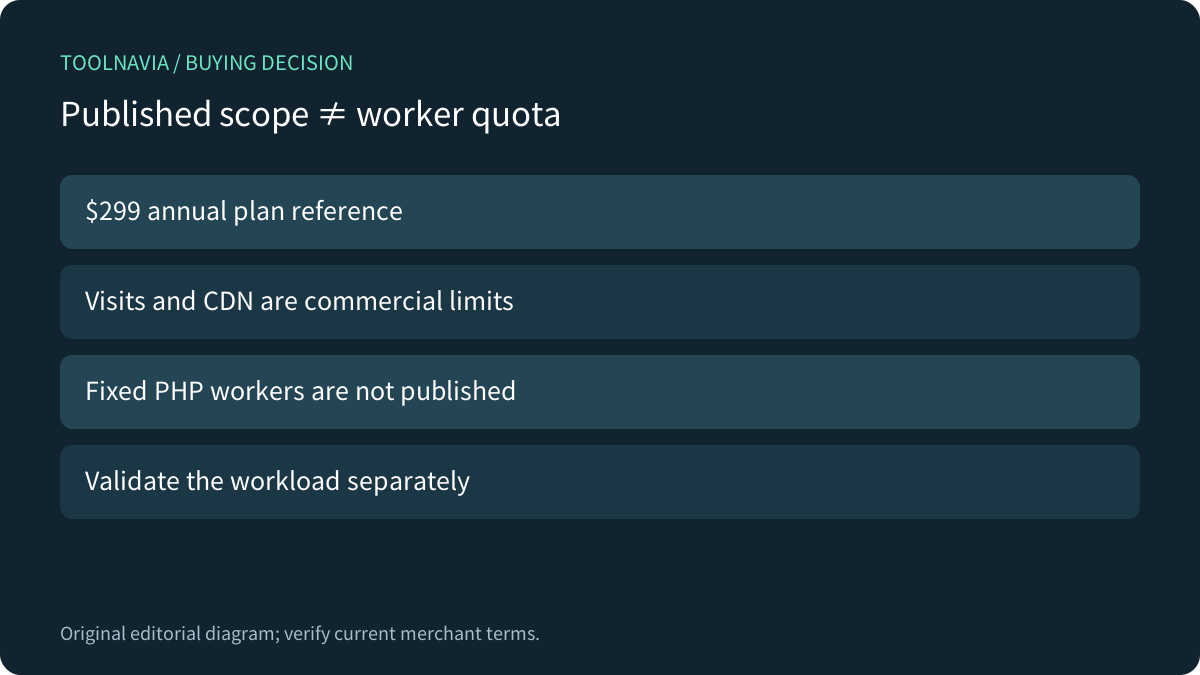
Pressidium's own resource article takes a different approach. It says a site is not assigned a fixed CPU or memory slice and runs on a managed fleet. The current Starter table gives commercial limits such as price, visits and CDN traffic, but it does not publish a fixed PHP-worker figure. The honest answer is not “unlimited” and not a number copied from a competitor. It is “capacity must be judged from the workload and verified with Pressidium.”
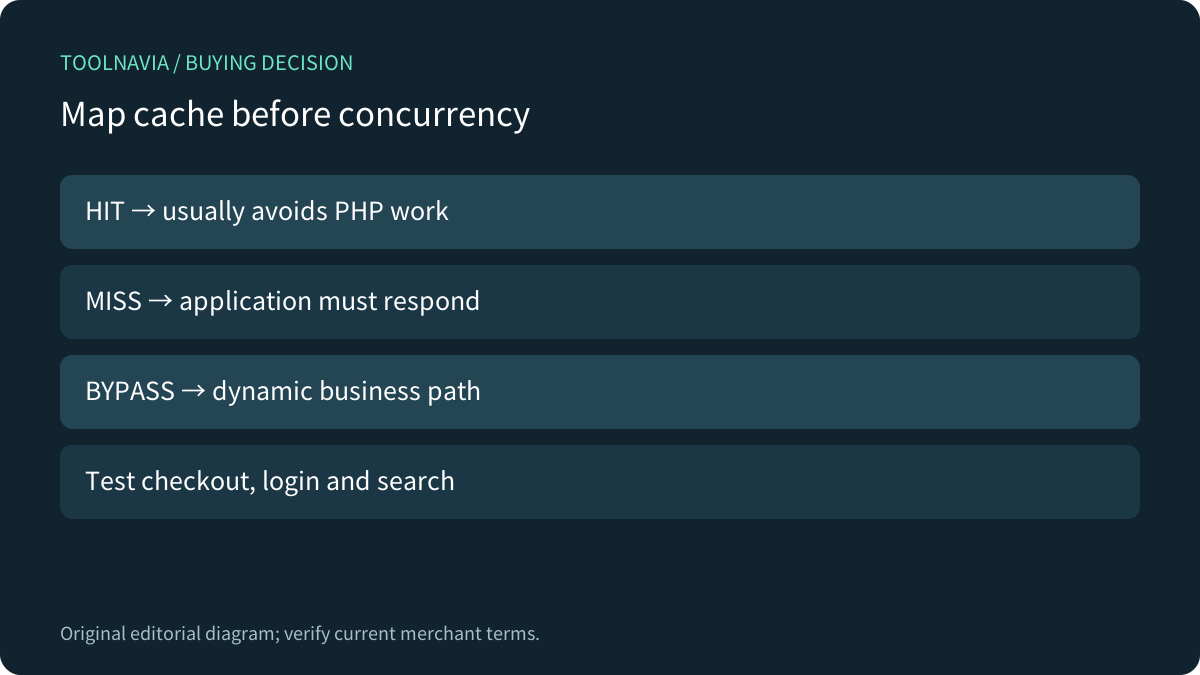
This distinction matters because 50,000 cached page views and 50,000 uncached account actions are not the same workload. A fast cache hit may avoid PHP application work. Login, cart, checkout, search, personalized dashboards, webhooks and admin actions may bypass cache and consume application time.
2. Turn the workload into a four-part evidence sheet
**Traffic shape.** Record ordinary requests per minute, expected peak requests per minute, peak duration and whether a campaign creates a sharp burst. Monthly visits are useful for budgeting but hide bursts.
**Dynamic share.** List the paths expected to be HIT, MISS or BYPASS. Pressidium's Cache Analytics documentation provides those categories. Pay special attention to admin, login, cart, checkout, search, account, webhook and API routes.
**Business journey.** Pick three to five actions that must remain usable: open a product, add to cart, sign in, search, submit a form, enroll in a course or complete payment. Measure the whole journey rather than a homepage alone.
**Acceptance threshold.** Set a response-time target, error-rate ceiling and backlog rule. For example, “95% of checkout steps under two seconds, fewer than 1% server errors, no growing queue after the burst.” This is a proposed buyer threshold, not a Pressidium SLA.
Pressidium's Requests Analytics and Performance Analytics can then be mapped to the same sheet. Request paths and status codes tell you what was hit; performance evidence tells you how the application behaved. Neither dashboard turns a single observation into a guaranteed ceiling, but together they replace guesswork with an auditable question.
3. Starter price is not a concurrency guarantee
The current official entry page lists Starter at **$299 paid annually**. Use that as a budget reference only. Final tax, billing period, current cart and any add-on still control the order.
A common mistake is to divide $299 by twelve, compare that monthly equivalent with a host advertising a worker count, and conclude that the plans offer interchangeable capacity. They do not necessarily use the same architecture, cache behavior, isolation policy or support process.
The right comparison has two columns:
- **Published commercial scope:** named plan, annual total, visits, CDN traffic, storage and included operations. - **Validated application scope:** dynamic paths, peak concurrency, database behavior, plugin work, error rate, response time and support-approved test conditions.
If the first column fits but the second is unknown, the decision is not automatically “upgrade.” First remove avoidable dynamic work: fix slow queries, reduce duplicate webhooks, audit plugins, cache public responses, and separate scheduled jobs from the campaign peak. Then ask whether Starter remains the named plan for the revised workload.
4. Load testing has an authorization boundary
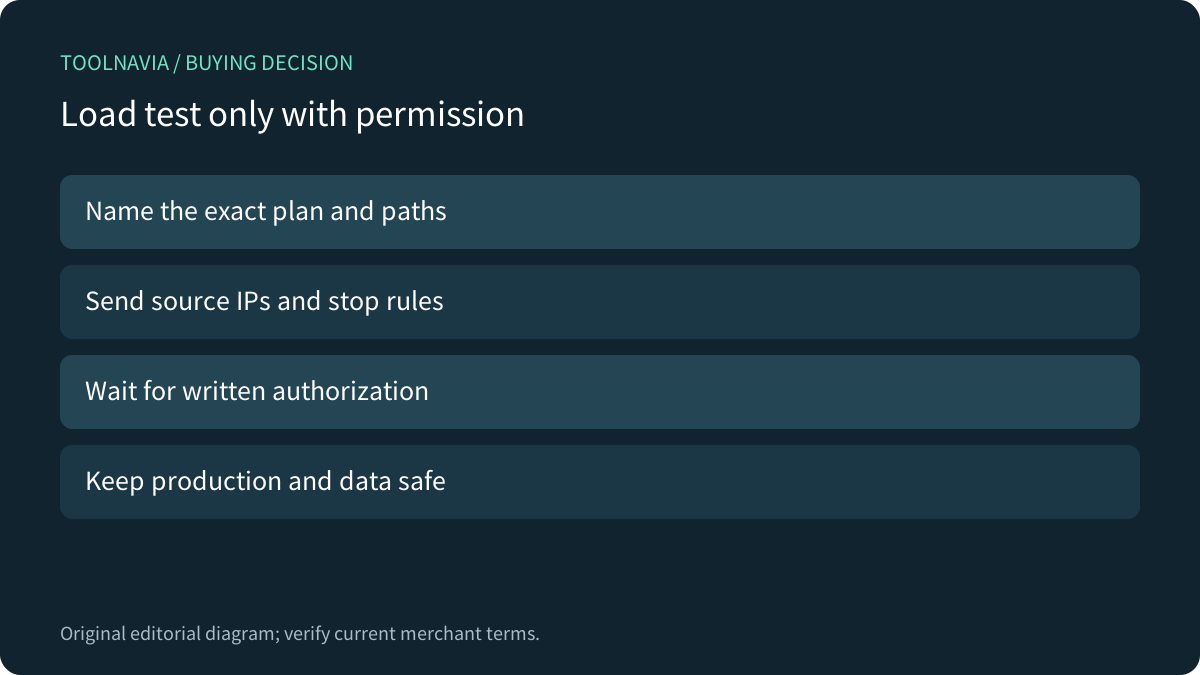
Pressidium's load-testing guidance says formal load testing is for Enterprise plans and requires advance coordination and source-IP whitelisting. That is a critical limitation. A buyer should not launch a large synthetic test against production and interpret rate limiting, security controls or protective actions as the application's true capacity.
For Starter, ask support three written questions before testing:
1. Is synthetic load testing permitted for this named Starter order? 2. If not, what non-production or support-assisted validation is available? 3. Which metrics and logs can Pressidium review for a real traffic sample?
If support directs the project to a higher plan or an Enterprise test process, treat that as a separate commercial decision. The approved link in this article is associated with Starter; it does not certify a higher-tier quote or promise that a custom test will be accepted.
5. What third-party tests can and cannot tell you
Historical reviews such as Review Signal can show how Pressidium performed in a particular test at a particular time. They are useful for forming questions: Was the workload cached? Which plan and region were used? What was the dynamic path? Were source IPs approved? What error threshold ended the run?
They cannot guarantee current Starter capacity. Platform software, hardware, routing, cache policy, plan packaging and test tools change. A historical aggregate result also cannot predict a WooCommerce store with different plugins, queries and payment webhooks.
The same caution applies to same-intent comparisons that discuss explicit PHP-worker counts. Their educational model is helpful; their numbers remain competitor facts. This article therefore leaves the Pressidium worker count **unknown** and discloses that unresolved gap in both languages.
6. A practical pre-purchase validation sequence
**Step 1 — classify pages.** Use a staging or existing comparable site. Mark each important path as cacheable or dynamic and document why.
**Step 2 — capture a baseline.** Record request volume, cache status, response time, database time and server errors during normal use. Remove obvious application defects first.
**Step 3 — write the peak scenario.** State concurrent users, journey mix, ramp-up time and duration. “100 users” is incomplete if all 100 only load a cached homepage.
**Step 4 — request authorization.** Send Pressidium the plan name, source IPs, timing, tool, paths and stop conditions. Do not proceed without an explicit answer.
**Step 5 — test the business path.** If approved, include login or checkout actions that represent real dynamic work. Exclude destructive actions and protect customer data.
**Step 6 — read the recovery curve.** After the burst, check whether latency and queues return to baseline. A test that completes while leaving a growing backlog is not a pass.
**Step 7 — record the decision.** Keep the support response, configuration, result date and acceptance threshold. Re-run after major plugin, theme, PHP or traffic changes.
**Evidence-backed advantages and boundaries.** Pressidium's **fleet-managed resources without a published fixed quota** avoid a misleading dedicated-server slice, but they provide no fixed Starter CPU, memory or worker promise. Its **cache, request and performance analytics** help separate hits from dynamic paths, but observed dashboards are not a contractual ceiling. Its **support-coordinated load-test process** protects the platform and clarifies conditions, but formal testing is documented for Enterprise and requires advance coordination. The **defined Starter commercial entry point** gives a current $299 annual reference, but price, visits and CDN allowances do not prove dynamic concurrency. The general PHP-thread model is useful context only; the same-intent comparison cannot supply a Pressidium number; and the historical Pressidium test is question-forming evidence, not a current guarantee.
7. Who should buy Starter?
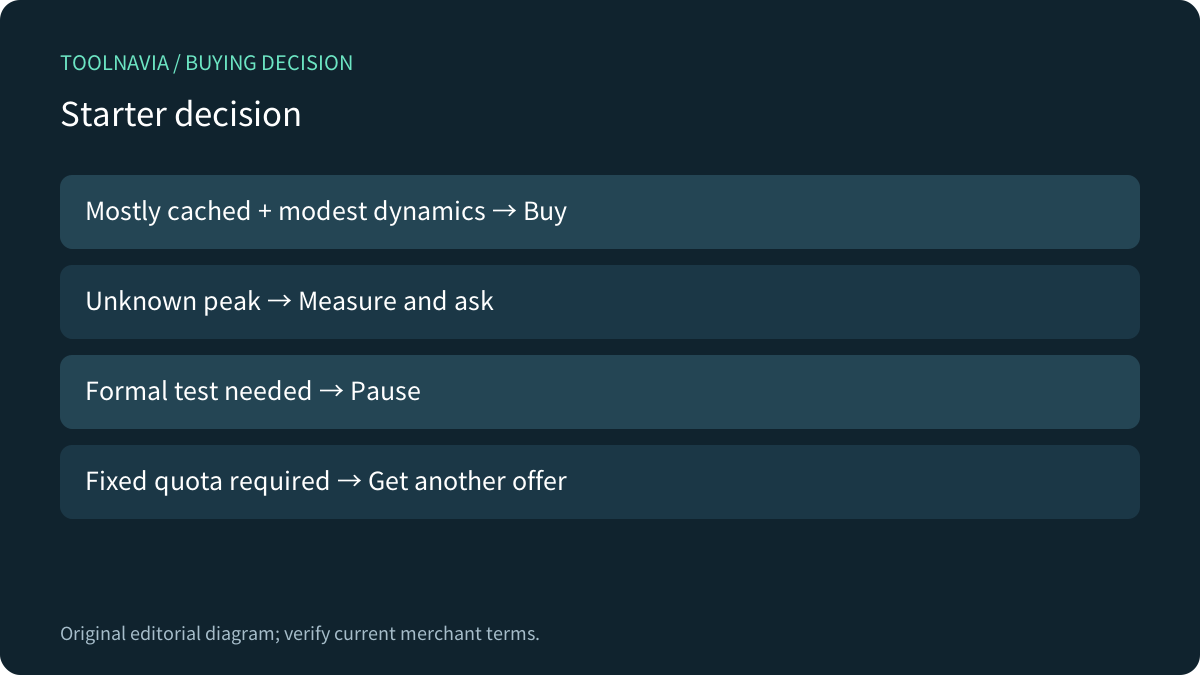
Starter is the stronger fit when the site is mostly public and cacheable, dynamic actions are modest, the owner values managed operations, and the team is willing to verify the few critical paths. It is also reasonable when the first order is deliberately reversible and the migration plan includes a rollback.
Pause before buying when revenue depends on sustained uncached concurrency, when a fixed worker count is a procurement requirement, when a launch requires a formal synthetic test, or when support cannot validate the named plan. In those cases, request a written capacity discussion and compare the exact higher-tier offer rather than assuming that visit allowances solve the problem.
8. Final verdict
Pressidium Starter should be purchased as a managed hosting package with a current commercial scope—not as an invisible bundle of assumed workers. The missing fixed quota is not evidence of unlimited capacity. The defensible purchase process is to classify cache behavior, define dynamic journeys, inspect request and performance evidence, obtain testing authorization and retain a written decision.
If that process matches your operating style, the approved Pressidium Starter link is a reasonable next step. Confirm the final cart and plan terms before payment. If you need a contractual worker count or an authorized campaign-scale test, pause and obtain a named alternative in writing.