TOOLNAVIA / BUYING GUIDE
Krystal Ruby vs Amethyst 2026: Is £4/Month More Worth It?
The short answer
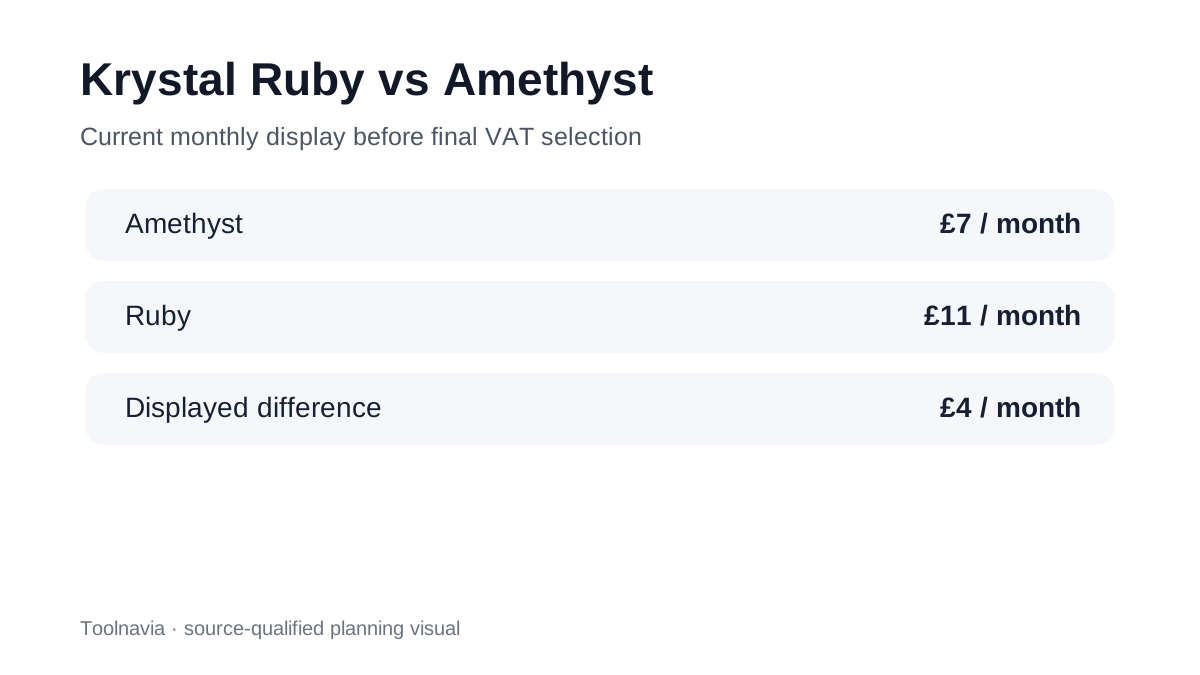
**Quick verdict:** Krystal Ruby currently displays at **£11/month** versus **£7/month** for Amethyst before final VAT/checkout. The £4 step buys **5 sites vs 1, 25GB vs 10GB, 2 CPU vs 1, and 4GB RAM vs 2GB**. Backups and standard support stay essentially the same, so Ruby makes sense mainly when you will use the extra capacity.
At a glance
- Best for
- Buyers choosing between one compact site on Amethyst and two-to-five sites or a larger shared-resource envelope on Ruby.
- Price model
- Amethyst £7/mo display vs Ruby £11/mo display; verify VAT and checkout
- Check first
- £7/£11 are public displays before final VAT/checkout; Ruby does not improve backup frequency or standard support; no speed benchmark.
The £4 question: capacity, not a different service class
At the current public monthly display, Ruby costs £4 more than Amethyst. Twelve monthly payments would make that a **£48 annualized difference before VAT or other adjustments**. That is simple arithmetic, not a quote for Krystal's annual or biennial billing; the product page separately advertises 16% and 25% savings for those cycles.
Ruby is not managed WordPress, a VPS or a business-hosting tier. It is still the same shared cPanel family. The decision is therefore unusually clean: do you need the extra site count, storage and account resources enough to justify the higher displayed monthly rate?
One site versus five sites is the biggest practical divider
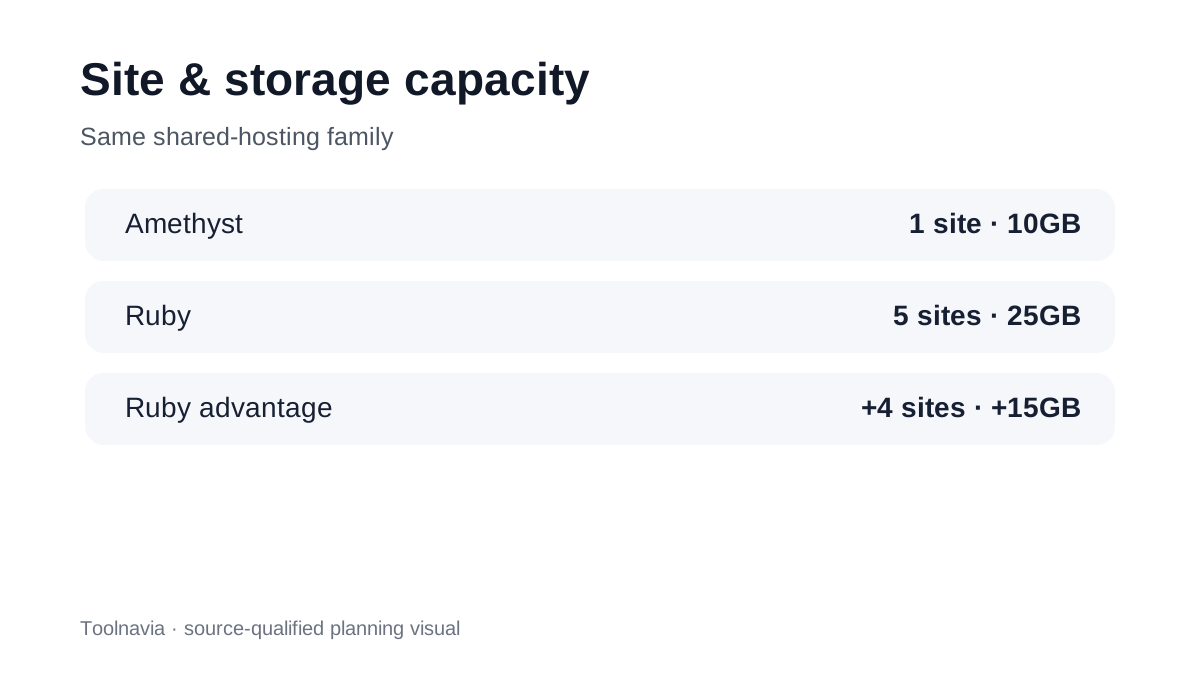
Amethyst supports **1 website**. Ruby supports **5**.
If you already know you need two or more production sites, Ruby avoids opening a second Amethyst account just to gain another site slot. If you used all five slots, the displayed £11 monthly reference works out to **£2.20 per site** before VAT; that is planning arithmetic, not a per-site entitlement or performance guarantee.
For one compact brochure site, paying for four unused slots may add little value. For a freelancer maintaining several client or project sites, the Ruby jump is much easier to justify.
Ruby doubles compute and quadruples the inode ceiling
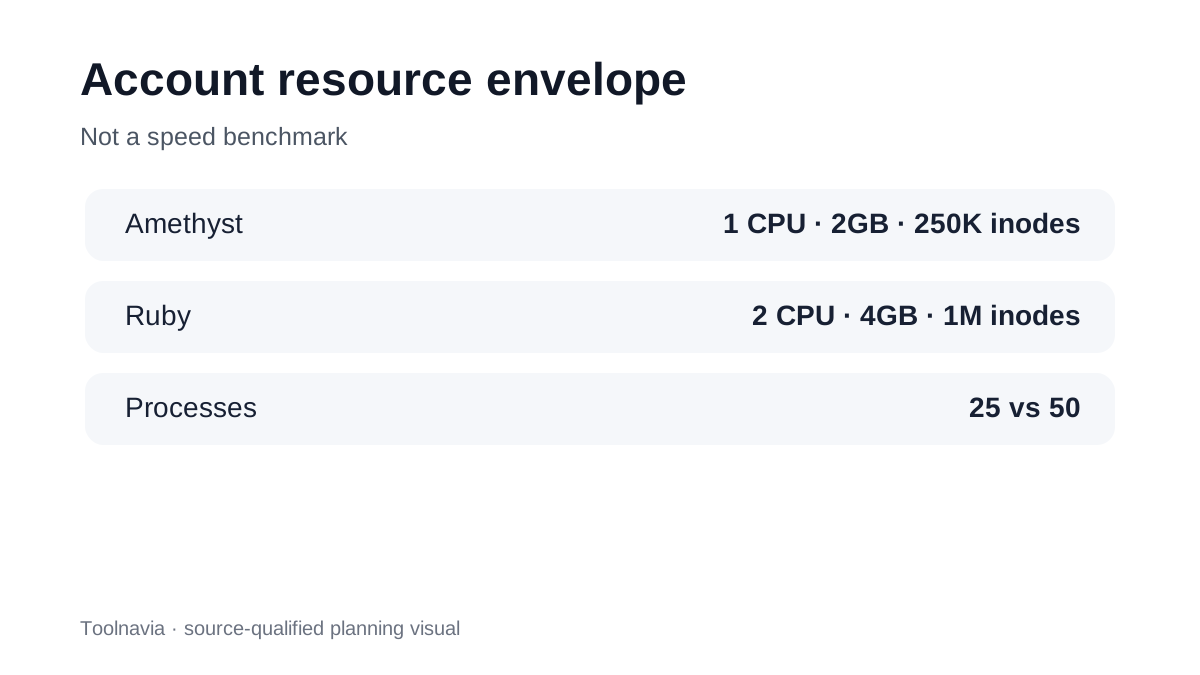
The resource difference is larger than the price difference. Current official limits show Amethyst at **1 CPU, 2GB RAM, 25 processes and 250,000 inodes**. Ruby moves to **2 CPU, 4GB RAM, 50 processes and 1,000,000 inodes**.
That does not mean Ruby is "twice as fast." Shared-hosting performance depends on application behavior, caching, databases, traffic and neighboring workloads. But it does give a materially larger account-level resource budget.
Storage rises from **10GB to 25GB**, and Krystal's disk-usage guidance says website files, databases and email all count toward that allowance. A mailbox-heavy account can therefore consume the same storage pool as the websites.
Backups do not get deeper when you move to Ruby
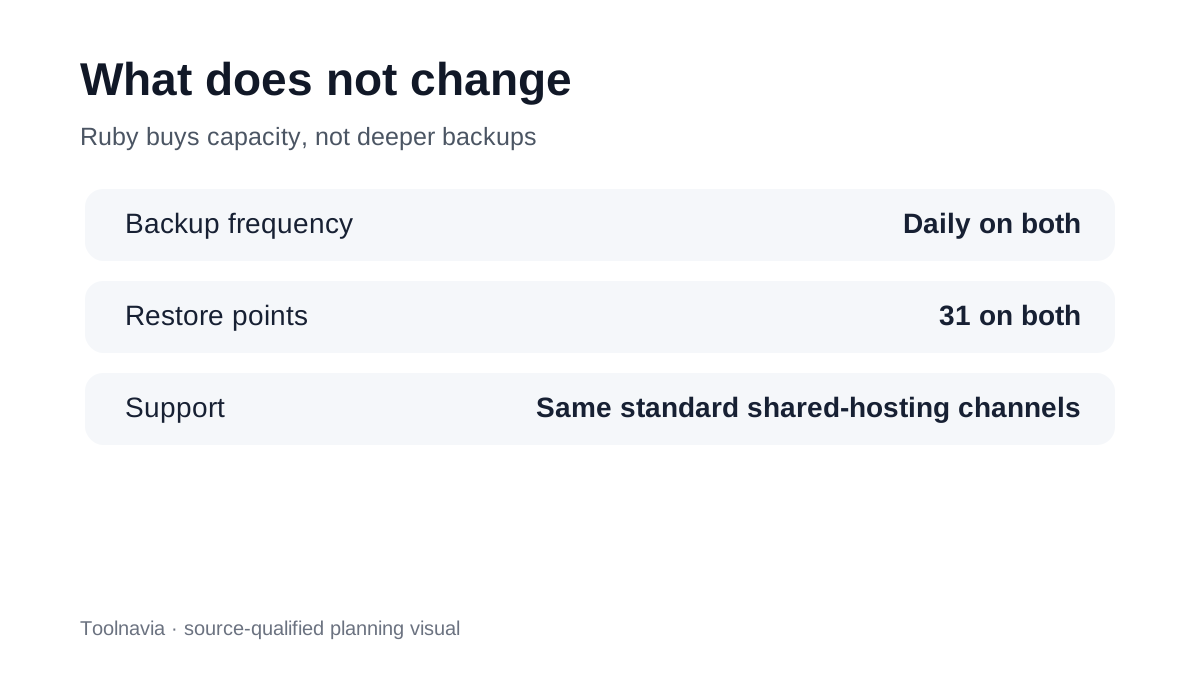
Both Amethyst and Ruby currently receive **daily off-site JetBackup backups with 31 restore points**.
This matters because the upgrade is mostly about capacity, not a stronger recovery schedule. If backup frequency is the reason you are considering a more expensive plan, Ruby does not change that. Krystal also advises customers to keep their own off-site backups and reserves the right to remove user-created backup/archive files older than seven days when they are left inside the hosting account.
The free domain has conditions
Ruby includes a free domain while Amethyst does not. The current plan comparison labels it **"for life of plan"**, but the checkout and legal terms matter.
The current Ruby cart lists eligible extensions including .co.uk, .org.uk, .me.uk, .uk, .com, .net, .org and .ltd.uk. Krystal's terms say qualifying free domains generally need to be selected during initial checkout for a new hosting account and used as the primary domain; premium or restricted domains can be excluded, and domain costs can be deducted from a hosting refund.
Treat the domain as a useful extra only after checking your exact TLD and order.
Support is effectively the same on both plans
Standard shared hosting—Amethyst and Ruby—currently includes **24/7 tickets**, weekday live chat and weekday phone support. Neither plan gets the 24/7 emergency phone line reserved for higher business tiers.
Ruby therefore should not be bought for better support access. Buy it for the bigger shared-hosting resource envelope.
Independent review cross-check
Two fresh 2026 reviews broadly reflect the current **£7 Amethyst / £11 Ruby** and **1-site versus 5-site** plan split, which helps confirm that this is a real buyer comparison rather than an invented pairing. One 2026 HostingSpy page still describes Ruby as allowing unlimited websites; that conflicts with Krystal's current official **5-site** limit, so this guide rejects the stale third-party claim and uses the current first-party limit.
Upgrading later is a real option
Krystal says an Amethyst-to-Ruby change is a shared-hosting quota adjustment: remaining term value is taken into account, and the new limits take effect after the invoice is paid without moving the cPanel account to another platform.
That lowers the risk of starting on Amethyst when you genuinely need only one small site. It also means there is little reason to prepay for Ruby capacity you do not expect to use.
Who should choose which?
**Choose Amethyst** when you have one compact site, 10GB is comfortable and the 1 CPU/2GB/250K-inode envelope fits.
**Choose Ruby** when you need two to five sites, expect storage above 10GB, want materially more CPU/RAM/process/inode headroom, or can use the qualifying free domain.
**Bottom line:** Ruby's current £4/month premium is compelling when you will use the extra sites or resources. If you have one modest site, Amethyst remains the more efficient starting point—and the documented in-family upgrade path means you do not have to guess your future capacity today.