TOOLNAVIA / BUYING GUIDE
InterServer VPS vs UltaHost VPS: $3 Root or $6.89 Managed?
The short answer
InterServer costs **$3 monthly** and provides **2GB RAM plus root**. UltaHost VPS Basic costs **$6.89 monthly**, or **$5.52/month on a two-year term**, with 1GB RAM and a managed-support path. Choose InterServer for raw value; pay more for UltaHost only when assistance and location replace real operations work.
At a glance
- Best for
- Buyers choosing between a $3 self-managed VPS and a $6.89 managed-support VPS.
- Price model
- $3 vs $6.89 monthly; UltaHost $5.52 on two-year term
- Check first
- No performance equivalence; term, panel, refund and management scope matter.
Quick verdict
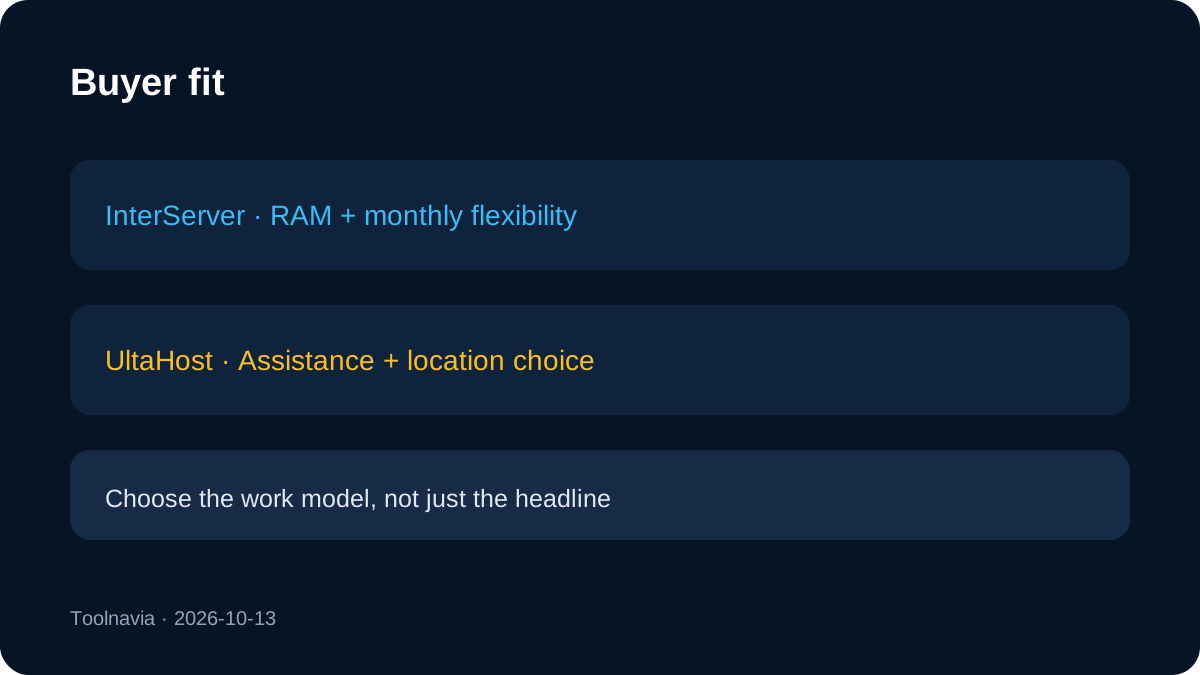
Choose **InterServer 1 Slice** when you can operate Linux yourself, want 2GB RAM and root for $3 a month, and prefer a true month-to-month base bill.
Choose **UltaHost VPS Basic** when a broader managed-support path, free-panel options, weekly backups and wider location choice are worth the higher price and lower published RAM.
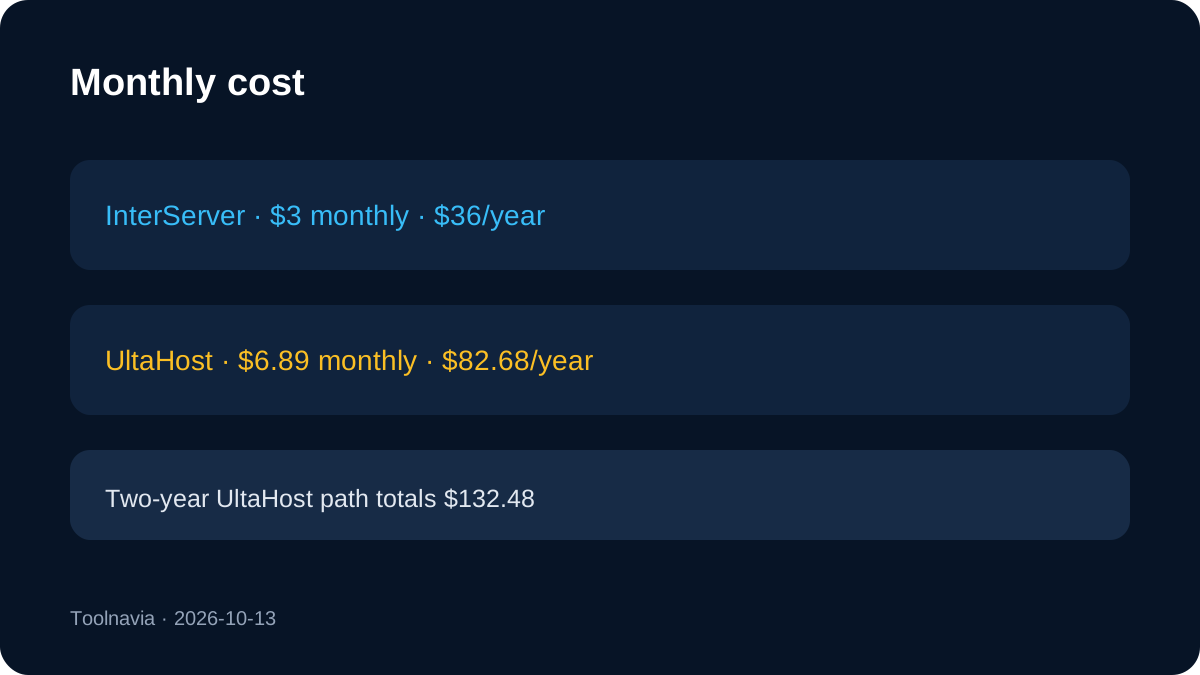
For monthly billing, the base gap is **$3.89/month or $46.68/year**. On the advertised two-year UltaHost term, the total is **$132.48** versus **$72** for 24 months of InterServer—a **$60.48** gap before panels, taxes and other add-ons.
This is not a speed benchmark. CPU labels, “NVMe,” network language and management do not prove equal application performance.
Price: monthly flexibility versus term discount
InterServer's exact one-slice offer is $3 per month. At the current base price, one year is $36 and two years are $72. The offer is useful when a buyer wants low commitment or expects to resize, migrate or cancel without carrying a prepaid term.
UltaHost exposes two valid but different price paths. The monthly storefront lists VPS Basic at $6.89 per month, or $82.68 over twelve monthly payments. The main VPS page defaults to a two-year selector at $5.52 per month, which is $132.48 paid for 24 months and shown as renewing on the same two-year cadence.
Do not compare InterServer's monthly $3 with UltaHost's two-year $5.52 as if both were monthly contracts. A fair checkout decision compares either **$3 monthly versus $6.89 monthly**, or **$72 over 24 InterServer months versus $132.48 for UltaHost's two-year term**.
Resources: InterServer buys more RAM
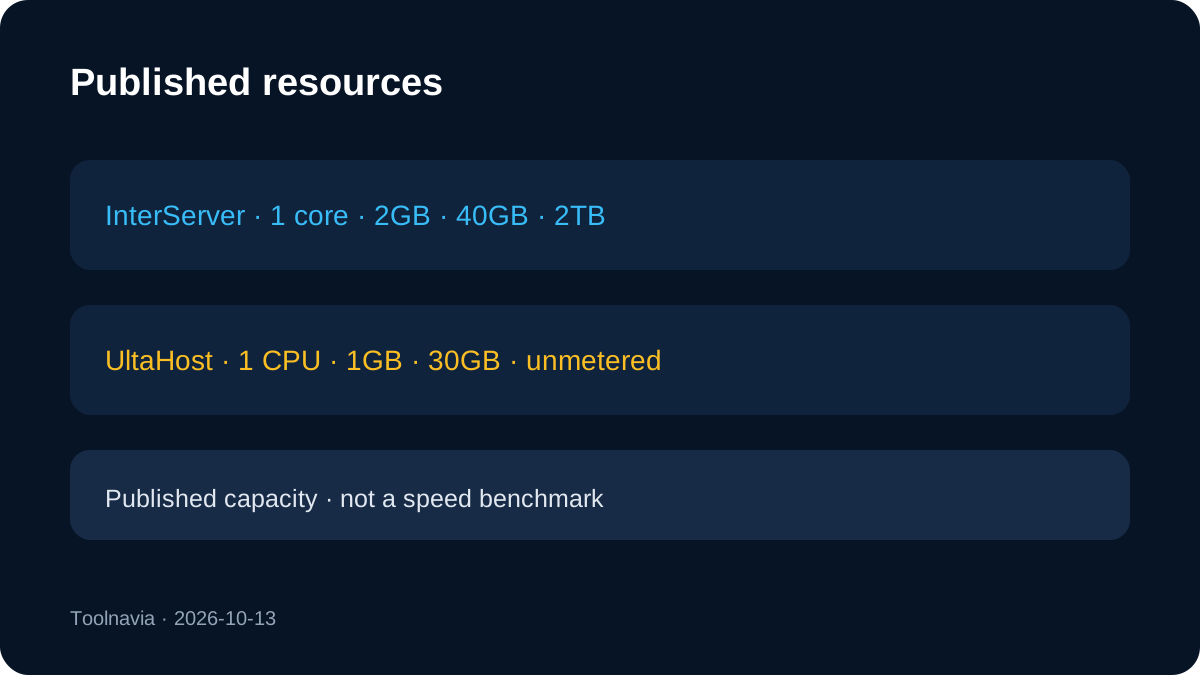
InterServer publishes 1 core, 2GB memory, 40GB SSD and 2TB transfer for one slice. UltaHost publishes 1 CPU, 1GB memory, 30GB NVMe and unmetered bandwidth for VPS Basic.
The InterServer plan therefore shows twice the RAM and 10GB more storage at the base tier. That matters for databases, several small services, containers, build jobs or a WordPress stack that may exceed 1GB after the operating system and control panel take their share.
UltaHost's “unmetered” bandwidth is attractive for buyers who dislike a fixed transfer number, but it is not a promise of unlimited sustained throughput. Treat it as a policy term and check acceptable-use limits and port behavior for the selected location.
Operations: root control versus assistance
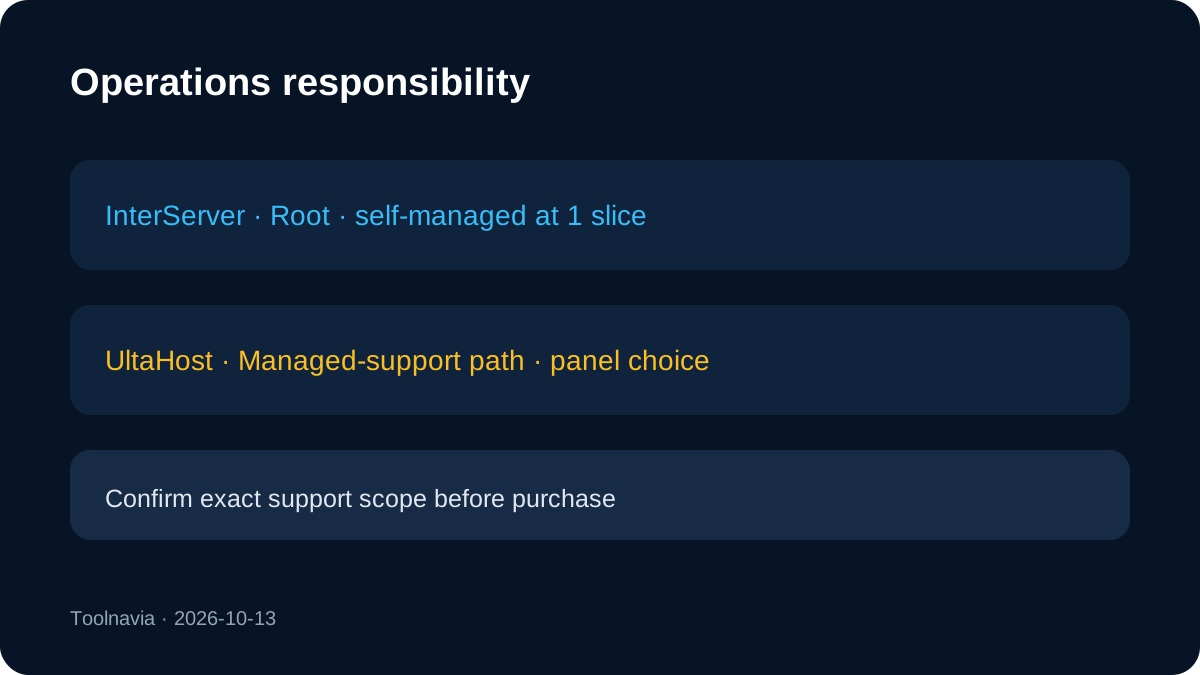
InterServer is the clearer self-managed choice at one slice. You receive root access and choose the Linux stack, firewall, monitoring, patches and application lifecycle. InterServer says managed support begins at eight or more slices, so a $3 buyer should budget time or outside help for administration.
UltaHost labels VPS Basic as a managed server and its current FAQ distinguishes unmanaged, semi-managed and fully managed modes. Free Hestia or CyberPanel choices can reduce license cost, while paid panels may change both price and the degree of hands-on management.
“Managed” still needs a written boundary. Before purchase, ask whether support will patch the OS, repair a broken web stack, migrate applications, monitor services proactively, recover data and harden custom software. Marketing assistance is not the same as an application-level service agreement.
Panels and real recurring cost
InterServer's official upgrade page lists cPanel at **$15/month**, DirectAdmin at **$8/month**, Softaculous at **$2/month** and an extra IP at **$3/month**. A one-slice server with DirectAdmin would therefore start at $11/month before other services; cPanel would lift the starting stack to $18/month.
UltaHost advertises free Hestia and CyberPanel options, while cPanel and Plesk are paid. The public page does not provide a single universal panel total for every configuration, so confirm the selected panel, management tier and renewal price in the cart.
A buyer who already uses SSH, configuration management and a reverse proxy may not need a panel. A buyer hosting client email and many sites may value a panel more than the raw VPS price gap.
Backup and refund risk
InterServer documents remote full-image backups retained for 45 days, with up to three concurrent images. Those images are suited to full restore or cloning; single-file recovery is more involved. Keep an independent backup and run restore tests rather than treating any control-panel button as a complete recovery plan.
UltaHost's main VPS page advertises free weekly backups and instant snapshots. Confirm how many restore points are retained, whether the backup is off-node, whether restores are self-service, and whether paid retention is needed for production.
UltaHost's refund policy matters to the term decision. It says an eligible first monthly VPS package may receive a refund within 30 days, but yearly, biennial and triennial VPS plans are not refundable. Special promotions, paid panels and several payment methods can also be excluded. The cheaper two-year rate therefore carries more commitment risk than the monthly storefront rate.
**Location and workload fit.**
InterServer is strongest for a technically managed US workload where $3 monthly, 2GB RAM and root control dominate the decision. It is a good fit for a small API, VPN, test environment, low-traffic application or compact database when the owner already has monitoring and recovery automation.
UltaHost fits buyers who need a wider location choice, want a management path and prefer a bundled hosting workflow. The published 1GB ceiling is tighter, so verify memory usage for a panel, database and application before migrating a production site.
Neither provider's location list guarantees latency for your audience. Run a representative test after provisioning and keep the first production move reversible.
What comparison pages get wrong
Several direct InterServer-versus-UltaHost pages rank the brands with their cheapest shared-hosting or provider-level price. They prove that the provider pair has search demand, but their $2.50, $1.80 or shared-plan rows do not describe this exact VPS purchase.
Independent VPS reviews help explain the operating models: InterServer is praised for its cheap slice structure, while UltaHost is framed around managed assistance and broader locations. Exact price, RAM, storage, term and refund math in this article still comes from current first-party pages.
Checkout checklist
For **InterServer**, verify Linux Cloud VPS, one slice, $3 monthly, 1 core, 2GB RAM, 40GB SSD, 2TB transfer, chosen region and OS. Add the exact panel, backup and extra-IP costs you actually need. Do not assume one-slice managed support.
For **UltaHost**, verify whether the cart is monthly at $6.89 or two years at $5.52 per month, the total due today, renewal cadence, location, 1GB RAM, 30GB NVMe, panel and management scope. Read the refund exclusions before accepting a long term.
Use only the exact Toolnavia offer buttons tied to these two products. This article does not claim any personal coupon code is active.
Final choice
Buy **InterServer 1 Slice** if you want the cheapest true monthly base, need 2GB RAM, and can own Linux operations.
Buy **UltaHost VPS Basic** if managed assistance, panel options and a broader location footprint are worth paying $46.68 more per year on monthly billing—or $60.48 more across the advertised two-year term.
**Bottom line:** InterServer wins on raw monthly value and memory. UltaHost wins only when its support and bundled workflow replace enough real operational work to justify the premium.