TOOLNAVIA / BUYING GUIDE
HostArmada Speed Reaper Review 2026: $3.95, Then $19.75?
The short answer
At a glance
- Best for
- Multi-site WordPress buyers needing more shared-hosting resources, 21 daily backups and developer/security tooling without VPS administration.
- Price model
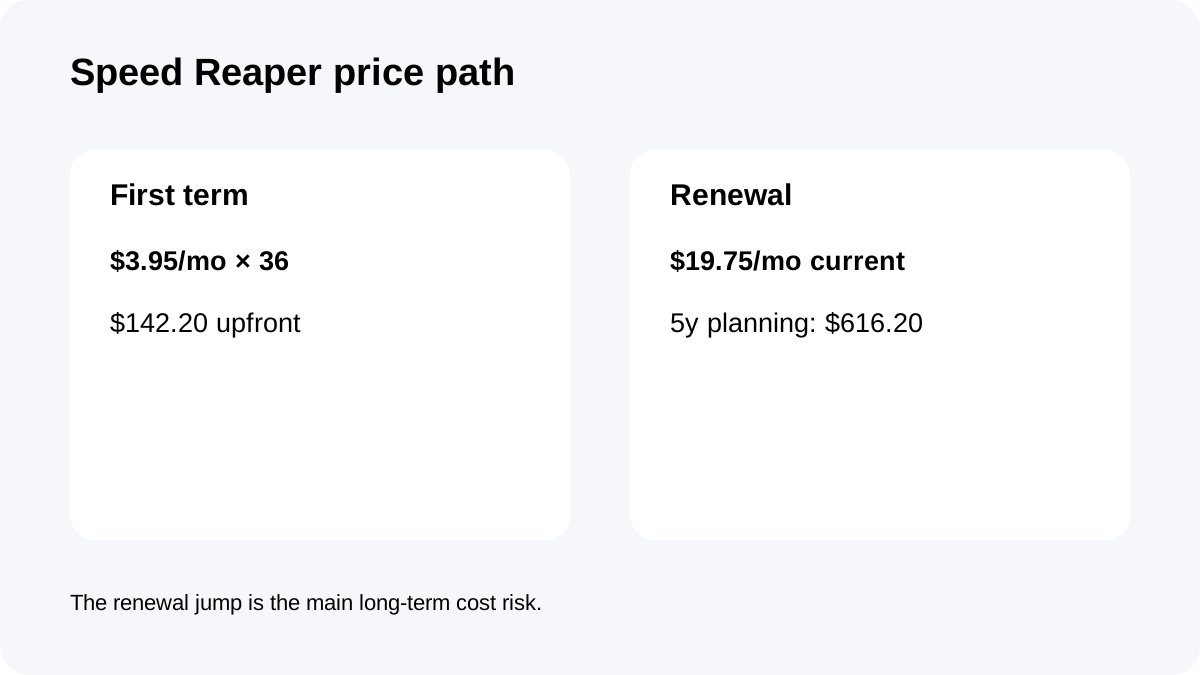
- $3.95/mo for 36 months; current regular/renewal $19.75/mo
- Check first
- Intro requires 36 months; renewal jumps to current $19.75; unlimited sites share 40GB/6CPU/6GB; bandwidth has 90GB acceptable-use guidance.
Verdict
HostArmada Speed Reaper is the top shared-hosting tier for buyers who want **more account resources and deeper daily-backup history** without moving to a VPS. Current pricing is **$3.95/month for 36 months**, then **$19.75/month** at the published regular/renewal rate.
Price and renewal: cheap entry, expensive long-term
The first 36 months cost **$142.20**. If months 37–60 are modeled at today's $19.75 renewal, the five-year planning total is **$616.20**.
That is planning only; the actual renewal invoice follows the selected renewal term and future prices can change. The large jump from $3.95 to $19.75 is the plan's biggest purchase risk.
HostArmada also advertises a **45-day money-back period** for eligible initial shared-hosting orders, with exclusions and add-on rules that should be checked before purchase.
Unlimited sites still share 40GB, 6 CPU and 6GB RAM
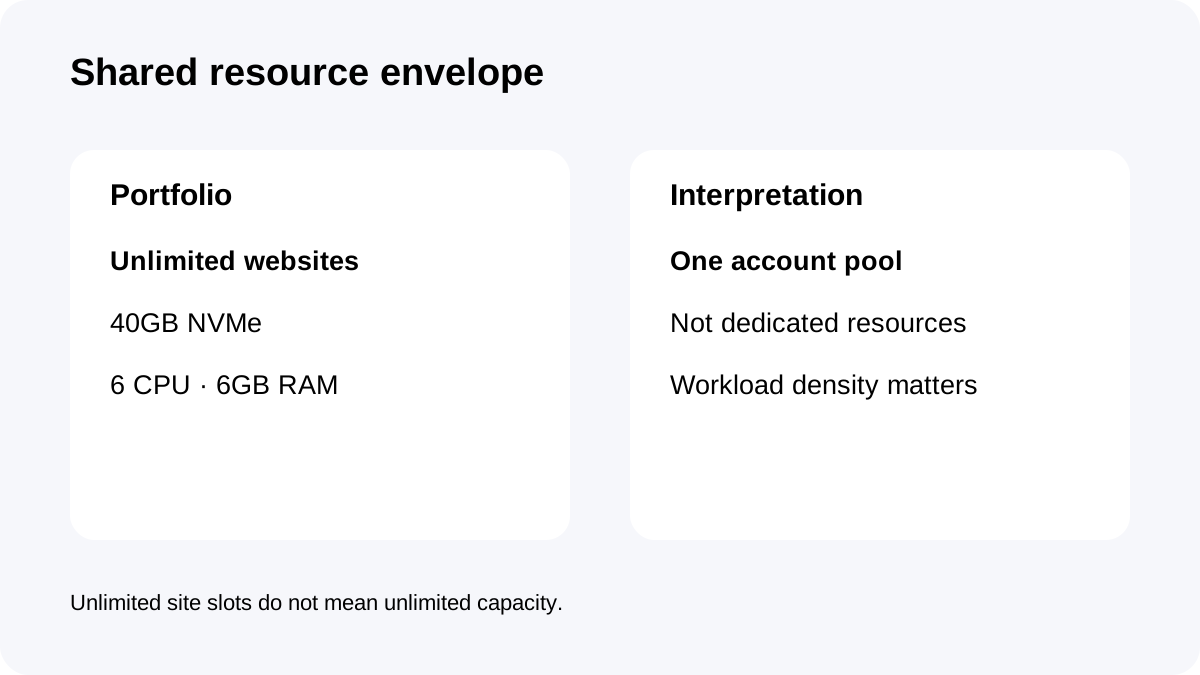
Speed Reaper allows **unlimited websites** with 40GB NVMe, 6 CPU cores and 6GB RAM.
“Unlimited websites” is permission, not infinite capacity. Every site shares the same account-level storage, CPU and memory pool. A portfolio of cached brochure sites can fit very differently from several busy WooCommerce, LMS or membership sites.
Use the published 6CPU/6GB figures as shared-account capacity limits, not dedicated-server equivalents or a guaranteed speed multiplier.
21 daily backups are a real differentiator
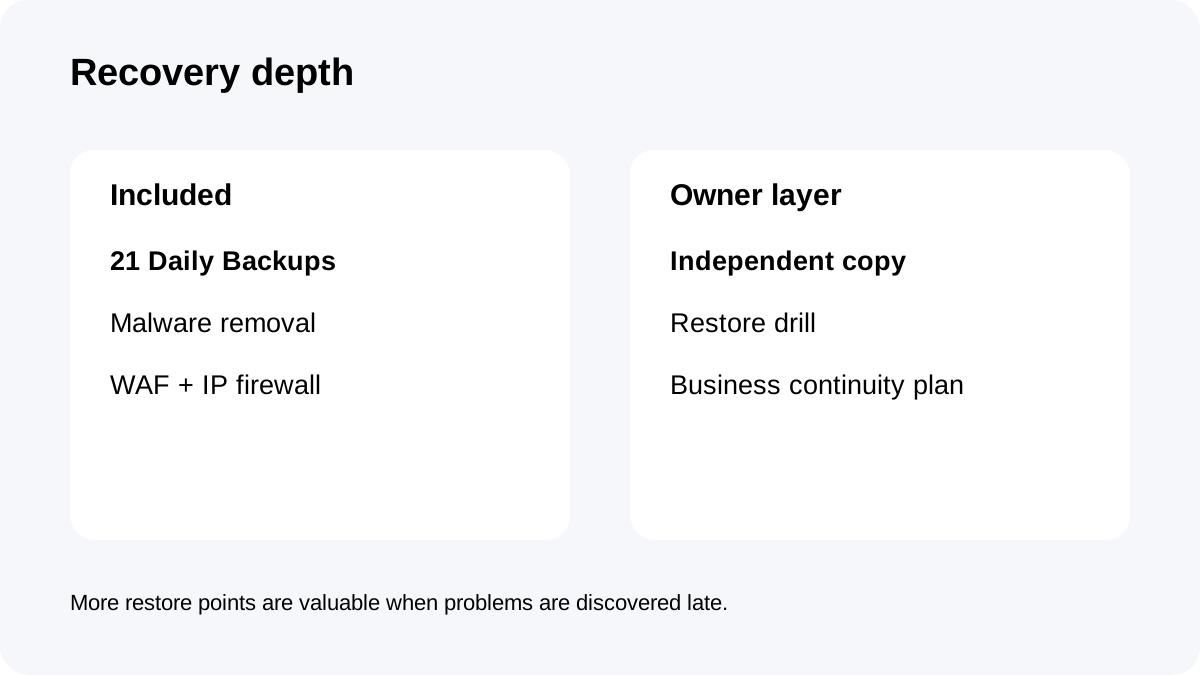
Speed Reaper includes **21 Daily Backups**.
That gives substantially more restore history than lower HostArmada tiers. For sites that change every day, this matters because plugin issues, bad updates or content mistakes are often discovered days after the event.
Even with 21 host-side restore points, business-critical sites should keep an independent off-provider copy. A host backup is useful recovery infrastructure, not a complete business continuity plan.
Bandwidth is flexible, but 90GB guidance matters
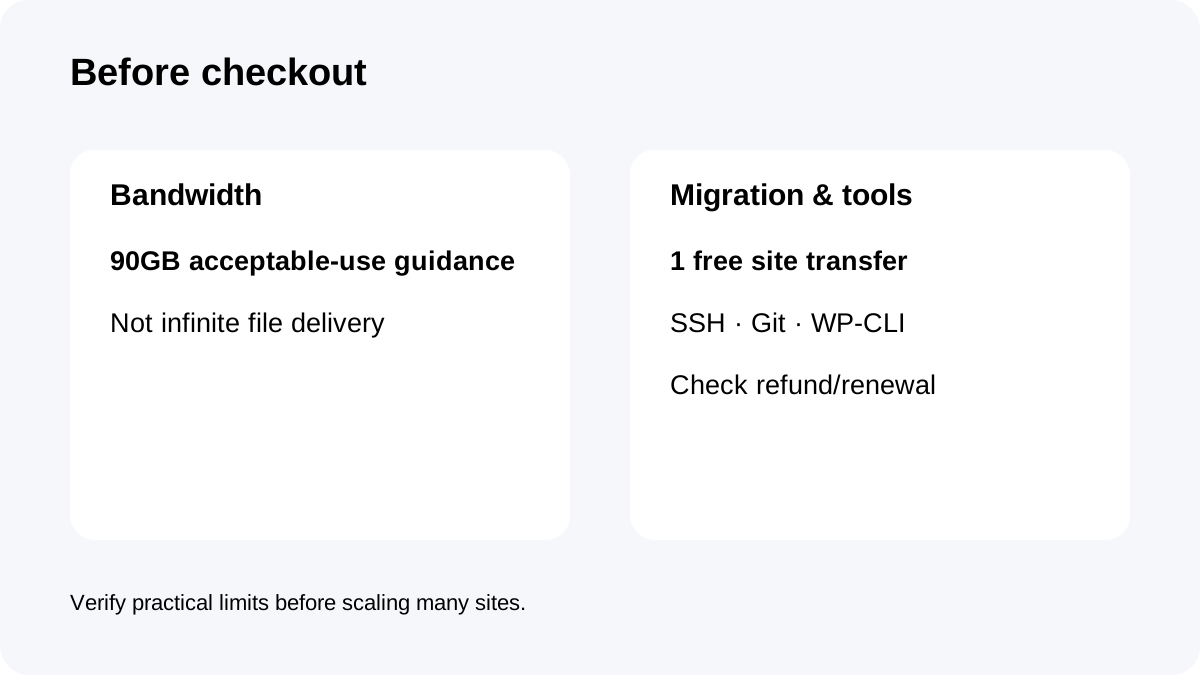
HostArmada does not present Speed Reaper bandwidth as a hard billed cap, but it publishes an **acceptable-use estimate of 90GB** and notes that excessive usage can affect shared-server resources.
That means buyers should not interpret “unlimited” transfer language as unlimited high-volume delivery. Media-heavy downloads, backup archives or large file distribution are poor fits for shared hosting.
Before purchase, estimate monthly transfer from analytics/CDN data and leave margin for growth.
Caching, security and developer workflow
Speed Reaper includes malware scanning/removal, WAF/IP firewall, SSL, dynamic caching, SSH/Bash, Git and WP-CLI.
These features create a stronger shared-hosting workflow than a bare entry plan, especially for buyers managing multiple WordPress sites. But caching and HTTP/3 features are not proof of guaranteed real-world speed; plugin stack, database behavior, geography and workload still matter.
The plan also includes one free website migration. If moving many sites, budget migration effort beyond that included transfer.
Who should buy—and what to verify
Speed Reaper fits buyers who need more than entry shared hosting but do not need root access: multi-site WordPress portfolios, busy content sites or small ecommerce projects that benefit from 6GB RAM, 6 CPU, 21 daily backups and stronger security tooling.
Before checkout, confirm the 36-month $3.95 term, current $19.75 renewal, unlimited-site wording, 40GB storage, 6CPU/6GB shared-account limits, 21 daily backups, one free migration, 90GB acceptable-use guidance and refund eligibility.
**Bottom line:** Speed Reaper is compelling when its richer shared-hosting resources and 21-day recovery depth replace the need for a VPS or separate backup tooling. It is much less attractive if the renewal jump or 40GB/90GB practical boundaries do not fit the portfolio.