TOOLNAVIA / BUYING GUIDE
GreenGeeks Free Domain: $17.95 Renewal, Privacy & Transfer
The short answer
GreenGeeks Lite currently includes one domain registration for the first year, but “free” does not mean the domain stays free for as long as you keep hosting. For a normal .com, the current GreenGeeks table lists $17.95 for renewal, $17.95 for transfer and an optional $9.95/year ID Protect service. Those are separate from Lite’s hosting renewal.
At a glance
- Best for
- Lite buyers budgeting .com renewal, privacy and registrar-transfer timing.
- Price model
- .com renewal $17.95/year; optional ID Protect $9.95/year; verify live account.
- Check first
- Only the current .com example; checkout, tax, eligibility, locks and other TLDs vary.
The three bills are separate
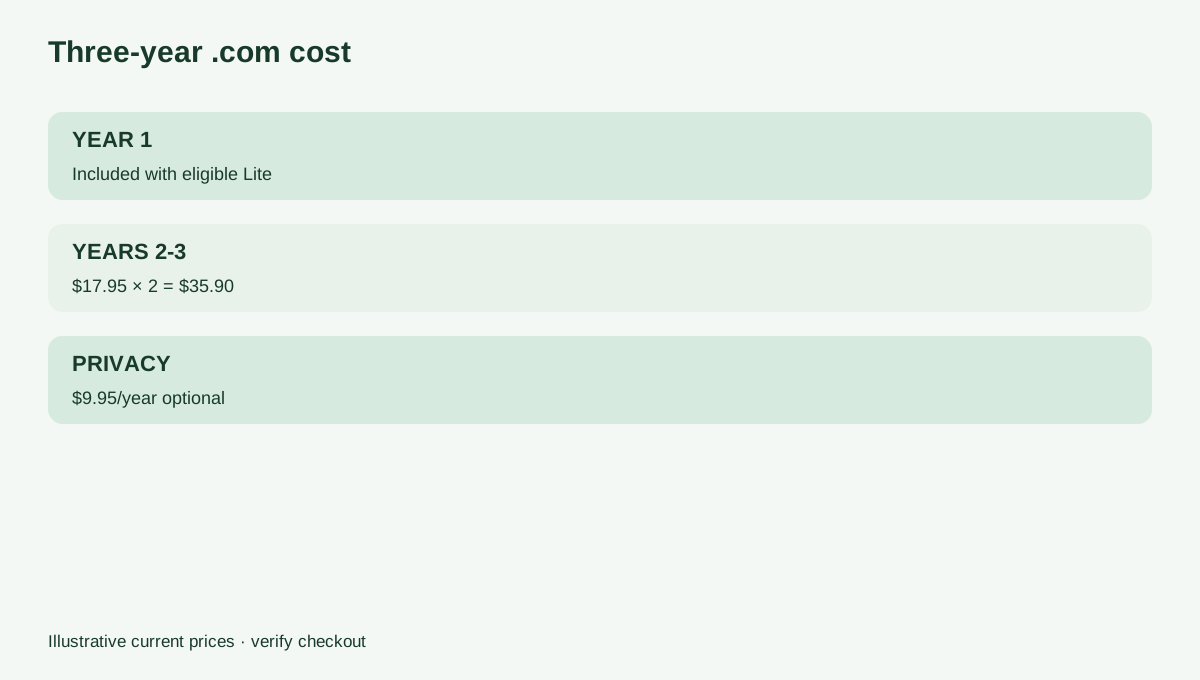
A buyer can face three recurring lines: hosting, the domain registration and optional privacy. Lite currently displays $2.95/month prepaid for 12 months and $13.95/month at renewal. The bundled domain covers a qualifying first-year registration, while later domain years use the TLD’s regular rate. ID Protect is an optional, non-refundable add-on rather than part of the free-domain promise.
For a .com only, two paid renewal years at the current table rate are $35.90. Buying ID Protect for all three years at today’s rate would add $29.85. That makes an illustrative three-year domain-plus-privacy total of $65.75, compared with $35.90 without the paid privacy layer. These are arithmetic examples before tax and future price changes—not a checkout quote.
Do you need paid ID Protect?
GreenGeeks says basic GDPR-related redaction is already applied, while ID Protect replaces public registrant details with the privacy service’s data and provides an obfuscated contact address. The practical question is not “privacy or no privacy.” It is whether you need the enhanced service for this TLD and use case. Some country-code extensions do not permit the same masking, so never generalize the .com row to every extension.
Competing registrars sometimes include privacy or redaction without a separate annual fee. Cloudflare and Porkbun illustrate that alternative pricing model, but they also have different account, DNS and support conditions. Compare the full operating model, not a single add-on price.
Renew before the risk window
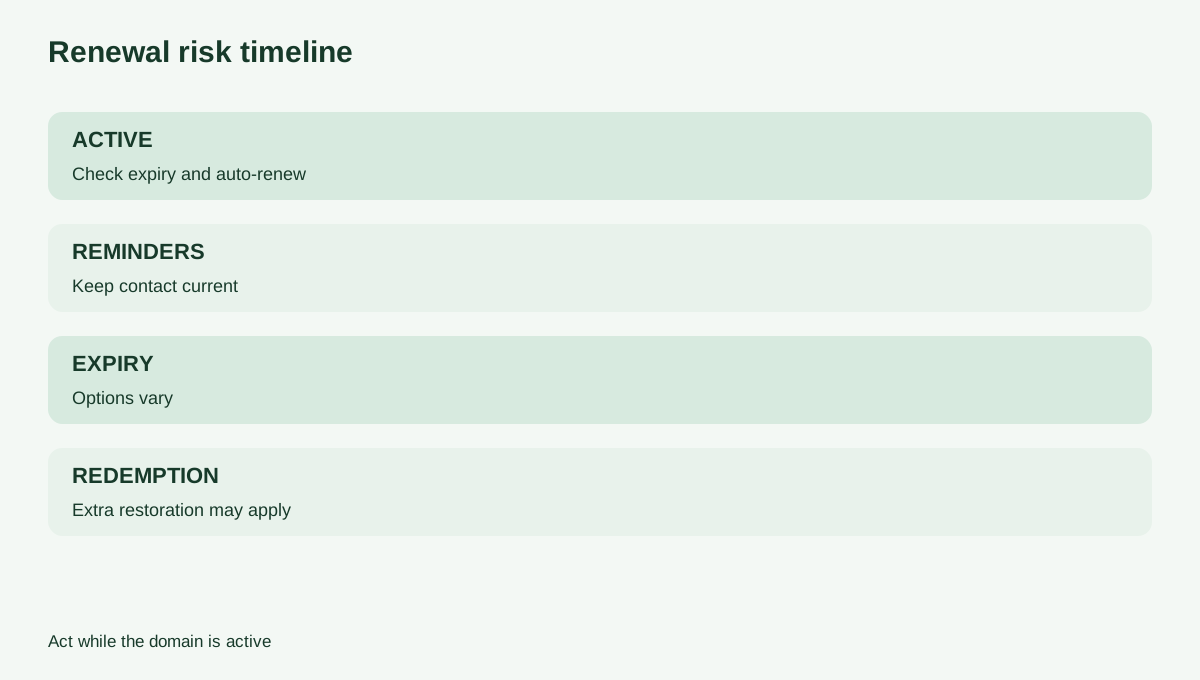
GreenGeeks separates cancellation and auto-renewal by product, while its renewal guide also treats domain renewal as a distinct billing action. Turning off hosting renewal does not automatically cancel the domain or ID Protect, and the terms require disabling auto-renewal at least five business days before the relevant renewal. Keep contact details current and act on reminders rather than relying on them as the only control.
ICANN requires renewal notices and explains that expired-domain options and fees vary by registrar. A domain in Redemption Grace Period may need restoration before transfer, adding cost and delay. The safe budget rule is therefore simple: renew or transfer while the domain is active, then verify the new expiry date and nameservers.
Transfer is not the same as moving the website
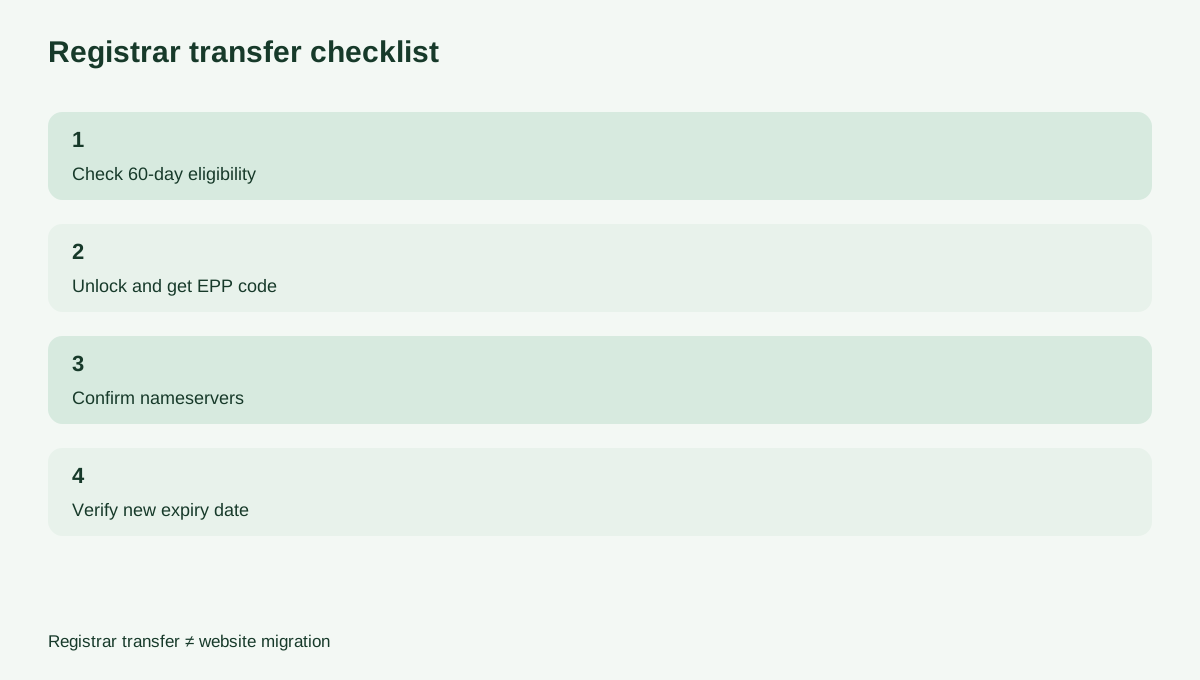
A registrar transfer changes who manages the domain registration. A hosting migration moves files, databases and email. You can transfer one without moving the other. GreenGeeks’ process calls for checking eligibility, unlocking the domain, handling privacy when required and obtaining the EPP/Auth code. ICANN’s rules explain when a registrar may apply 60-day locks after registration, a prior transfer or a registrant-contact change.
Do not change registrant details immediately before a planned transfer without checking the lock effect. Also verify nameservers before and after the move. Namecheap’s operational guide notes that leaving nameservers unchanged can preserve DNS service during transfer; that is broadly useful guidance, not a promise about every registrar.
Is transferring cheaper?
At GreenGeeks’ current .com table, transfer and renewal are both $17.95. A lower-cost registrar can reduce later renewal expense, but transfer timing, the extra-year treatment, privacy, DNS requirements and support may change the result. Cloudflare’s at-cost model and Porkbun’s multi-year calculator show why a five-year view is more informative than a first-year promotion. Recheck the exact .com price immediately before initiating the move.
Buying rule
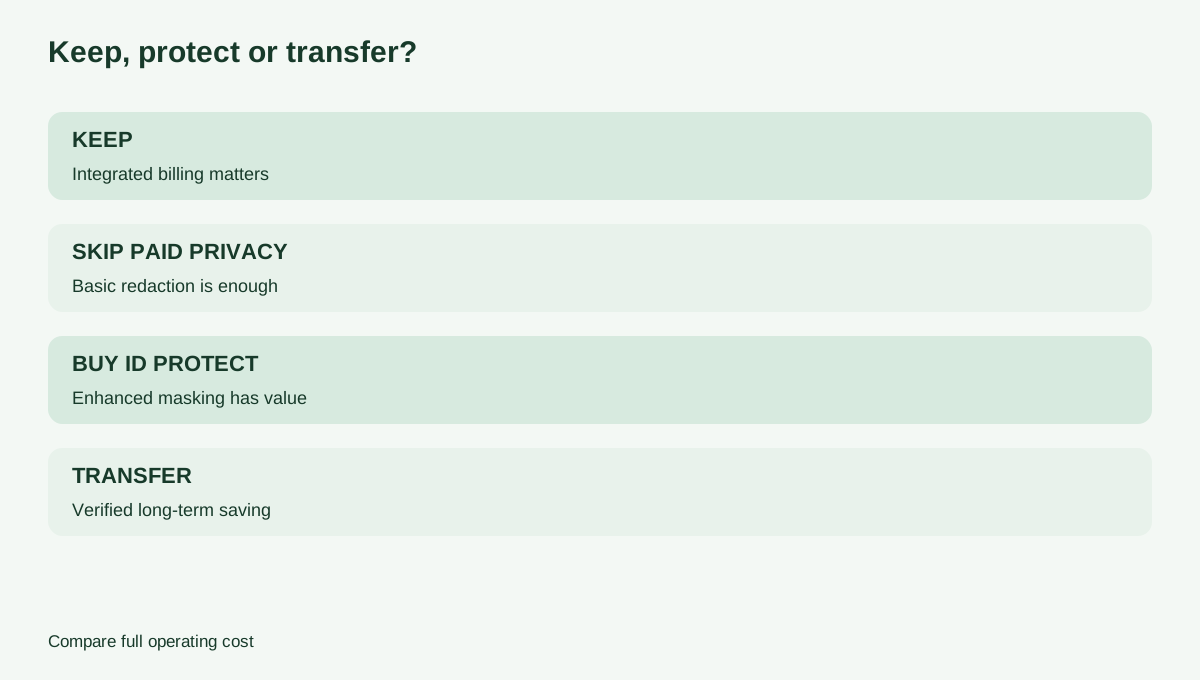
Keep the domain at GreenGeeks if integrated billing and support are worth the current renewal difference and you understand each product’s auto-renew setting. Skip paid ID Protect if basic redaction is enough for your risk profile; buy it only when the enhanced privacy service has a clear value. Transfer while the domain is active if a verified multi-year saving outweighs the operational change. Always confirm the live account or checkout price, tax, expiry date and nameservers before acting.
Affiliate disclosure: Toolnavia may earn a commission if you buy GreenGeeks through the approved personal tracking link, at no extra cost to you.