TOOLNAVIA / BUYING GUIDE
Cloudways Laravel Queues: A Running Worker Can Still Have Old Code
The short answer
At a glance
- Best for
- Laravel maintainers owning worker refresh and queued-result acceptance.
- Price model
- Use currentDigitalOceanPremium2GB configuration;serverusage,backups andadd-ons affect total.
- Check first
- Running status doesnot prove newcode,correctqueueorfinishedjobs;resourcecapacityneedsmeasurement.
Verdict: buy for an owned worker-release process
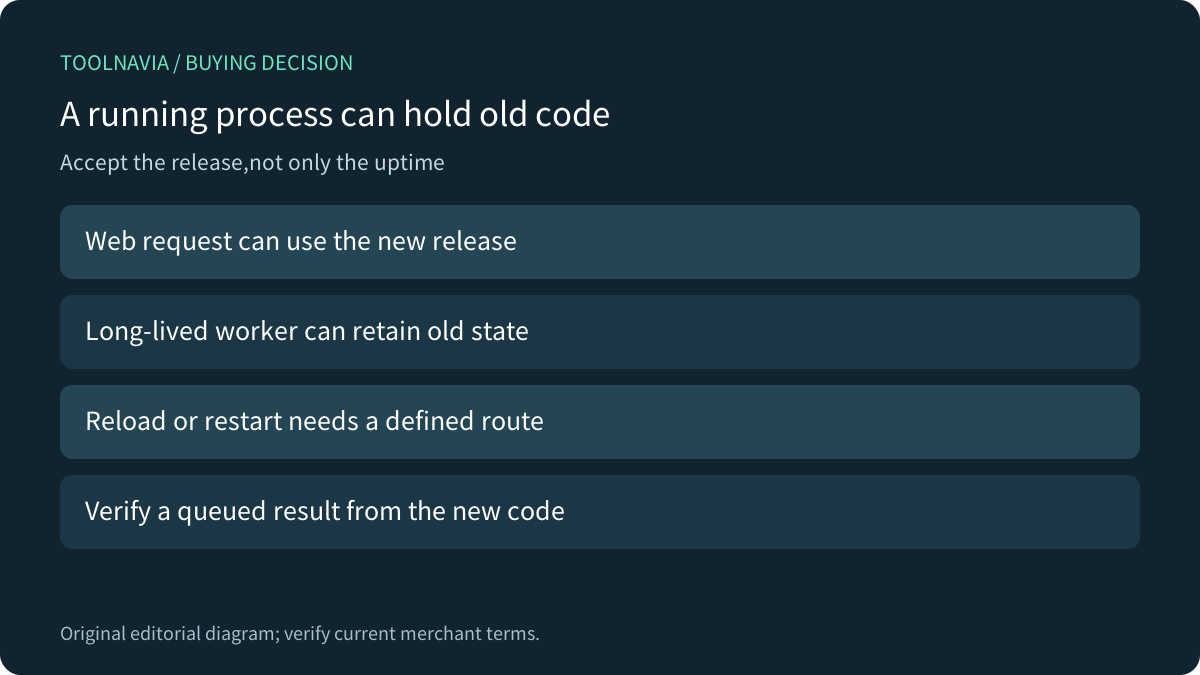
Cloudways Flexible can suit Laravel teams that want managed process controls and can own queue configuration, release coordination and job acceptance. Do not buy more RAM merely because a background job still behaves like the previous release. A long-lived worker may need refreshing even when the website and process status look healthy.
This guide analyzes documentation. No application, queue, job, SSH session, deployment or process was operated. The exact DigitalOcean Premium 2GB offer is hosting context, not a promise of sufficient capacity for every worker workload.
Review the exact Cloudways Flexible offer. Toolnavia may earn a commission through this approved direct link.
Know what the platform actually controls
Cloudways documents Supervisor for Laravel applications on its Laravel or Custom PHP stacks, with Redis prerequisites in its illustrated setup. Application Supervisor Jobs exposes queue selection, process count, timeout, tries, environment and Artisan path. Check the installed framework configuration instead of copying a dated environment-variable example blindly.
Four relevant strengths are integrated job control, execution/queue selection, configurable process count, and status/log/restart controls. They make the operating path visible. None independently proves that the process consumes the intended queue or produces a correct result.
Name the release owner and record the application path, queue connection and required job outcome. A process named after the right project can still have the wrong configuration.
Deploying files does not refresh long-lived state
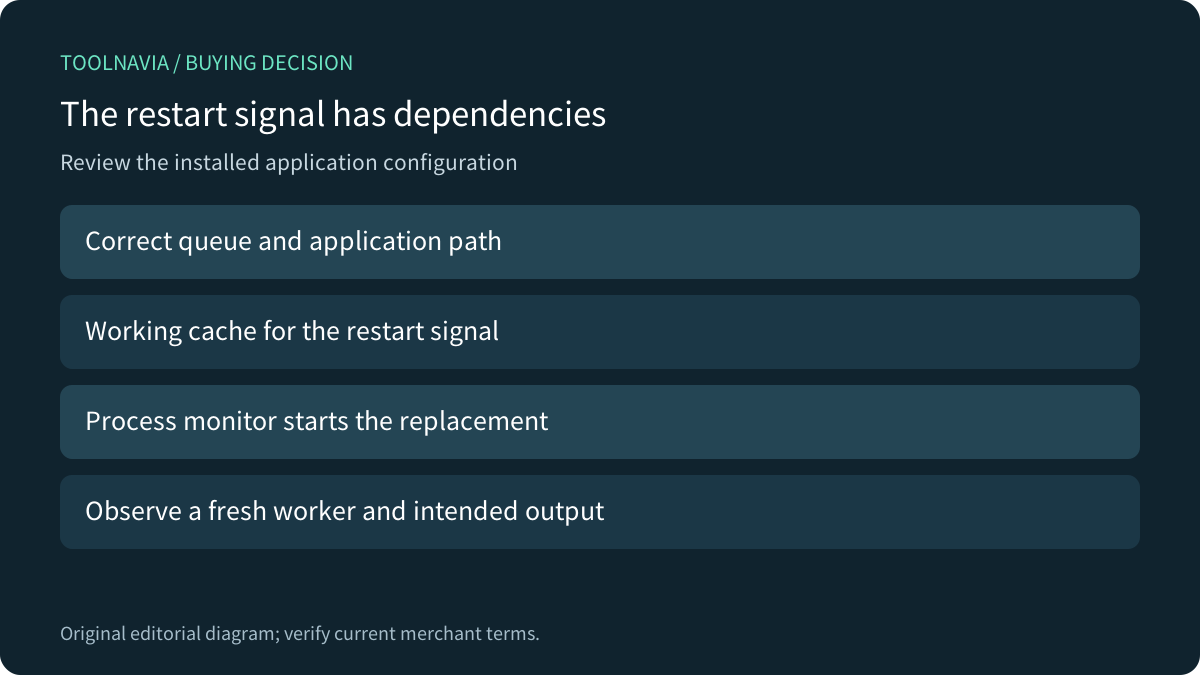
Laravel 12's queue documentation explains that queue workers keep booted application state in memory and do not automatically notice changed code. Its queue:restart route asks workers to exit after current work, with a process manager expected to start replacements. Restart signals use the application cache, so that dependency must work.
Check the installed release and interruption configuration. Do not assume every command on today's documentation exists in an older application. Likewise, Cloudways' platform restart button is not asserted here to have identical graceful semantics to the framework command.
Laravel's deployment guide separately requires refreshing long-running services and a process monitor outside its own managed-cloud workflow. A successful web boot check does not establish that a background worker has loaded the new release.
Review execution, retry and shutdown timing separately
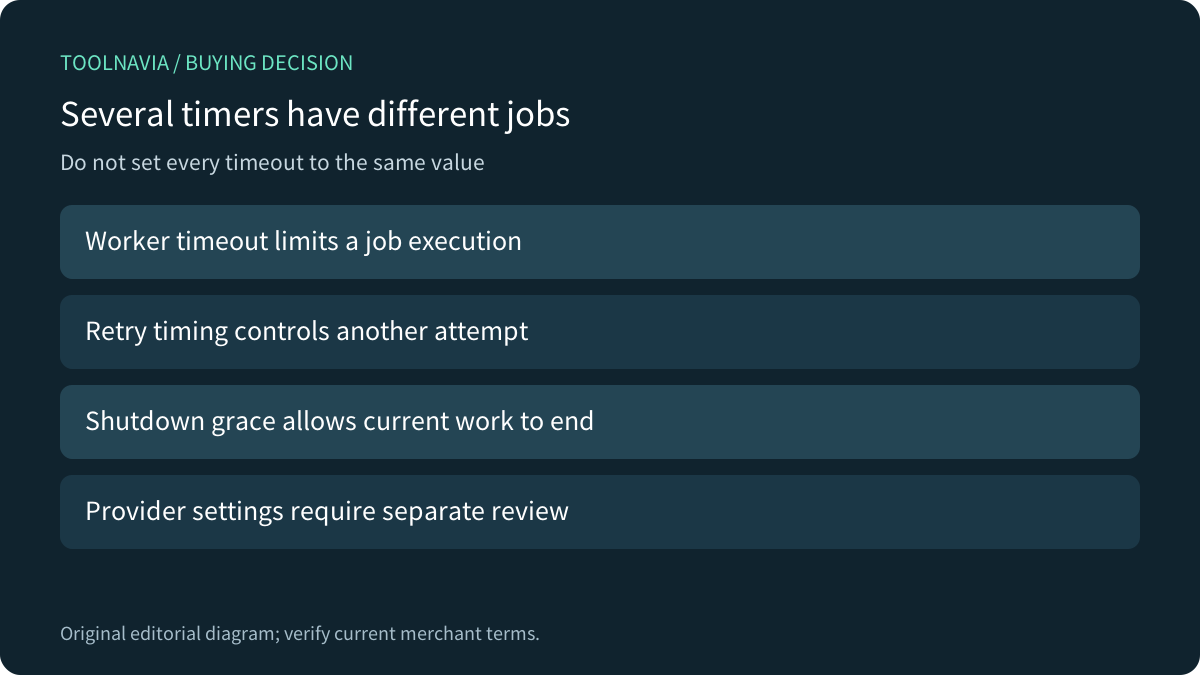
Laravel documents a relationship between worker timeout and retry timing: the worker timeout should be shorter than retry_after, otherwise duplicate processing can occur. That is not a universal pair of numeric values for every job or queue backend.
Supervisor's upstream stopwaitsecs is a different timer: after the stop signal, it limits how long to wait before a final kill. Its documented default is not evidence of Cloudways' installed value or an editable customer entitlement. Confirm the provider-supported shutdown behavior for the longest legitimate job.
Design jobs to handle permitted retries without repeating an unintended business effect. Process supervision alone does not establish exactly-once business execution, and increasing process count can add contention rather than useful throughput.
Compare lifecycle behavior across frameworks
Symfony 7.4 likewise documents refreshing workers after deployment, using a cache signal and letting current work finish before the process manager starts replacements. Its multi-host cache and termination-window guidance provides useful review questions, not Laravel commands or Cloudways defaults.
Keep framework-specific details separate. A restart procedure that works for one application is not automatically correct for another cache layout, queue transport or release directory. Observe the actual replacement and the resulting job output.
Accept a synthetic queued result before sizing capacity
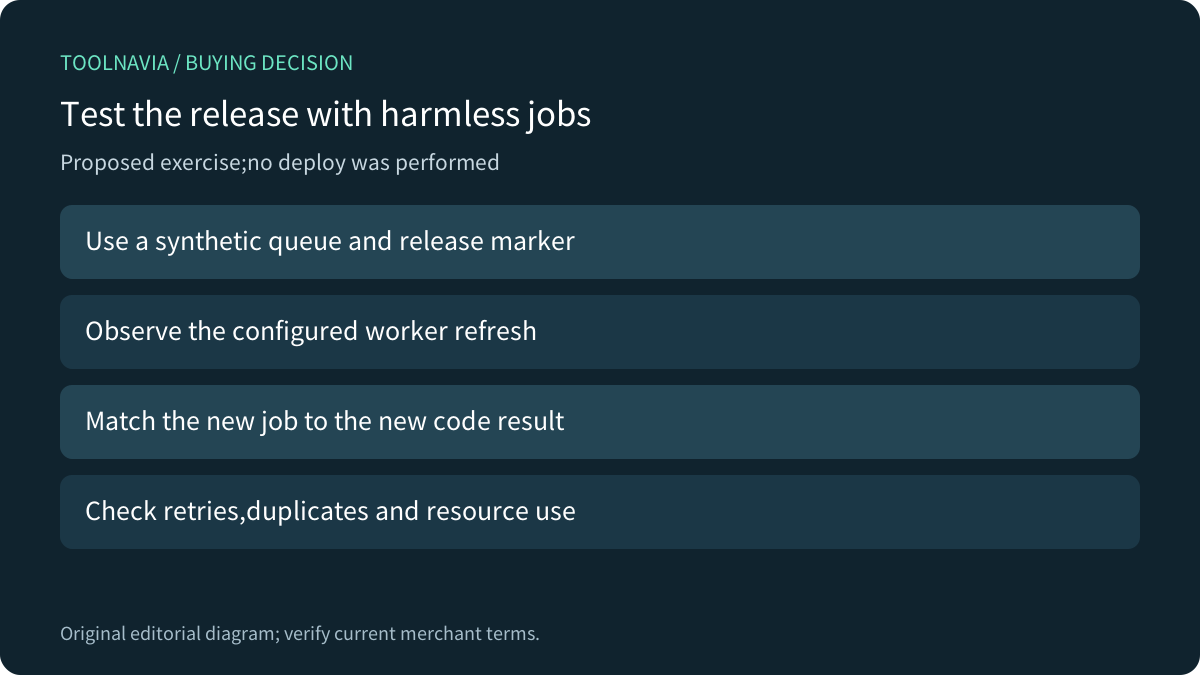
For a proposed authorized exercise, use an isolated application and harmless jobs that include a release marker. Deploy a controlled code change, follow the supported refresh route, and match a new job to the expected new-code result. Inspect the relevant logs, retries and duplicate-safe handling. No exercise was performed here.
Measure worker and broker resource use alongside the web application before choosing concurrency or a larger server. Confirm the current exact Premium 2GB configuration and invoice, including usage, offsite backups and add-ons;the multiple DigitalOcean tables do not justify a universal price quote.
Choose Flexible when this maintained lifecycle fits the team. Keep a suitable existing arrangement when it already meets the job requirement. A running process is a starting signal for inspection, not the final evidence of a successful release.