TOOLNAVIA / BUYING GUIDE
Bluehost Business vs ChemiCloud Pro: 50 Sites + 50GB or 4GB RAM + 20 Backups?
The short answer
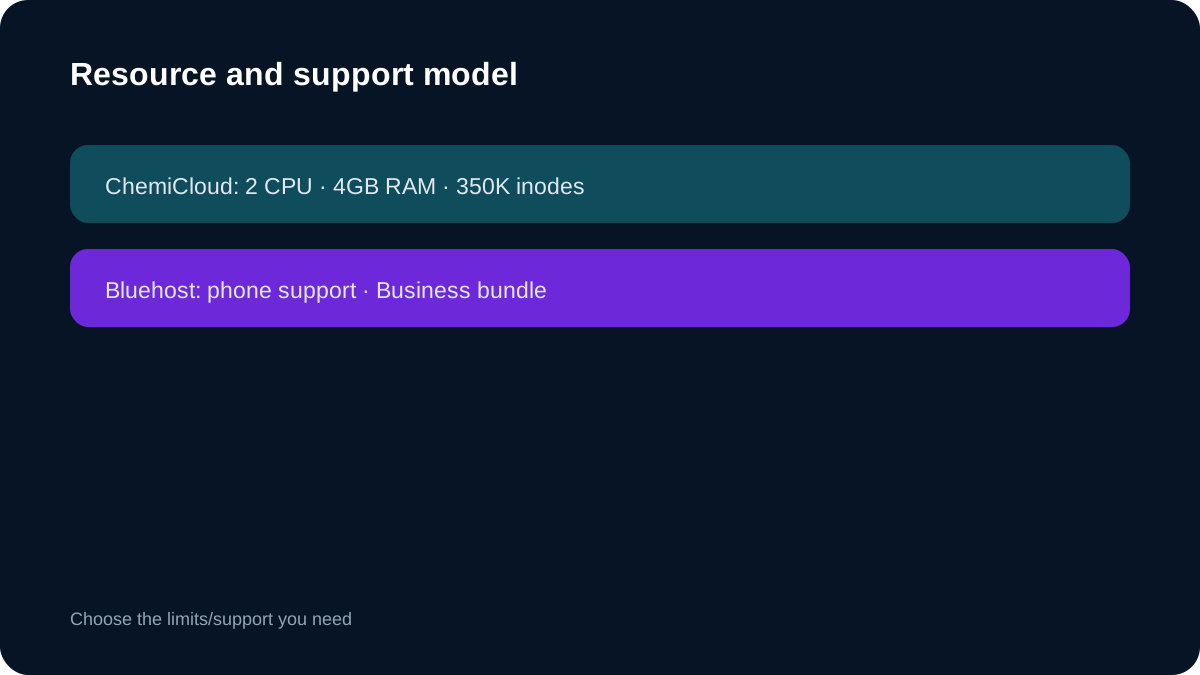
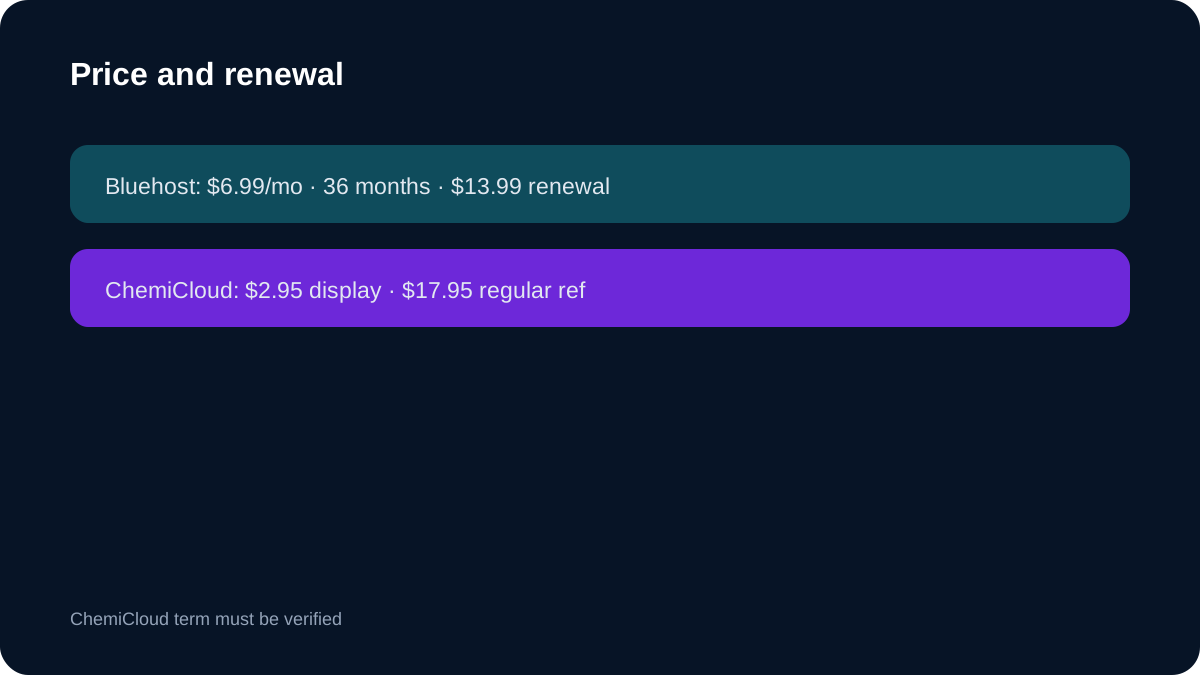
Bluehost Business and ChemiCloud Pro are both multi-site shared-hosting upgrades, but they optimize very different limits. Bluehost Business is **$6.99/month for 36 months**, renewing at a current **$13.99/month**, with up to 50 sites, 50GB NVMe and about 200K monthly visits. ChemiCloud Pro currently displays **$2.95/month** with a **$17.95 regular-price reference**, unlimited website allowance within 35GB NVMe, 2 CPU cores, 4GB RAM, 350K inodes and 20 daily backups.
The decision is not simply $6.99 versus $2.95. Bluehost gives more storage, a much higher published visit-planning number and phone support; ChemiCloud gives explicit CPU/RAM/inode limits, deeper visible backups and a lower current promo display.
At a glance
- Best for
- Multi-site shared-hosting buyers choosing between Bluehost's larger storage/visit envelope and ChemiCloud Pro's explicit compute/backups/unlimited-site model.
- Price model
- Bluehost $251.64/36m + $13.99 renewal vs ChemiCloud $2.95 display/$17.95 regular ref
- Check first
- ChemiCloud exact promo term requires checkout; Bluehost security presentation varies; capacity metrics are not benchmarks.
Quick verdict
Choose **Bluehost Business** when 50GB storage, up to 50 sites, a 200K-visit planning envelope and phone support matter more than ChemiCloud's deeper resource transparency.
Choose **ChemiCloud Pro** when explicit 2 CPU/4GB RAM, 350K inodes, 20 daily backups and cPanel/LiteSpeed operations matter more than Bluehost's larger storage and phone channel.
Current 2026 comparisons confirm that buyers actively evaluate Bluehost and ChemiCloud on renewal, support, resource model and WordPress/shared-hosting fit. Toolnavia does not reuse third-party performance rankings as exact plan facts.
Intro and renewal: clear 36-month Bluehost math versus a ChemiCloud live display
Bluehost Business currently costs **$6.99 × 36 = $251.64** for the 36-month opening term and publishes a current **$13.99/month renewal**.
ChemiCloud Pro currently displays **$2.95/month** and a **$17.95 regular-price reference**, but the live plan table warns that selected-timeframe availability can vary.
That means Bluehost offers clearer term-normalized opening math, while ChemiCloud shows a much lower promo display but needs checkout confirmation before a responsible first-term total can be published.
Bluehost's renewal is currently lower than ChemiCloud's regular reference, but both can change in future billing cycles.
Site count and storage: 50 sites/50GB versus unlimited sites/35GB
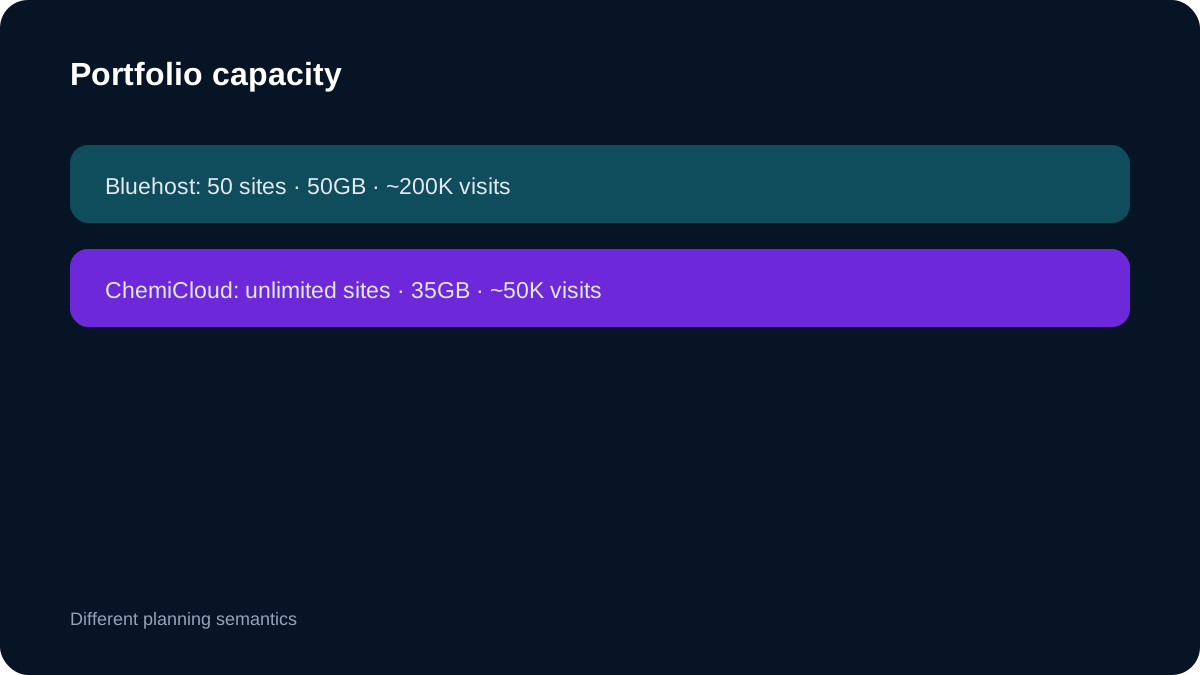
Bluehost Business publishes **up to 50 websites and 50GB NVMe**.
ChemiCloud Pro publishes **unlimited websites within 35GB NVMe**.
Bluehost gives 15GB more local storage, while ChemiCloud removes a fixed website-count cap but still constrains the account with storage, CPU, RAM and inode limits.
For a portfolio of many small sites, the unlimited-site allowance can matter. For a smaller number of media-heavy sites, Bluehost's 50GB may be more useful.
Visit planning versus compute transparency
Bluehost Business publishes a planning figure of about **200K monthly visits**.
ChemiCloud Pro publishes about **50K monthly visits**, but also gives **2 CPU cores, 4GB RAM and 350K inodes**.
These figures use different capacity language and should not be turned into a speed benchmark. Bluehost gives a larger traffic-planning number; ChemiCloud gives more explicit compute/file-count boundaries.
If your main risk is traffic volume, Bluehost's planning number is easier to read. If your risk is PHP/database/resource contention, ChemiCloud's CPU/RAM/inode disclosures are more actionable.
Backups and recovery
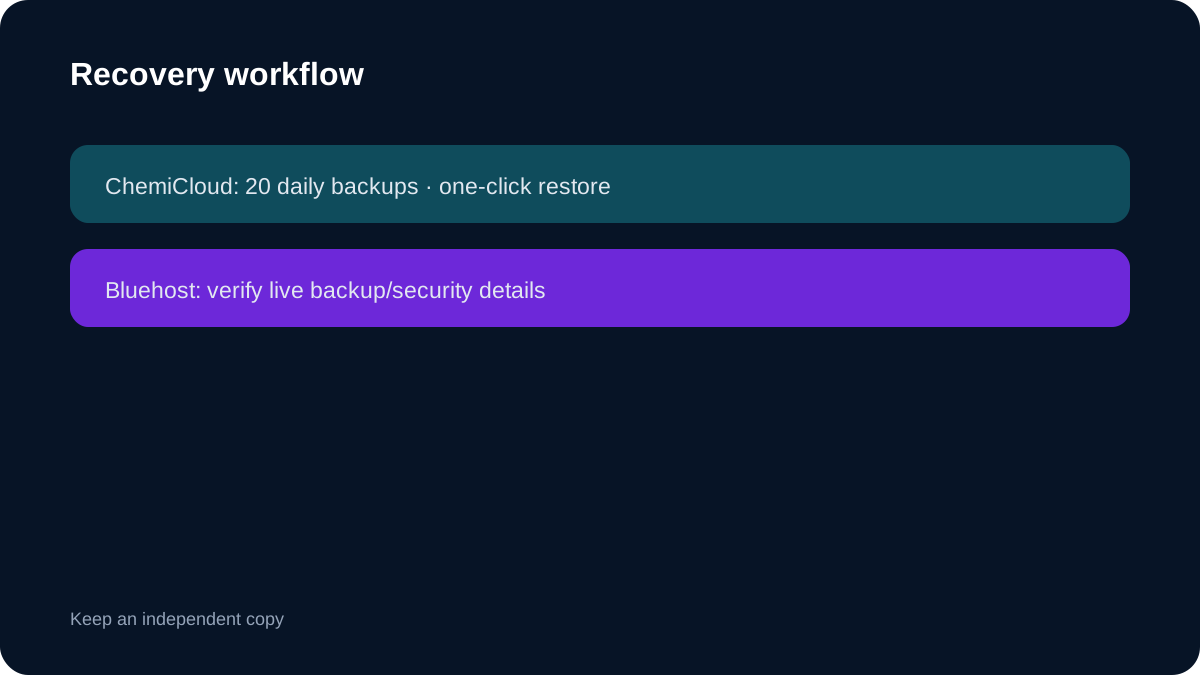
ChemiCloud Pro explicitly lists **20 daily backups** plus one-click restore on the current plan table.
Bluehost Business is positioned with backup/security features on its pricing surfaces, but current official pages can differ in how some protections are presented.
Because the exact backup depth is clearer at ChemiCloud, buyers who need a defined recovery-history count have an easier planning model there.
Regardless of host, keep an independent recovery copy for business-critical sites.
Support and control-panel workflow
Bluehost Business includes **phone support** in addition to chat, which can matter to teams that want a voice escalation channel.
ChemiCloud Pro uses **cPanel**, LiteSpeed, free migrations, CDN and one-click backup restore.
Both are mainstream shared-hosting workflows, but their operational emphasis differs: Bluehost leans on broader support channels and high site/visit planning, while ChemiCloud exposes more server-resource detail and recovery tooling.
Refund and migration risk
ChemiCloud qualifying Shared Hosting has a **45-day initial money-back window** under current terms and includes free migration support.
Bluehost's plan pages use a shorter standard refund framework and a fixed 36-month discount commitment for the quoted Business rate; renewal values remain subject to account-specific updates.
That means ChemiCloud gives more evaluation time, while Bluehost gives clearer opening-term arithmetic but ties the best displayed rate to a longer commitment.
Checkout checklist
For **Bluehost**, confirm Business, 36 months at $6.99, total due today, $13.99 renewal reference, 50 sites, 50GB NVMe, 200K-visit planning, phone support and the exact live security/backup features in checkout.
For **ChemiCloud**, confirm Pro, the billing cycle that makes the current $2.95 display available, the $17.95 regular reference if still shown, unlimited website allowance, 35GB NVMe, 2 CPU, 4GB RAM, 350K inodes, 20 daily backups and migration/refund eligibility.
Who should buy which?
**Buy Bluehost Business** when larger storage, a higher published visit-planning figure and phone support fit your portfolio.
**Buy ChemiCloud Pro** when explicit compute/file limits, backup depth and cPanel/LiteSpeed operations matter more.
**Bottom line:** Bluehost Business buys broader capacity and support channels; ChemiCloud Pro buys resource transparency and recovery depth.