TOOLNAVIA / BUYING GUIDE
MailerLite for Shopify: Why Your Abandoned-Cart Email Never Sent
The short answer
At a glance
- Best for
- Stores with a reachable opted-in audience that want newsletters and recovery journeys in one email platform.
- Price model
- Current USD: Comfort from $12/month; lowest annual display $10.80/month equivalent; final price varies by subscriber tier/tax
- Check first
- Stores expecting a paid plan to identify every anonymous shopper or recover all first-time Shopify checkouts.
A paid account cannot email an unknown shopper
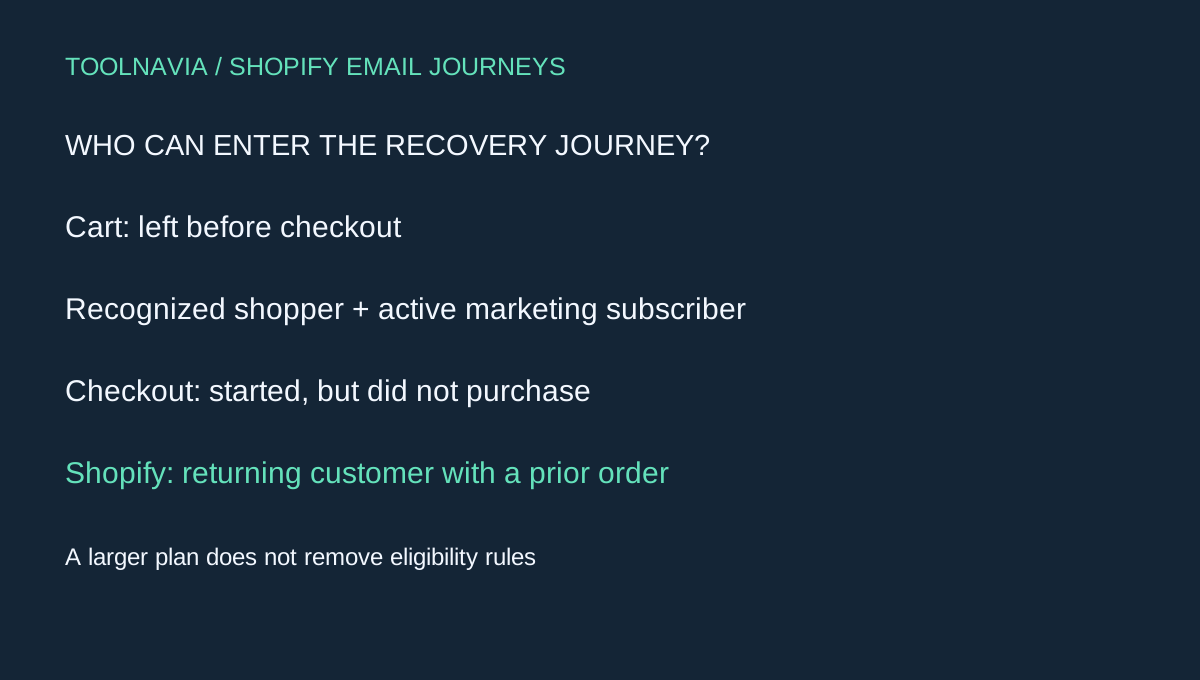
Your store shows abandoned baskets, but MailerLite sends nothing. Before buying a bigger plan, check whether those shoppers were eligible to enter the workflow at all. MailerLite's Shopify integration requires recognized shoppers for abandoned-cart workflows; subscribing through a MailerLite store form or clicking a MailerLite email are documented recognition routes. Anonymous visitors are not automatically a recoverable audience.
That does not make the tool useless. A store with an opted-in customer base can combine newsletters, product education and recovery journeys in one place. The buying question is whether your reachable audience and operating needs justify the subscription—not whether the store reports a large abandonment number.
This guide uses documentation, not a live recovery experiment. Toolnavia may earn commission through the official referral buttons; no discount or recovered-sales result is promised.
Cart and checkout are different moments
An abandoned cart means items were added but the shopper left before checkout. An abandoned checkout means checkout began without a completed purchase. Choose the trigger that matches the event you want to follow up. In MailerLite, advancing to checkout or completing a purchase stops the cart sequence; a recovered order stops the checkout sequence.
Shopify adds a crucial qualification: MailerLite's checkout guide says its abandoned-checkout workflows trigger only for returning customers with at least one previous order. Do not apply the guide's general first-time-buyer example to Shopify; the same document explicitly excludes Shopify from that example.
This makes a first-time shopper who typed an email at checkout a poor universal test case. Ask support to confirm eligibility for your current integration if that audience is the core reason you would buy. Do not purchase on the assumption that moving from Comfort to Power removes an integration-specific rule.
Follow the evidence before changing the plan
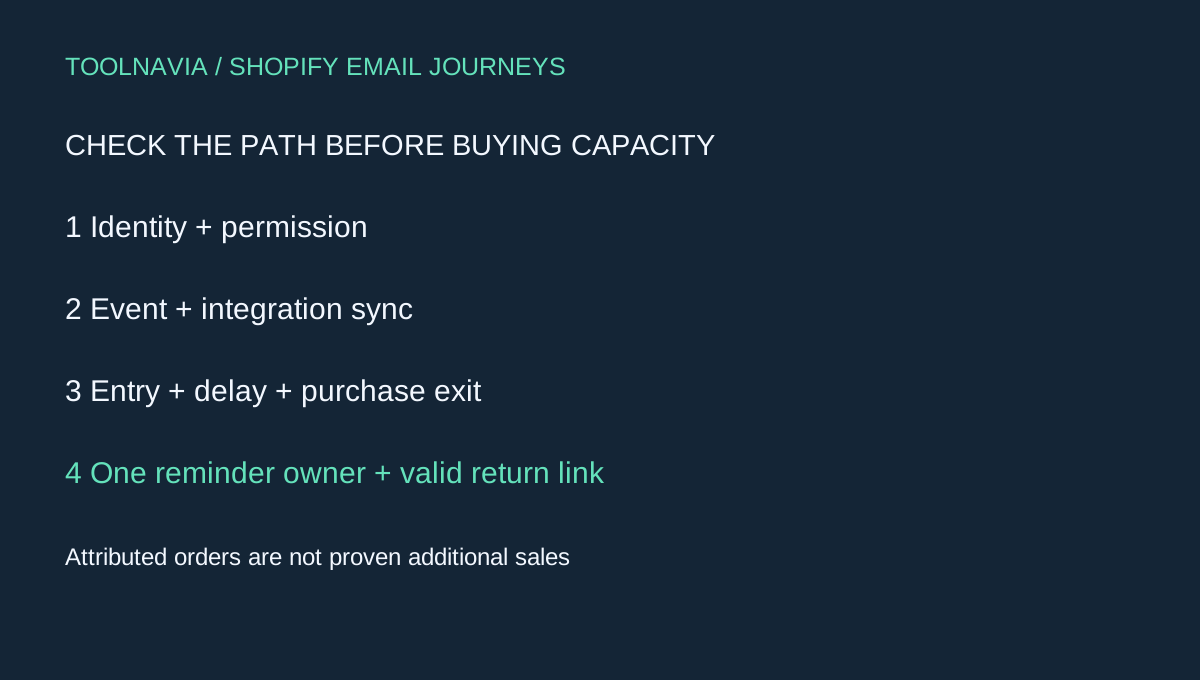
Start with a known test customer and the correct event. Confirm integration sync and that the workflow was active before abandonment. Check active subscriber status and marketing permission. For the cart path, MailerLite also documents login and recognition requirements; changing browsers or clearing cookies can break recognition until another qualifying action occurs.
Then inspect Automation Activity. A person who never entered, a person waiting for the delay and a person canceled after moving to checkout are three different diagnoses. A canceled recovery sequence can be correct behavior. Avoid measuring success solely by whether every test produces an email.
Our recommended evidence record has five fields: test customer, event timestamp, subscriber status, workflow activity and expected next action. Keep screenshots or event records privately; do not paste customers' addresses into public support comments. This is a suggested diagnostic method, not testing we performed on a merchant's account.
Use six cases to accept the setup
Run controlled tests with your own accounts, following the store's test-order method where available. Define the expected result before each case:
| Case | What the check should establish | |---|---| | Recognized, opted-in existing customer leaves a cart | Eligible cart entry and scheduled reminder | | Anonymous visitor leaves a cart | No assumption that an email can be sent | | Returning customer abandons checkout | Checkout eligibility and correct trigger | | First-time Shopify buyer abandons checkout | The documented Shopify restriction is respected | | Shopper buys during the waiting period | Recovery stops rather than chasing a completed sale | | Customer withdraws marketing permission | No later marketing reminder is sent |
Check the message too: product content, return destination, sender and mobile layout. Match the cart or checkout content block to the workflow. A technically delivered message with the wrong product or broken return path is not an accepted setup.
Give each reminder one owner
Shopify Messaging already offers marketing automations, and custom or third-party workflows can use Shopify Flow. Write down which system owns each reminder before adding another sender. Once a replacement is tested, retire the overlapping reminder deliberately rather than leaving both active.
Other platforms have similar operational boundaries. Brevo documents identification prerequisites and warns that website reminders can duplicate its messages. Klaviyo uses trigger and profile filters; its documentation illustrates purchase exclusions in checkout flows. Switching providers therefore does not remove the need to verify identity, event data and exit conditions.
Also separate attribution from incremental profit. MailerLite's Shopify guide counts purchases within 30 days after a campaign or automation shop-link click as email revenue. That report is useful, but it does not prove those orders would otherwise have been lost. Compare cohorts or controlled periods cautiously; seasonal demand and promotions can change the result.
Buy capacity after the recovery path works
Comfort currently starts at $12 per month, with the actual quote depending on the subscriber tier. At an illustrative $15 contribution per genuinely additional order, one extra order could cover that entry subscription price before setup labor and other costs. This is a planning calculation, not a prediction—and attributed orders are not automatically additional orders.
MailerLite is more compelling when you also need regular campaigns and customer education for an existing audience. If most prospective recovery users are anonymous or excluded first-time Shopify checkouts, a higher subscription alone does not solve your purchase requirement.
Use the official options through the referral button after validating the audience and workflow. Choose the tier from subscriber and sending needs, keep a single owner for each reminder, and review actual eligible volume before committing to a larger bill.