TOOLNAVIA / BUYING GUIDE
WPX Powerstore vs Superstore: Is $1,600 More Worth 3 Stores + 36GB RAM?
The short answer
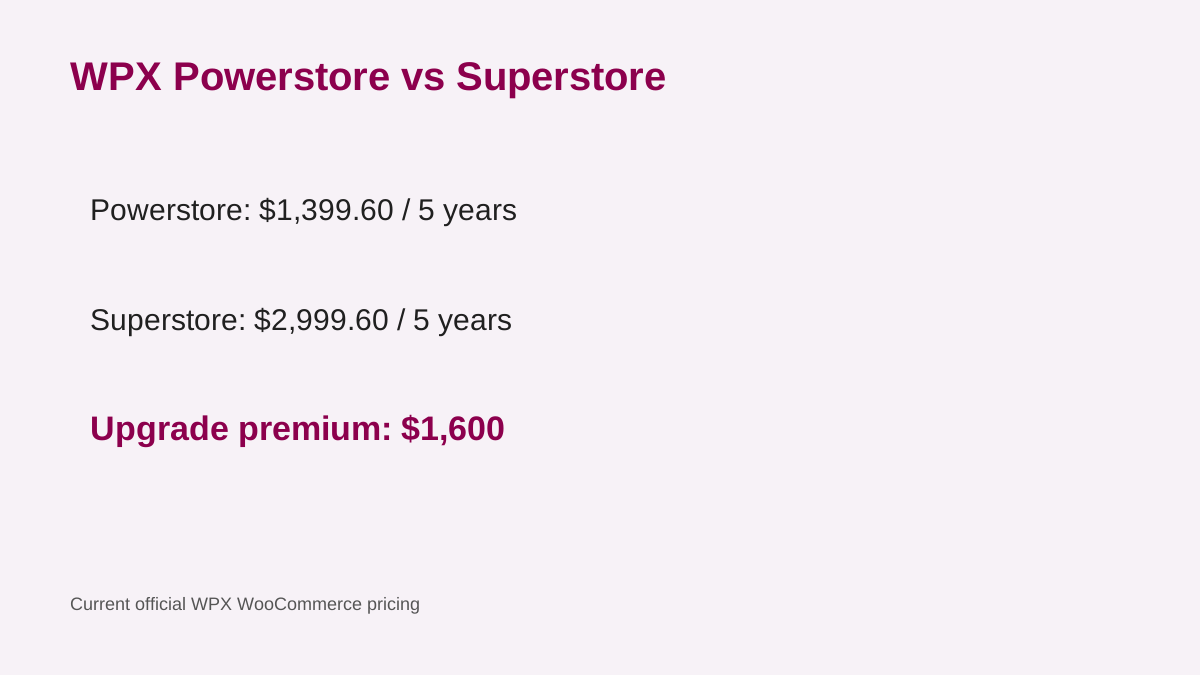
WPX Superstore costs $1,600 more than Powerstore over the current five-year prepayment: $2,999.60 versus $1,399.60. The upgrade raises store capacity from 1 to 3, storage from 20GB to 50GB, RAM from 8GB to 36GB, CPU from 2 to 3 cores, and PHP workers from 10 to 40.
Affiliate disclosure: Toolnavia may earn a commission from qualifying WPX purchases through the approved affiliate links on this page.
At a glance
- Best for
- WooCommerce operators with a second/third store or workloads approaching Powerstore RAM/worker limits.
- Price model
- $1,399.60 vs $2,999.60 prepaid for five years; $34.99 vs $74.99 regular monthly
- Check first
- Five-year rates require prepayment; unlimited bandwidth still has policy/compute boundaries; no speed benchmark.
The five-year upgrade costs $1,600
Powerstore is $34.99 regular monthly or $1,399.60 prepaid for five years. Superstore is $74.99 regular monthly or $2,999.60 prepaid for five years. The five-year difference is exactly $1,600. That should solve a store-count or resource limit you can already see, not vague future growth.
Store capacity rises from 1 to 3
Powerstore is built for one WooCommerce store. Superstore supports up to three. A merchant operating a primary store plus a separate regional, wholesale or second-brand store can use that capacity immediately. If only one store matters, the two extra slots are not enough by themselves to justify the premium.
Storage rises 2.5× and bandwidth becomes unlimited
Powerstore lists 20GB storage and 400GB bandwidth. Superstore lists 50GB storage and unlimited bandwidth under current plan terms. For large catalogs, product media or several stores, the extra 30GB is meaningful. “Unlimited bandwidth” still operates inside WPX service and resource policies, so it should not be read as unlimited compute.
RAM and PHP workers jump dramatically
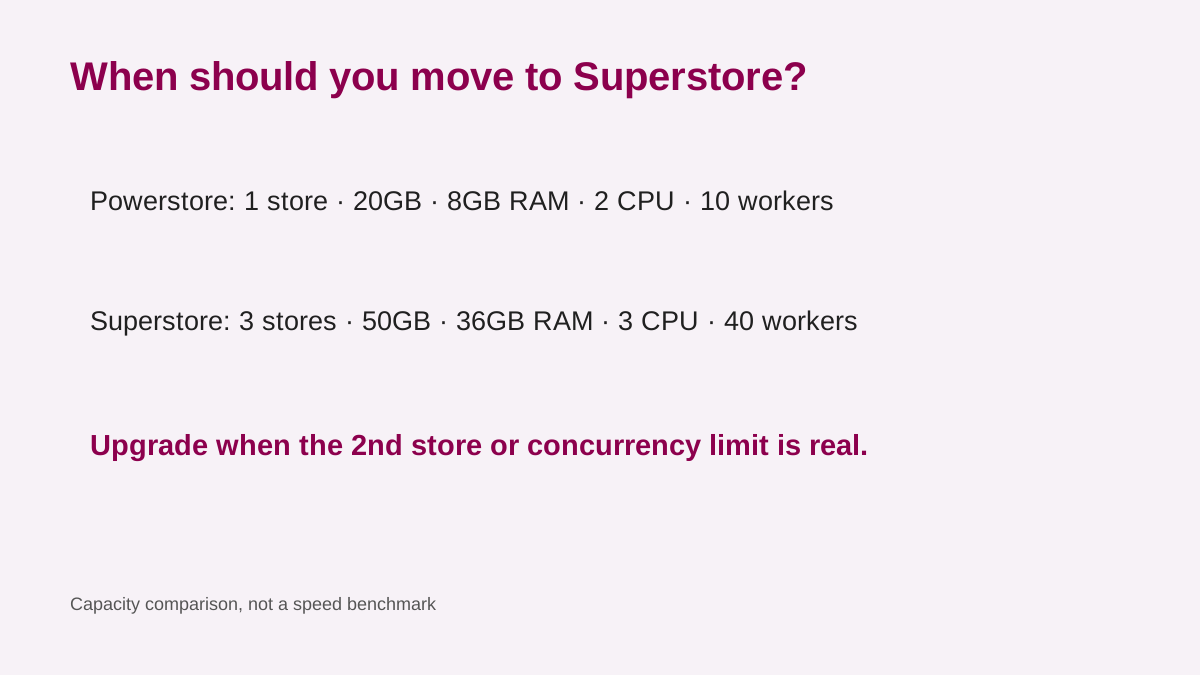
Powerstore publishes 8GB RAM, 2 CPU cores and 10 PHP workers. Superstore publishes 36GB RAM, 3 CPU cores and 40 workers. The upgrade gives 4.5× RAM and 4× workers, while CPU rises 1.5×. This shape matters most when concurrency and PHP worker pressure are the problem.
Both remain managed WooCommerce
WPX says its WooCommerce plans are designed for dynamic stores that need more resources than standard WordPress plans. The managed platform remains familiar; the upgrade is primarily about scale and resource headroom rather than a completely different service.
Migration makes the store-count threshold concrete
WPX says each migrated site needs its own migration request, and approved migrations are handled by its team. If you already have two or three WooCommerce stores to move, Superstore's store count is immediately relevant. If you have only one, migrate it first and measure whether Powerstore actually hits a limit.
Use the refund period as a load test
WPX currently advertises a 30-day money-back guarantee. Before a five-year commitment, test the heaviest store with representative catalog size, checkout volume, logged-in users, admin operations and scheduled tasks. The right tier removes a measured constraint, not an imagined one.
When Powerstore is the better buy
Choose Powerstore when one store is enough, 20GB/400GB fit comfortably and the 2-core/8GB/10-worker envelope handles real traffic. Staying on Powerstore avoids $1,600 of five-year prepayment.
When Superstore earns the extra $1,600
Choose Superstore when the second or third store is real, storage is moving beyond 20GB, or higher concurrency can use the 36GB RAM / 40-worker envelope. For one store with headroom, Powerstore remains the cleaner value; for two to three busy stores or visible worker/RAM pressure, Superstore becomes a serious operational purchase.