TOOLNAVIA / BUYING GUIDE
WPX Agency Monthly vs 5-Year: When Does $23,999.60 Pay Off?
The short answer
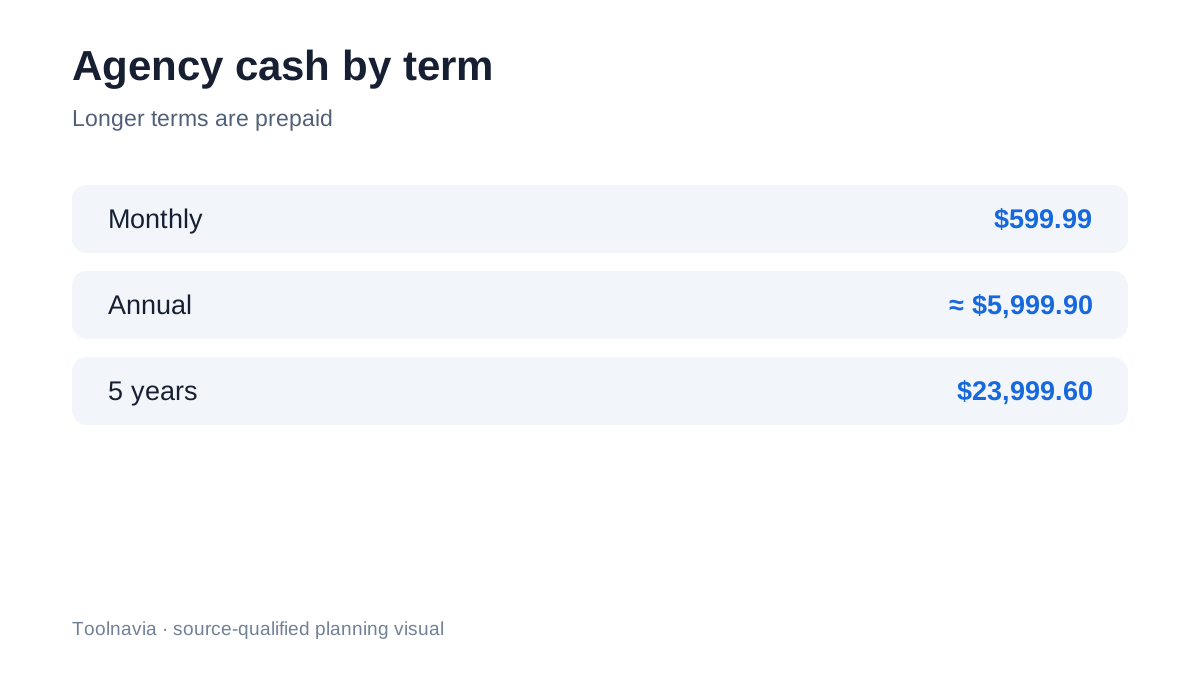
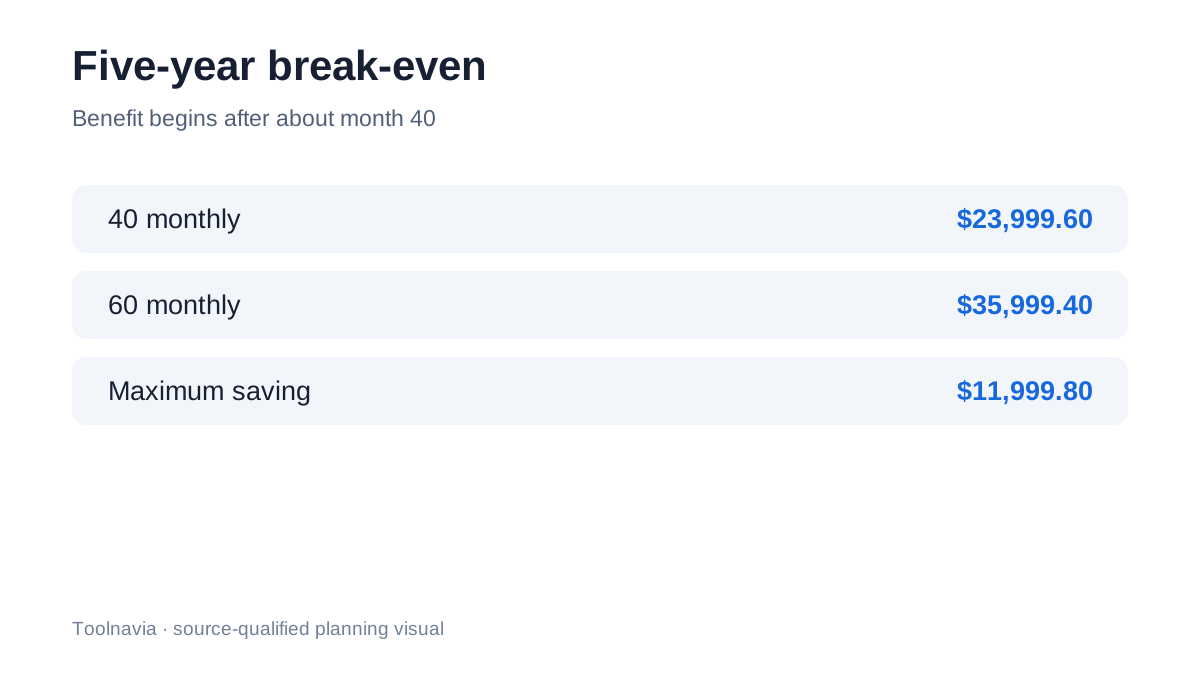
**Quick answer:** WPX Agency is **$599.99 month to month** or **$23,999.60 prepaid for five years**, advertised as **$399.99/month** with 20 months free. Sixty monthly payments at today's rate total **$35,999.40**, so five-year prepay can save **$11,999.80**. But it equals about forty monthly payments: the cash break-even arrives around month 40. [Check WPX Agency](/go/wpx-managed-wordpress-agency-official-usd).
At a glance
- Best for
- Established agencies matching term length to 50–200 occupied client sites.
- Price model
- $599.99 monthly; about $5,999.90 annual; $23,999.60 prepaid five years
- Check first
- Long terms are prepaid; churn raises per-client cost and price lock covers only the initial period.
The headline hides a $23,999.60 decision
The $399.99 figure is an effective monthly rate, not an installment. Monthly billing preserves $23,399.61 of immediate cash compared with prepaying, while five-year billing buys the lowest current effective rate and locks the initial subscription period. Fresh independent tables show an annual Agency equivalent of **$499.99/month**, or about **$5,999.90 upfront**. Verify the live order summary because tax, currency and campaigns can change the charge.
Break-even: month 10 or month 40
Ten payments at $599.99 equal **$5,999.90**, so annual is cheaper only if the account survives beyond roughly ten months. The five-year bill equals forty monthly charges. The remaining twenty months create the advertised benefit. Against sixty monthly payments, five-year prepay saves $11,999.80. Against five annual payments totaling $29,999.50, it saves $5,999.90—roughly one annual term. These are dated Toolnavia calculations, not a promise of future prices.
Occupancy decides per-client cost
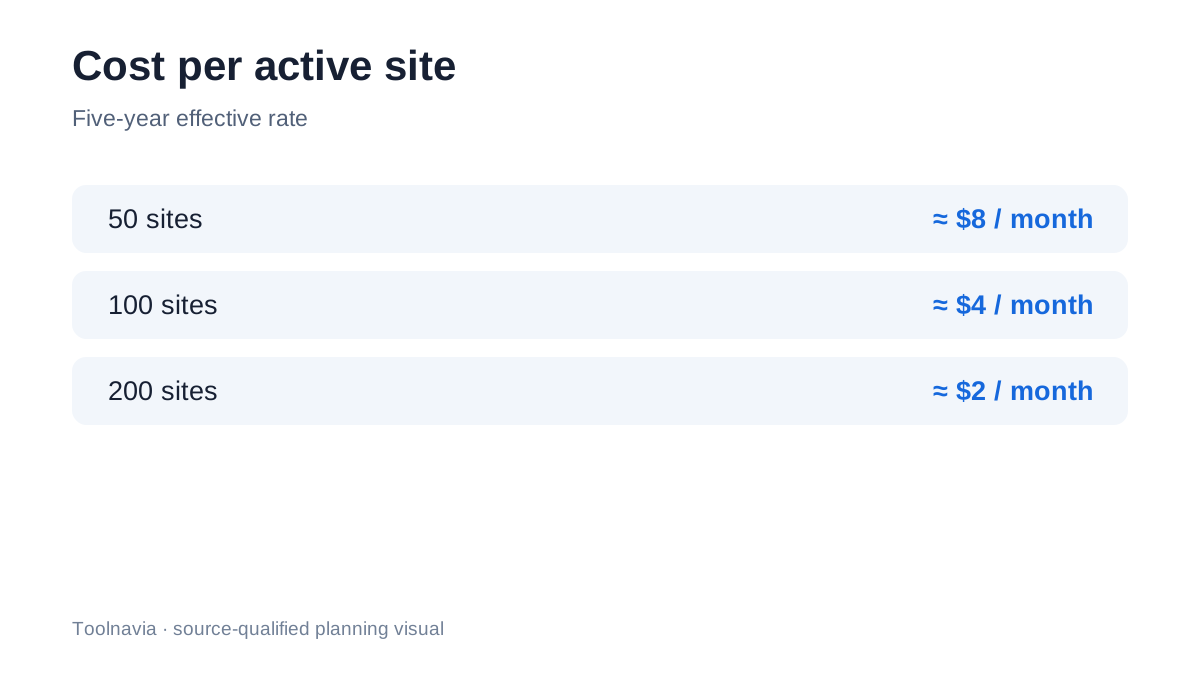
Agency supports up to 200 sites, 300GB storage, 100GB RAM, 6 CPU cores and 300 PHP workers. At the five-year equivalent, 200 occupied sites cost about **$2 each per month**; 100 cost **$4**; 50 cost **$8**. Monthly billing produces about $3, $6 and $12 per active site at those occupancies. Buying 150 empty slots cannot create margin. Resources are shared, so the arithmetic is not a per-site performance guarantee.
Churn can erase part of the discount
If an agency prepays while 200 sites are billable and later falls to 120, the five-year equivalent rises from $2.00 to about **$3.33 per active site**. The invoice does not shrink with the client list. Prepay only with conservative occupancy forecasts and enough reserves that $23,999.60 does not compete with payroll, acquisition or emergency migrations.
Refund and exit boundaries
WPX provides a 30-day refund window for a new hosting purchase but requires a formal cancellation request. Renewals and cycle changes are non-refundable, and downgrades do not receive pro-rata refunds. Do not treat five-year prepay as a free trial. A fresh independent review also confirms that the 30-day window applies to the initial purchase rather than renewals. Export sites and backups before closing. Cycle changes apply on a future invoice or after the current term, not by rewriting paid time.
Which term fits?
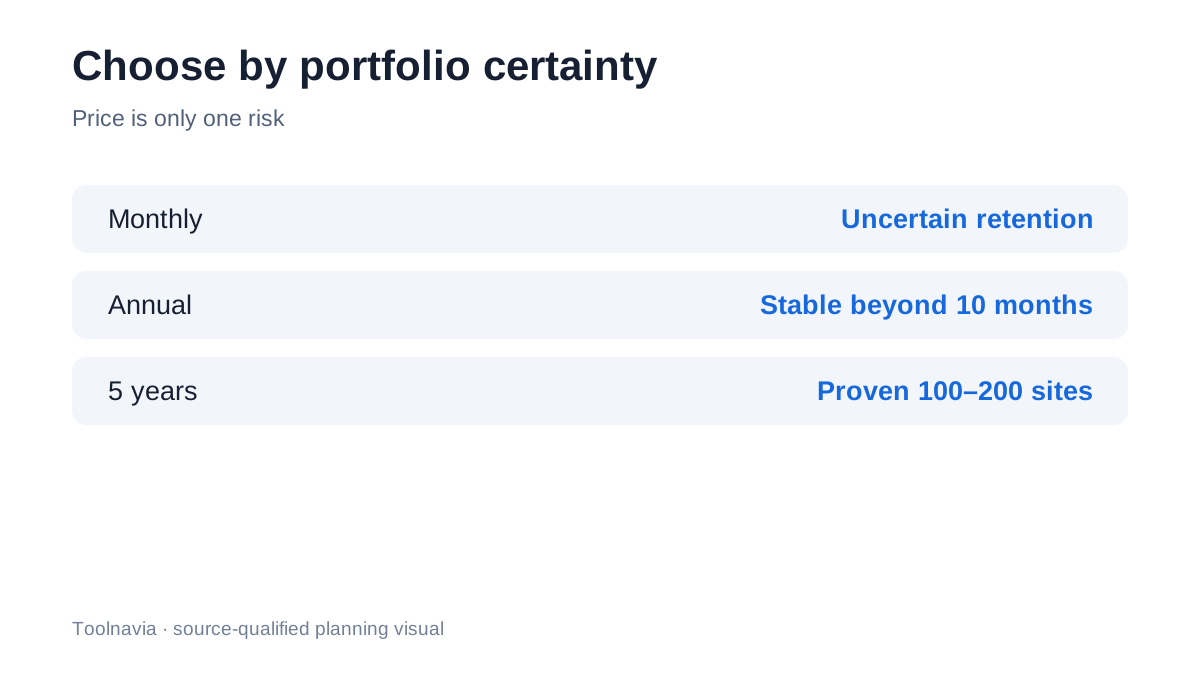
Choose **monthly** when occupancy, retention or platform fit is uncertain. Choose **annual** when the portfolio is stable beyond ten months but a $23,999.60 lock is too aggressive. Choose **five years** only after testing Agency, expecting 100–200 sites to stay billable, and protecting operating reserves.
Why pages disagree
One review calls the 30-day refund window a “free trial”; official policy says it is a post-purchase money-back guarantee, so this page claims no free trial. Another guide broadly says renewal prices do not rise. WPX's official price lock is narrower and covers the initial subscription period. This page makes no lifetime renewal promise.
**Bottom line:** Five-year Agency prepay can save $11,999.80 versus sixty current monthly payments, but only if you still need it after month 40 and keep enough sites occupied. Monthly buys flexibility; annual is the middle ground; five years is a portfolio-and-liquidity bet.