TOOLNAVIA / BUYING GUIDE
Pressidium vs Verpex for One WordPress Site: Managed Stack or cPanel?
The short answer
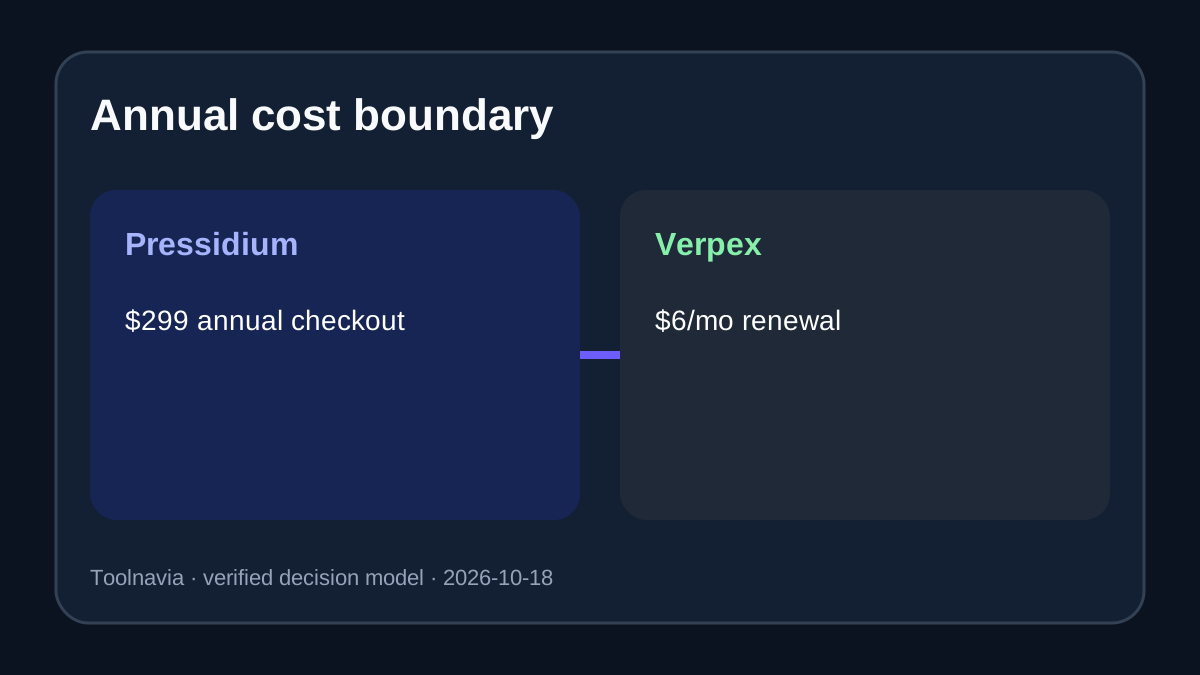
Pressidium Starter and Verpex Bronze can both host one WordPress site, but they sell different jobs. Pressidium charges **$299 upfront for an annual Starter term** and takes responsibility for a WordPress-specific operating stack. Verpex lists a **$6 monthly renewal** for Bronze and gives the buyer a general cPanel account with more raw storage, while the owner retains more operational responsibility. Verpex's stable current introductory checkout total was not visible in the evidence reviewed, so this comparison does not invent one.
At a glance
- Best for
- One-site WordPress buyers valuing managed operations against a lower-cost cPanel path.
- Price model
- $299 annual checkout vs $6/month Verpex renewal benchmark
- Check first
- Verpex intro total unknown; billing stages differ; backups conflict; no speed test.
Quick verdict
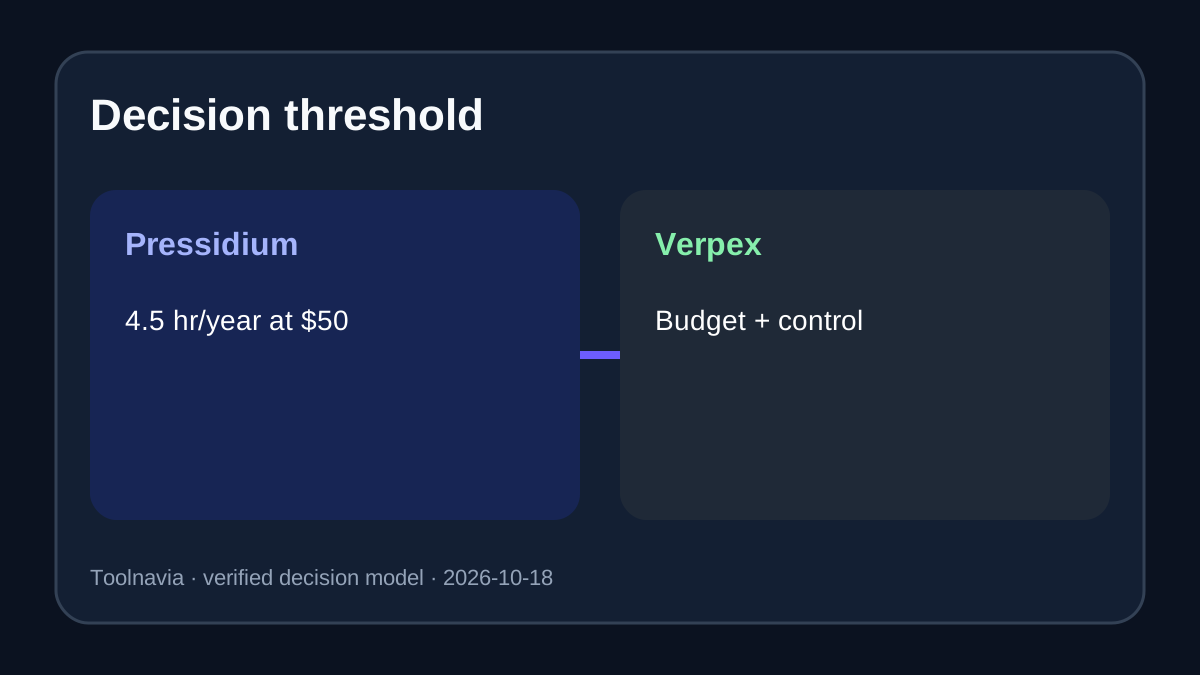
Choose **Pressidium Starter** when staging, managed WordPress/PHP updates, a managed WAF, malware monitoring/removal, 30-day backup recovery and WordPress-specific support would save at least **$227 per year** compared with Verpex's current $72 annual renewal benchmark. At a $50 hourly value of time, the premium breaks even if the managed workflow avoids about **4.5 hours per year**, or roughly 23 minutes per month.
Choose **Verpex Bronze** when a $6 renewal, 30GB NVMe storage, cPanel, email accounts and broader DIY control matter more than outsourcing the WordPress operating layer. Keep independent backups and budget your own update, staging, security and troubleshooting time.
This is not a speed test and the prices are not the same billing stage: $299 is Pressidium's current annual checkout total; $6 is Verpex's published renewal rate. Live checkout controls the first Verpex invoice.
The confirmed cost gap is an operations budget
Pressidium's entry-plan page pairs a “$25/month” display with **$299 due today** and “save $59.80.” Because $25 × 12 equals $300, the annual checkout total—not a guessed monthly plan—is the controlling figure.
Verpex Bronze publishes a **$6 monthly renewal**, which annualizes to **$72**. Its current page did not expose a stable introductory total in the same evidence session, so only the renewal benchmark is used.
The recurring benchmark gap is **$299 − $72 = $227 per year**, or about **$18.92 per month**. That does not mean Pressidium is “$227 more expensive for everyone.” It prices a different operating boundary. Ask whether managed updates, security, recovery, staging and specialist support replace enough labor or risk to earn back the premium.
- At $25/hour, $227 equals 9.1 hours of annual work. - At $50/hour, it equals 4.5 hours. - At $100/hour, it equals 2.3 hours.
These are planning thresholds, not promised savings.
What the Pressidium premium buys
Starter is designed for one WordPress site, up to 50,000 unique visits per month, 10GB total storage and 50GB of Akamai-backed CDN transfer. The plan page lists one free migration, a managed firewall/WAF, malware monitoring and removal, managed WordPress and PHP updates, automated backups, on-demand backups and staging. CDN overage is shown at $0.10/GB.
Pressidium documents instant/offsite backups, staging initialization and deployment from staging to production. That can reduce the plugins, vendor conversations and manual runbooks a small team must maintain.
Boundaries matter. Starter is one site. Extra sites cost $15 per month. The public page lists a six-hour backup add-on at $20 per site per month and hourly backups at $100 per site per month. A store needing frequent restore points can erase part of the managed-value advantage.
What Verpex Bronze leaves with the owner
Bronze lists one website, 30GB NVMe, 1GB RAM, 1 vCPU, 30 entry processes, 1,024 IOPS and 50MB/s I/O. It includes cPanel, email accounts, databases and bandwidth subject to fair-use and resource limits.
That fits a smaller site whose owner wants familiar panel access, email hosting and three times Pressidium Starter's stated storage. Specifications do not prove faster performance, and “unlimited” labels do not remove CPU, memory, process or fair-use constraints.
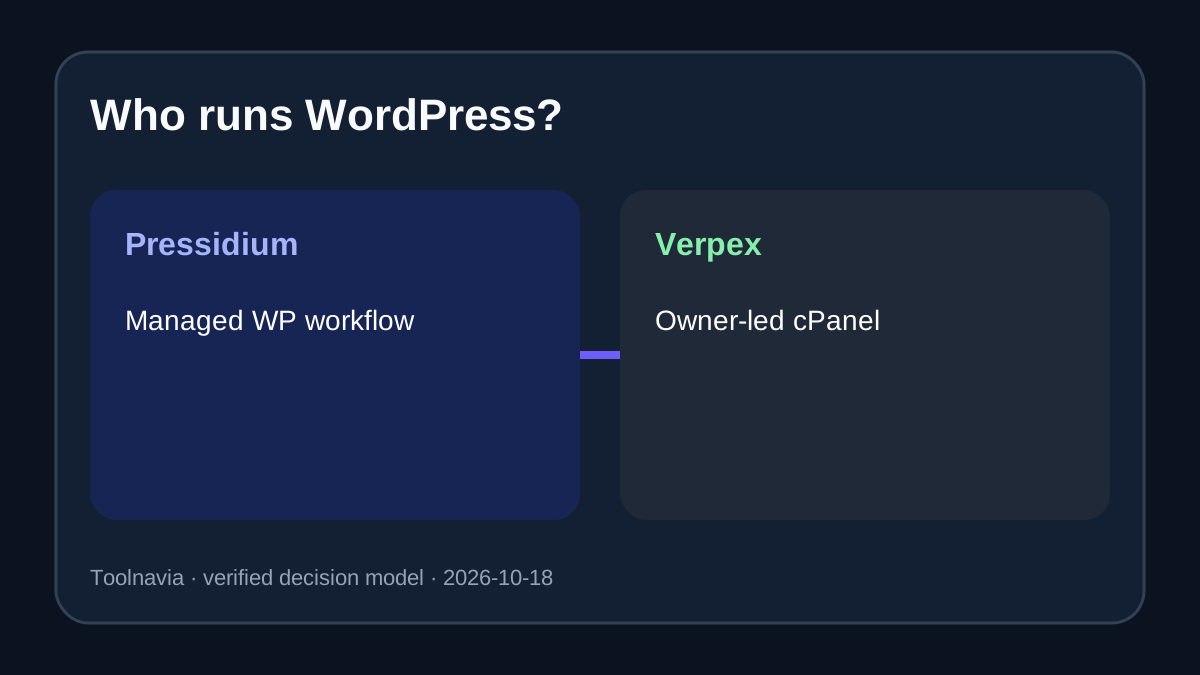
The lower price also does not transfer the full WordPress operating layer to the host. The buyer should own plugin/theme compatibility, update timing, staging discipline, restore tests and escalation records.
Backup claims need a conservative reading
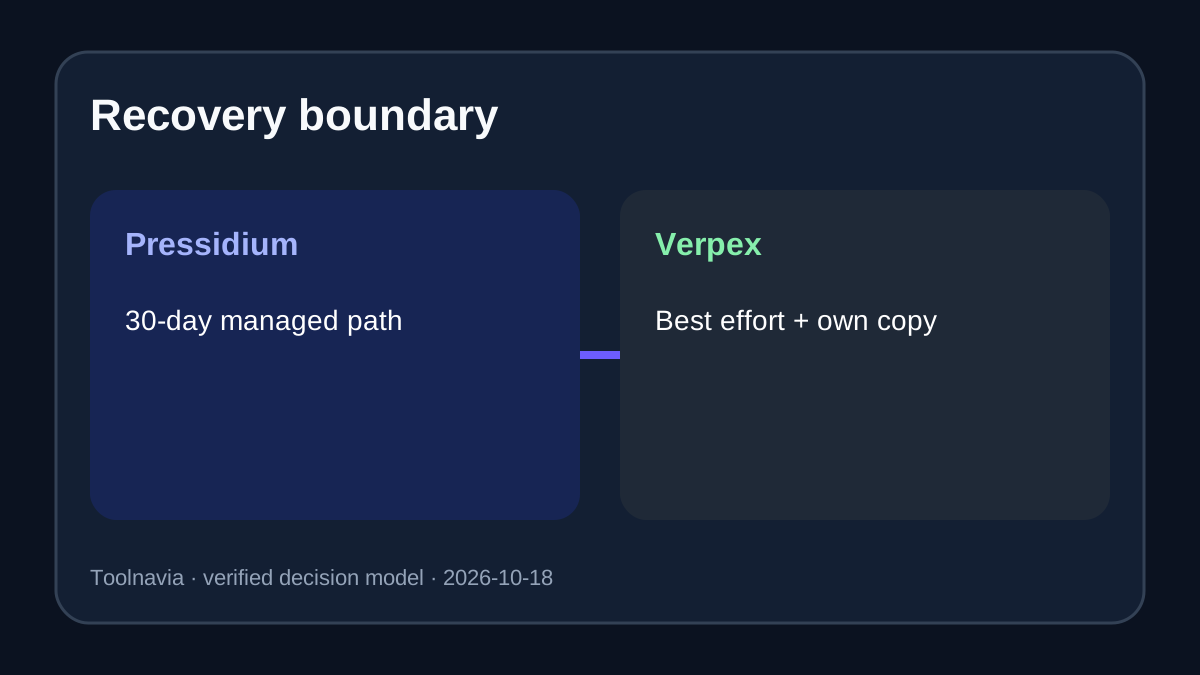
Verpex's marketing page says daily backups. Its terms say backups are performed twice daily on a **best-effort** basis and leave customers responsible for their own copies. The knowledge base says JetBackup 5 allows self-service restoration and describes 30-day retention.
Those statements may coexist operationally, but they are not the same promise. Treat the terms as the risk boundary: keep an independent off-platform backup and test a restore.
Pressidium's plan page states automated backups with 30-day retention and documents on-demand and offsite backup workflows. That is stronger recovery documentation, not a reason to skip independent exports for critical data.
Trial and migration test plan
Pressidium offers a 14-day trial with up to two sites under trial-specific 10,000-visit and 5GB limits, says it will not charge automatically, and warns against load testing. Use the window to test:
1. a copy of the real WordPress site; 2. staging creation and deployment; 3. one backup and restore; 4. plugin/theme compatibility; 5. support response on a real configuration question; 6. CDN and storage headroom.
For Verpex, verify the live introductory invoice, renewal date, data-center choice, migration scope, backup retention and refund exclusions before payment. Cancellation ends hosting data; domain purchases are separate and non-refundable.
Who should buy which plan?
**Pressidium fits better** when the site is business-critical, the team has little WordPress operations capacity, staging is used regularly, and a few avoided hours or one faster recovery can justify $227 a year.
**Verpex fits better** when the site is small, storage and email matter, cash cost is the primary constraint, and someone can maintain WordPress and independent backups.
**Neither is automatically right** for stores needing hourly recovery, sites exceeding 50,000 visits, portfolios with multiple sites, or buyers needing a measured performance winner. Model the next required upgrade, not only today's entry plan.
Evidence conflicts and limits
Independent Pressidium pages show lower snapshots such as $21 or $24.90 per month. They conflict with the current official $299 annual checkout and are not used in the cost model.
Third-party Verpex reviews contain changing introductory prices. Because the official page did not expose a stable intro total in this research session, those figures are excluded.
Managed-versus-shared comparisons consistently frame the category difference as outsourced updates, security, staging and support versus lower cost and broader control. They support the decision structure, but provider-specific facts still come from official pages.
Checkout checklist
For Pressidium, confirm: Starter, one site, $299 due now, tax, renewal amount, 50K-visit and 10GB limits, 50GB CDN allowance, overage, migration scope, backup retention and add-on prices.
For Verpex, confirm: Bronze, introductory invoice, $6 renewal, renewal date, data center, 30GB/1GB/1-vCPU limits, backup retention, refund eligibility, migration scope and domain charges.
**Bottom line:** Pressidium asks you to spend a verified $227 annual premium over Verpex's renewal benchmark to outsource more of the WordPress operating workflow. Buy it only if that workflow has measurable value. Choose Verpex when budget, storage, email and cPanel control outweigh the labor you retain.