TOOLNAVIA / BUYING GUIDE
GoDaddy Economy vs UltaHost Starter: $83.88 for 1 Year or $82.56 for 2?
The short answer
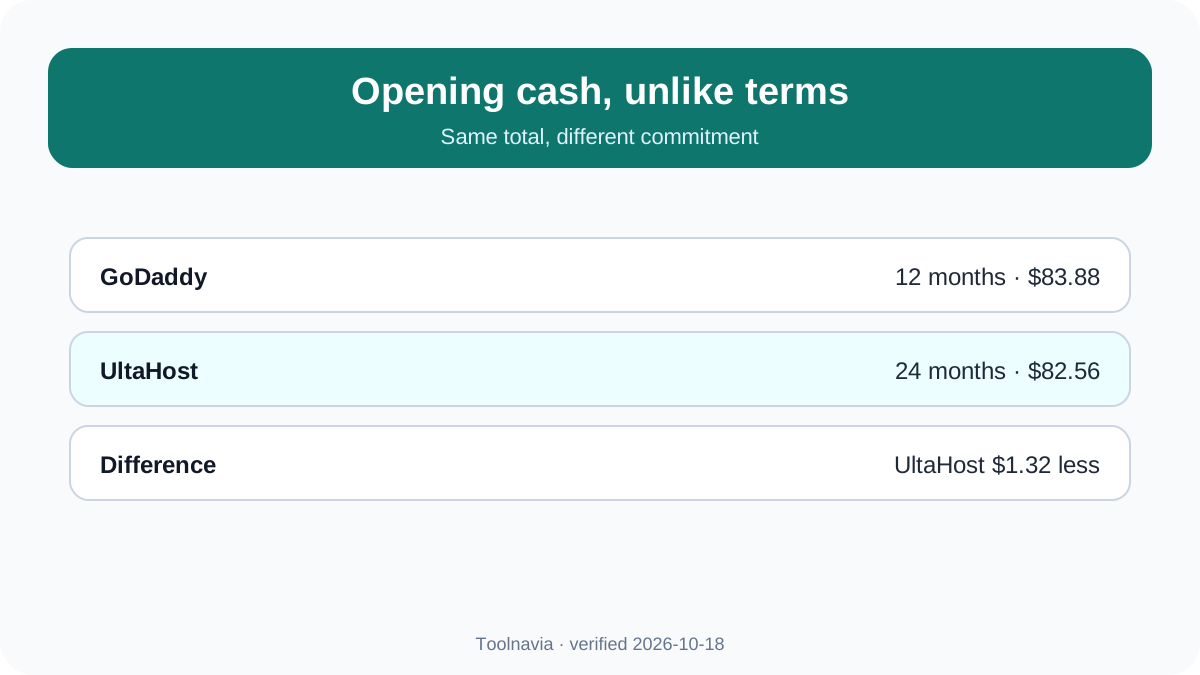
GoDaddy Economy asks for **$83.88 for the first year** at the current $6.99 display. UltaHost Starter asks for **$82.56 for two years** at $3.44. The totals are almost identical, but the commitment is not: UltaHost gives twice the term for $1.32 less, while its 24-month purchase is explicitly outside the refund policy.
At a glance
- Best for
- One-site buyers comparing a one-year cPanel commitment with a non-refundable two-year value term.
- Price model
- $83.88 for 12 months vs $82.56 for 24 months
- Check first
- Displayed renewal language conflicts with governing terms; taxes, add-ons, eligibility and future rates can change; UltaHost's two-year term is non-refundable.
Quick verdict
Choose **GoDaddy Economy** when you want a one-year decision window, cPanel, and a familiar account stack—and you accept that the current $11.99 crossed price is only a planning reference. GoDaddy's legal terms say renewal uses the then-current rate, so the account manager and checkout control the real future invoice.
Choose **UltaHost Starter** when you can commit for 24 months, one site's 30GB storage and included backups fit, and you value the much lower cost per year. Treat **$82.56 as the opening two-year charge**, not as a refundable trial.
Do not choose from a generic “faster host” ranking. The independent pages use brand-level measurements, old entry prices or different configurations; none is an equivalent current Economy-versus-Starter test in the same region and period.
The useful comparison is $83.88 for 12 months versus $82.56 for 24
GoDaddy shows Economy at **$6.99 per month for the first one-year term**. The base arithmetic is **$6.99 × 12 = $83.88** before tax, optional add-ons and checkout changes. The page also shows a crossed **$11.99** figure, one website, 25GB NVMe, cPanel, a first-year domain, email and first-year SSL.
UltaHost's two-year selector shows Starter at **$3.44 per month** and explicitly says the rate applies for two years. The opening charge is therefore **$3.44 × 24 = $82.56** before tax or options. It lists one domain, roughly 10,000 monthly visits, 30GB NVMe, unlimited bandwidth, backups, domain transfer and SSL.
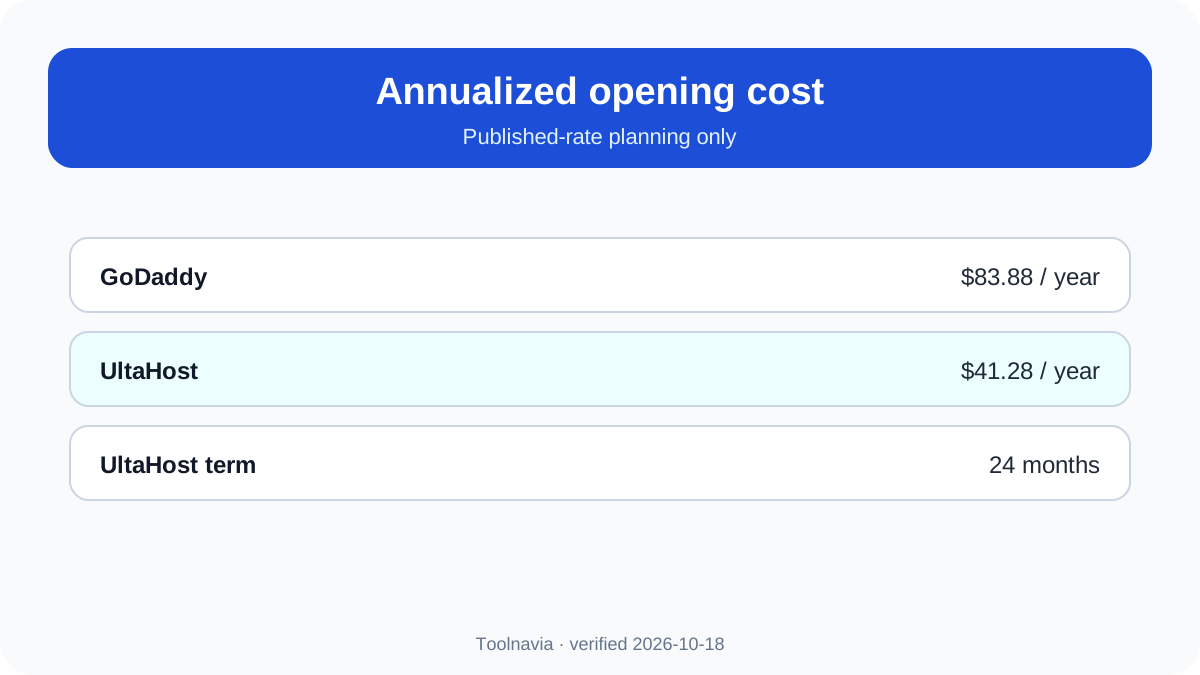
That makes UltaHost's opening cost **$1.32 lower while covering 12 additional months**. Normalized by year, the published-rate model is $83.88 per year at GoDaddy versus $41.28 per year at UltaHost. This is the article's strongest numerical finding, but it is not the whole risk decision.
Renewal: neither visible number is a guaranteed future invoice
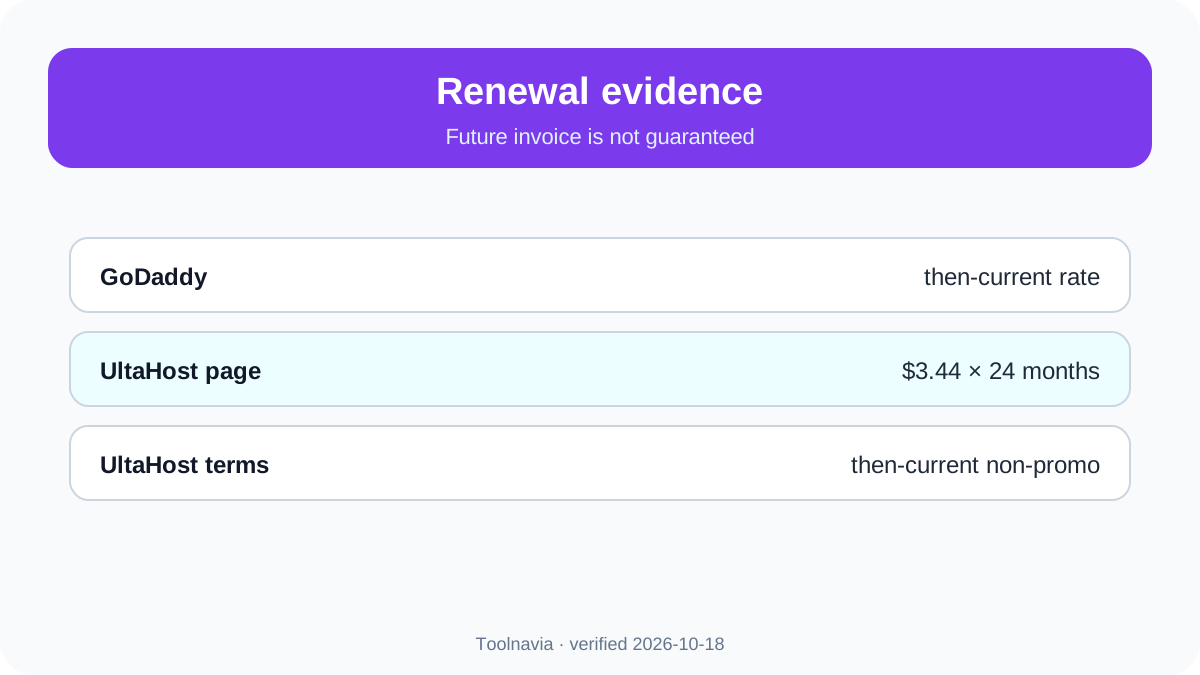
GoDaddy explains that the introductory price lasts the purchased term and then the service renews at its normal price. Its universal terms are more precise: automatic renewal is normally for the same term at the **then-current rate**, which can be higher or lower.
The crossed $11.99 therefore supports a planning model, not a promise. If it were unchanged, another one-year term would be **$143.88**, making a static two-year total of **$227.76**. Do not budget that as guaranteed. Open the account manager before renewal, confirm the term, remove unwanted options and save the quoted invoice.
UltaHost creates a more direct official conflict. Its current pricing pages say Starter “renews at $3.44/mo for 2 years,” but its terms say the original contract length renews at the **then-current non-promotional rate**. The safe interpretation is: $82.56 controls the displayed opening purchase; the exact renewal must be reconfirmed in the cart or account before billing. Save a dated screenshot and invoice. This guide does not turn the marketing sentence into a four-year price guarantee.
Refund risk changes the winner
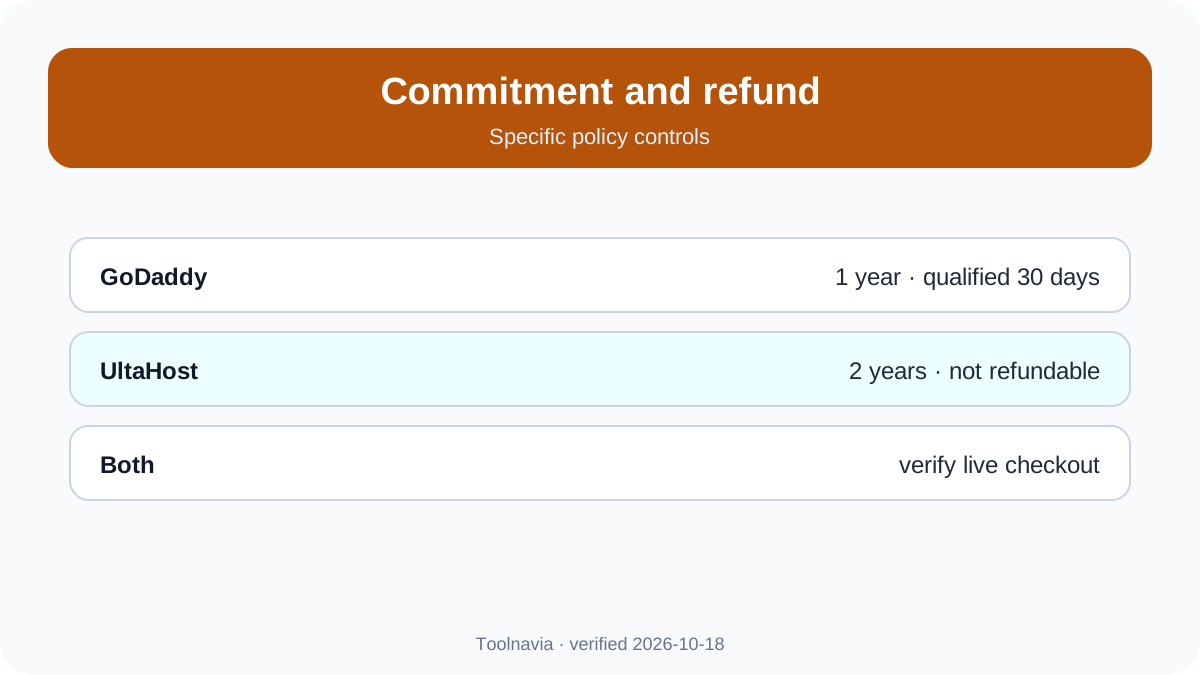
GoDaddy's product page carries a 30-day guarantee badge. Its detailed policy says annual plans use a 30-day standard window, but hosting already performed may be non-refundable; a retained free domain can also reduce the refund. Ask support which line items remain eligible before provisioning or migrating.
UltaHost's price page also shows a 30-day money-back badge. The specific refund policy, however, says **biennial and triennial plans are not eligible for a refund**. Because this comparison uses the two-year $3.44 offer, treat the $82.56 commitment as non-refundable. The specific term rule is more relevant than the generic badge.
That is the core trade-off: UltaHost buys two years for roughly GoDaddy's one-year cash, but GoDaddy offers a shorter commitment and a potentially eligible—though qualified—refund path.
One site on both, different resource disclosures
Both entry plans are for one production site. GoDaddy publishes 25GB NVMe on the sales page, while its cPanel limits table lists **one CPU core, 512MB RAM and 20 entry processes** for Economy. It also advises keeping disk headroom for system overhead.
UltaHost publishes 30GB NVMe, approximately 10,000 visits, unlimited bandwidth and included backups for Starter. Its cited exact-plan surfaces do not provide an equivalent CPU/RAM/entry-process table, so this guide does not claim greater compute capacity from the larger storage number.
For a small brochure site or light blog, either envelope can work. For a memory-heavy WordPress stack, store, forum or traffic spike, neither marketing label proves fit. Measure application usage and move to a plan with explicit resources when sustained demand approaches the boundary.
SSL, backups and migration are included features—not coupons
GoDaddy explicitly limits the bundled SSL statement to the **first year** on Economy. Confirm its later cost before purchase. UltaHost lists SSL, backups and domain transfer with Starter.
These are plan inclusions, not discount codes. A provider backup is also not an independent disaster-recovery copy. Keep an off-provider backup, test a restore, and verify what happens to backups and email after cancellation. During migration, leave the old host active until files, database, mail, SSL and DNS have all been tested.
What the same-intent pages can and cannot prove
CloudsPress, Prehost and HostAdvice confirm that people search this exact pair and care about price, speed, support and refund policy. But they either omit exact current prices or use brand-wide measurements. A recent UltaHost review repeats the apparent two-year price lock, while a GoDaddy review flags renewal exposure.
Those pages shape the questions; they do not control the answer. Current official exact-plan pages control opening price and capacity. Provider legal terms and the specific refund policy control renewal and cancellation boundaries. No independent page justifies a universal speed winner here.
Checkout checklist
For **GoDaddy Economy**, confirm: one-year term, $6.99 monthly equivalent, $83.88 base charge, current renewal quote and renewal term, one site, 25GB, cPanel limits, first-year SSL, domain/email renewal, tax, add-ons and which items remain refundable.
For **UltaHost Starter**, confirm: two-year term, $3.44 monthly equivalent, $82.56 base charge, the account's written renewal amount, one domain, 30GB, backup/restore access, panel choice, tax and the non-refundable biennial condition.
**Bottom line:** UltaHost Starter is the value choice if a non-refundable 24-month commitment is acceptable. GoDaddy Economy is the flexibility choice if a one-year term and cPanel matter more. The visible renewal labels conflict with governing terms, so save the live checkout and judge the plans on the first invoice you can verify—not on a future price neither provider guarantees.