TOOLNAVIA / BUYING GUIDE
GoDaddy Economy Free Domain Renewal: Is Year 2 Really $23.19?
The short answer
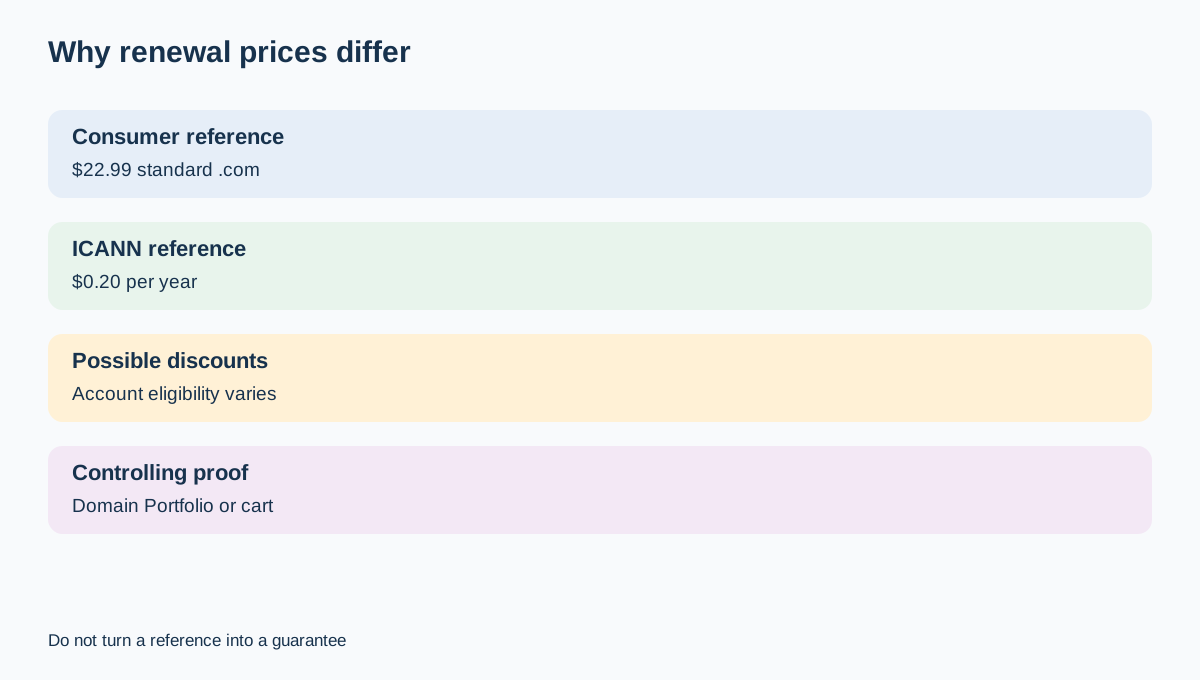
GoDaddy Economy includes a domain with a qualifying annual hosting purchase, but “free domain” is an initial-term benefit—not a promise of free registration for as long as the hosting stays active. GoDaddy’s May 20, 2026 U.S. reference lists standard .com renewal at $22.99 plus a $0.20 ICANN fee. That makes $23.19 a useful dated planning number, while the Renewal Price shown inside your own account remains the price to trust.
At a glance
- Best for
- Buyers who will track domain, hosting and email as separate renewals.
- Price model
- Included initial term; dated U.S. standard .com reference $22.99 + $0.20 ICANN
- Check first
- No account quote, premium-domain price or universal TLD rate.
The domain and hosting use separate clocks
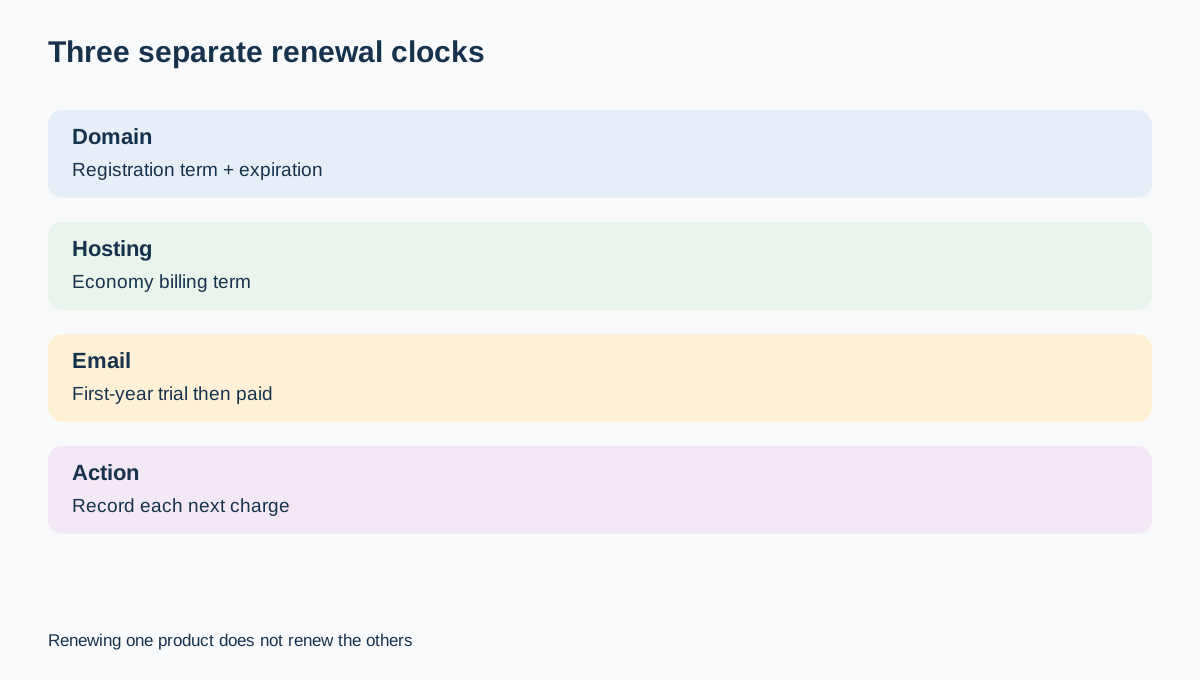
The domain is a registration. The Economy plan is hosting. GoDaddy explicitly says renewing the domain does not renew the website or email, and renewing those services does not automatically extend the domain.
A three-year hosting purchase therefore does not prove that the included domain is free for all three years. At checkout, record the domain registration term, its expiration date and the hosting renewal date separately. The free-domain terms say the benefit applies only to the initial purchase term and that additional registration time can be charged at the then-current rate. Independent hosting-cost guides likewise treat the included domain as a separate later renewal rather than an extension of the hosting term.
Model year two before checkout
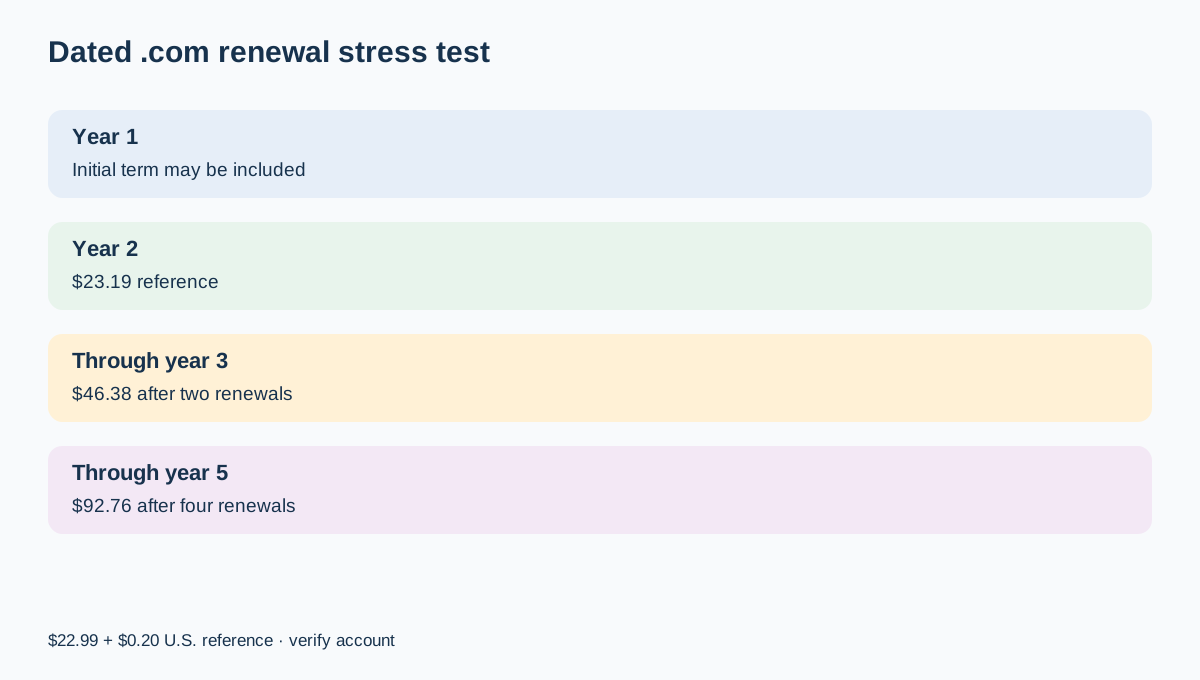
Using the dated U.S. standard .com reference, the renewal illustration is $22.99 plus $0.20, or $23.19 for one year. If the first registration year is included, keeping the same .com through year three would add two illustrated renewals, or $46.38. Keeping it through year five would add four, or $92.76.
Those totals are planning arithmetic, not a quote. The TLD, country, premium status, account discounts, renewal method, tax and add-ons can change the invoice. GoDaddy's own account guide says the Renewal Price column is for one year and excludes products such as Domain Protection and Premium DNS.
Why two official prices can appear
GoDaddy’s consumer pricing article lists $22.99 as the standard .com renewal reference. Separate developer documentation can display a discounted auto-renew figure for eligible API pricing. A buyer should not assume that every consumer account receives that discount.
This is a decision-relevant source conflict, so the article does not turn either number into a universal promise. Use $23.19 as a dated standard-price stress test, then replace it with the amount in your Domain Portfolio or renewal cart. Independent reviews also warn that the first-year headline can hide a materially higher later price.
Budget the bundle as three products
Create three rows: hosting, domain and email. Enter each product's current expiration date, next renewal date, renewal term and quoted amount. Add SSL or protection only if it appears as a separate line item.
The earlier Economy overview already covers hosting renewal. A separate Toolnavia guide covers the included email trial. This page focuses only on the domain-registration decision so the same “free first year” language is not counted twice.
If your domain contributes $20 per month in gross profit, an illustrated $23.19 annual renewal is small relative to the business value. If the site is experimental and earns nothing, the renewal is still a real carrying cost. Decide using contribution and switching effort, not the word “free.”
Auto-renew protects continuity, not price
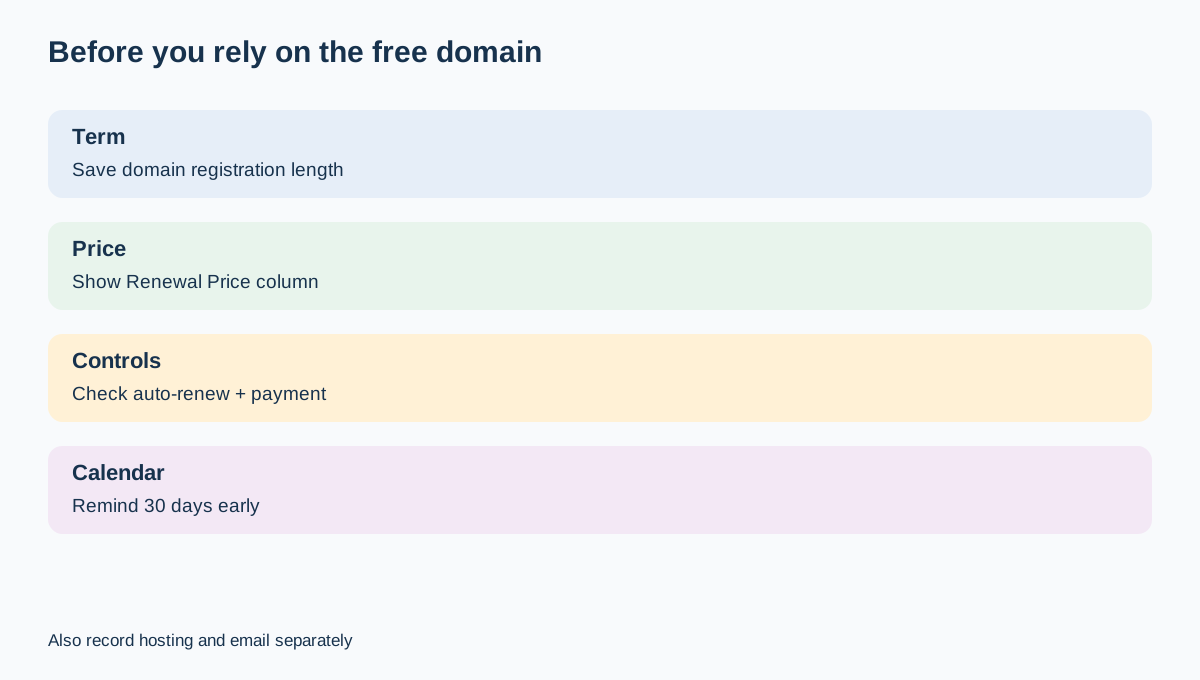
Auto-renew can reduce the risk of accidental expiration, but it does not lock today’s standard price forever. Confirm the saved payment method, renewal term and next charge. Set a reminder at least 30 days before expiration so there is time to compare, transfer or cancel intentionally.
GoDaddy’s expiration timeline says most domains receive multiple notices and renewal attempts, but a missed renewal can eventually park the domain, interrupt the connected site and email, add recovery fees or lead to loss. Do not use the grace period as a budgeting strategy.
Should you keep the domain at GoDaddy?
Keeping hosting and the domain together is convenient when one account, one support channel and simpler DNS management are worth more than a possible registrar price difference. TechRadar similarly treats management and support as strengths while cautioning about renewal prices.
Separating the registrar may be sensible when a lower long-term domain price or vendor independence outweighs migration work. Before transferring, verify eligibility, unlock requirements, authorization code access, DNS records and the receiving registrar's renewal terms. A transfer decision should not be made from the first-year promo alone.
Before purchase, capture a screenshot or export of the cart showing the domain term. Open Domain Portfolio and add the Renewal Price column. Check whether the displayed amount includes the ICANN fee, tax or protection. Confirm auto-renew and the payment method. Record hosting and email dates separately. Finally, calculate three- and five-year ownership using the account quote, not only the marketing card.
Verdict
GoDaddy Economy’s included domain can lower the first-year entry cost, but it should be treated as a one-term credit. For a standard U.S. .com, $23.19 is a reasonable May 2026 stress-test number; it is not a guaranteed renewal quote. The purchase makes sense when Economy hosting fits and you are comfortable with the domain’s separate renewal clock—or willing to transfer later.
Toolnavia may earn a commission from qualifying GoDaddy Economy purchases through the approved button. It uses the exact approved offer route, promises no special domain discount and does not change GoDaddy’s checkout price.