TOOLNAVIA / BUYING GUIDE
Cloudways Autonomous Scale Review 2026: Is $199/Month Worth It?
The short answer
At a glance
- Best for
- One high-value WordPress/WooCommerce app with sustained growth needing two always-on baseline autoscale servers.
- Price model
- $199/month base + $1/GB disk + $0.04/GB bandwidth + $0.10/hour per extra server beyond baseline
- Check first
- $199 is a base not a cap; one app only; worker count is not a checkout guarantee.
Verdict
Cloudways Autonomous Scale is a **$199/month one-application autoscaling plan** for WordPress or WooCommerce workloads with sustained growth and meaningful traffic peaks. It begins with **two baseline autoscale servers**, 50GB disk, 250GB bandwidth and 100 PHP workers per server.
What the $199 base buys
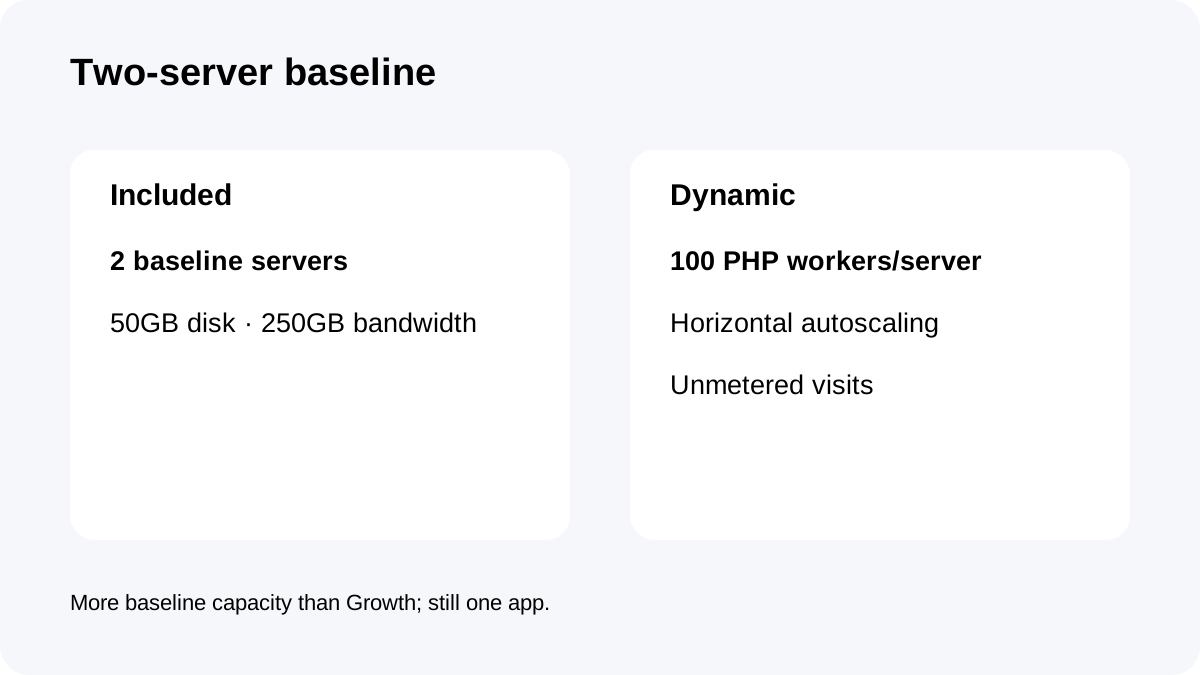
Scale includes one application, two baseline autoscale servers, 50GB disk, 250GB bandwidth, unmetered visits and 100 PHP workers per server. Cloudflare Enterprise, Redis, Object Cache Pro + Relay and one managed migration are included.
Compared with Growth, the important upgrade is the two-server baseline rather than simply more disk. The application starts with more always-on horizontal capacity before extra autoscaling begins.
That is useful when traffic growth is consistent enough that a second baseline server is not merely occasional insurance.
Extra autoscaling can still raise the bill
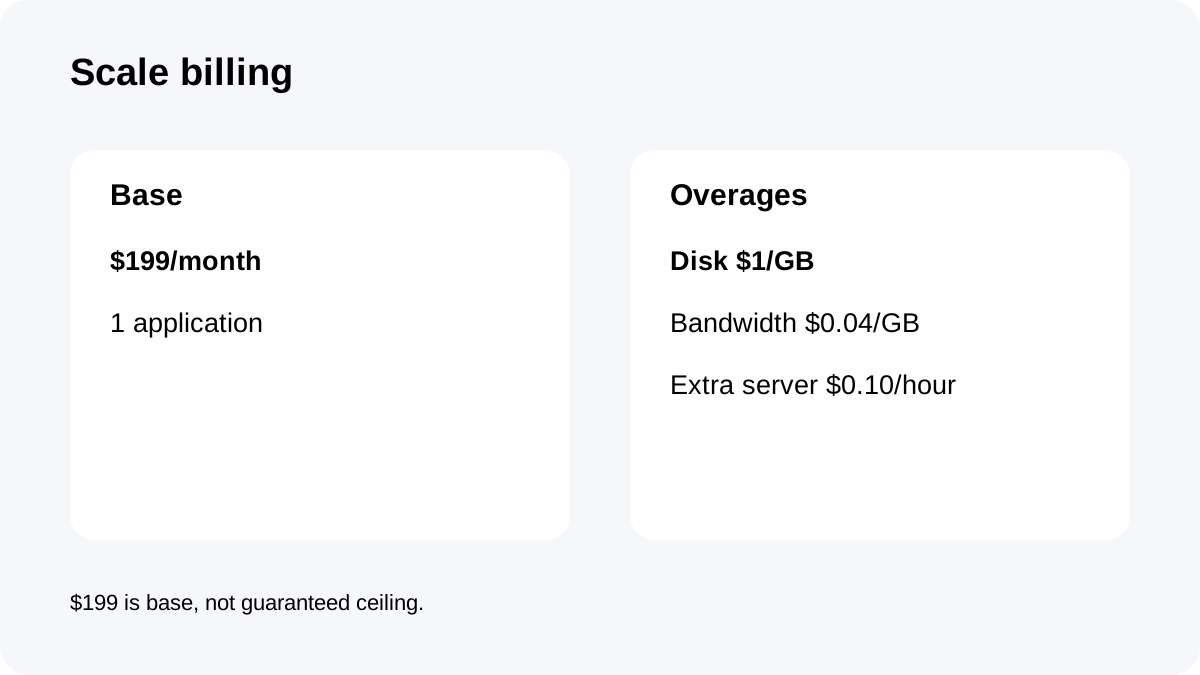
The $199 base is not a guaranteed ceiling. Scale charges **$0.10/hour for each extra autoscaling server beyond the two-server baseline**, plus **$1/GB disk** and **$0.04/GB bandwidth** overages.
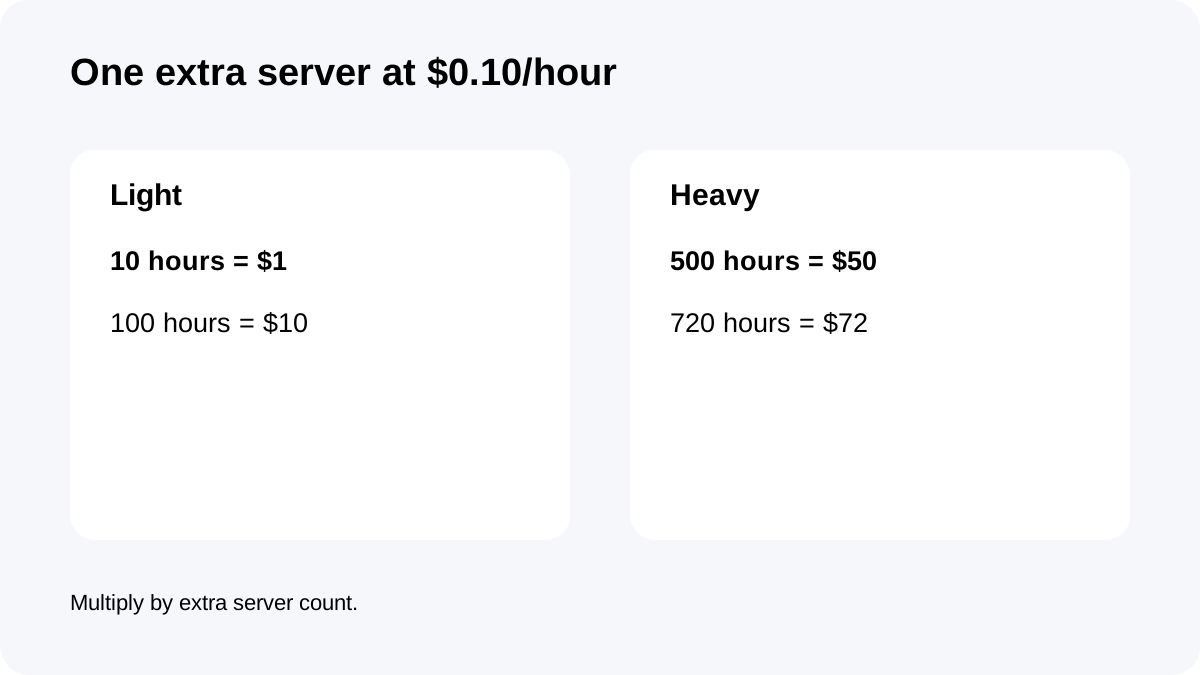
One extra server active for 10 hours adds $1; 100 hours adds $10; 500 hours adds $50; 720 hours adds $72. Two extra servers for the same period double the autoscaling portion.
These are arithmetic examples, not forecasts. Real billing depends on extra-server count/duration and storage or bandwidth use.
Two baseline servers are capacity, not an uptime guarantee
A two-server baseline gives Scale more horizontally distributed application capacity than Growth.
But it does not make every application failure harmless. Database behavior, plugin code, external APIs, payment gateways and application-level bugs can still become bottlenecks.
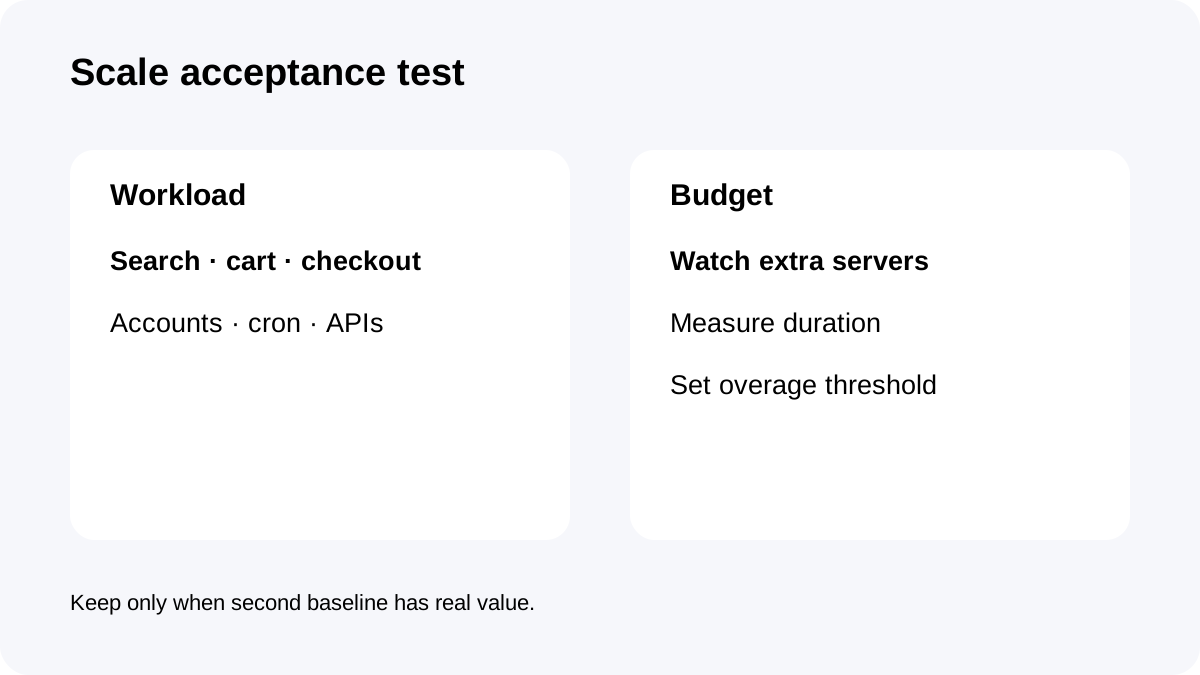
Test the actual revenue path—search, cart, checkout, account pages, membership actions or ticket purchase—rather than treating server count as proof of reliability.
100 PHP workers per server is transparent, not a checkout promise
Scale publishes **100 PHP workers per server**.
That is useful for WooCommerce and other dynamic applications because uncached PHP requests can queue when workers are busy.
With two baseline servers, the initial worker envelope is broader than Growth's, but worker count still cannot be converted into a fixed simultaneous-checkout number. Database latency, plugin execution time, cron and third-party calls determine worker occupancy.
Use the published worker count as a capacity boundary and validate with a representative clone.
When Scale is worth $199
Scale is strongest when one high-value application already has **consistent traffic growth**, revenue-sensitive peaks or an operational need for more always-on horizontal capacity.
It is harder to justify for a stable brochure site, small blog or store that rarely needs more than Growth's single baseline server.
The plan still hosts **one application**, so an agency with many low-traffic client sites should not treat $199 as a multi-app pool.
Checkout and acceptance checklist
Confirm **Autonomous Scale**, $199 base, one application, two baseline autoscale servers, 50GB disk, 250GB bandwidth, 100 PHP workers/server, and the current $1/GB disk, $0.04/GB bandwidth and $0.10/hour extra-server charges.
Before keeping the plan, test real dynamic workflows, observe when extra servers appear and set an acceptable autoscaling budget.
**Bottom line:** Cloudways Autonomous Scale is justified when one valuable application needs more always-on horizontal capacity than Growth and that capacity protects sales, uptime or staff time. It is expensive insurance when the second baseline server is rarely needed.