TOOLNAVIA / BUYING GUIDE
WPX Hyperstore Resource Guide 2026: Can 5 Stores Share 4 CPU + 80 Workers?
The short answer
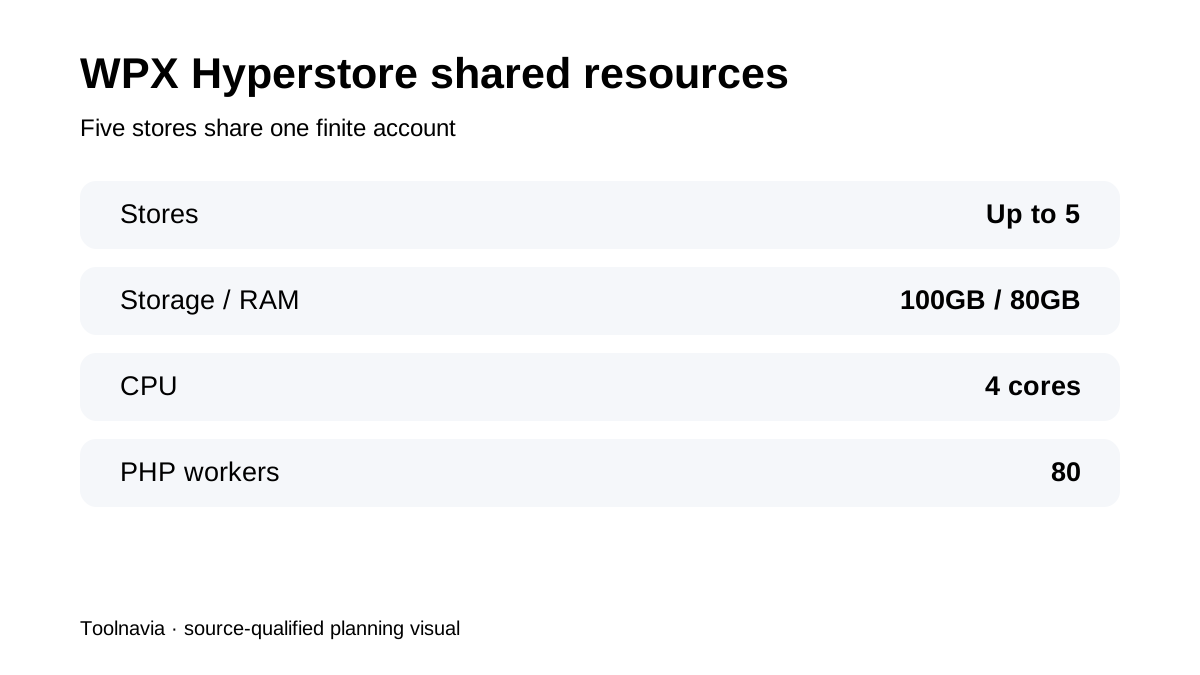
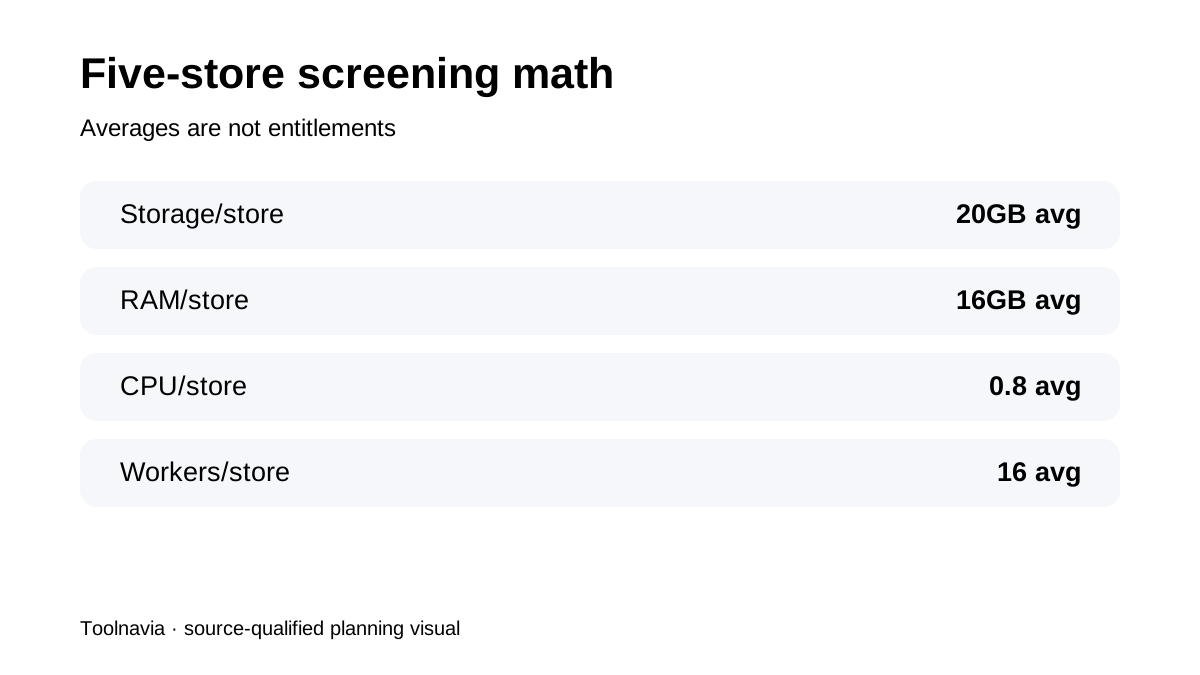
**Quick verdict:** WPX Hyperstore is the top managed WooCommerce tier for up to **5 stores** with **100GB storage, 80GB RAM, 4 CPU cores and 80 PHP workers**. Those are shared account resources, not dedicated per-store allocations. At full five-store use, equal-share arithmetic works out to **20GB storage, 16GB RAM, 0.8 CPU and 16 workers per store**, but real ecommerce workloads rarely divide evenly.
At a glance
- Best for
- Up to five WooCommerce stores that can share finite resources without persistent synchronized peaks.
- Price model
- $149.99 monthly or $5,999.60 prepaid five years / $99.99 equivalent
- Check first
- Resources are shared, migrations are separate per store, and five-year pricing requires prepayment.
Five stores share one finite resource pool
Hyperstore publishes 100GB storage, 80GB RAM, 4 CPU cores and 80 PHP workers for up to five WooCommerce stores. Those are account-level totals. The equal-share numbers—20GB storage, 16GB RAM, 0.8 CPU and 16 workers per store—are useful only as a screening model. One store running a major promotion can consume much more than the others.
CPU is the most obvious shared bottleneck
Four CPU cores across five stores means the account has less than one core per store on a simple average. That does **not** mean each store is capped at 0.8 CPU; the point is that all stores compete for the same finite pool. If several stores run checkout, product search, imports, feeds or heavy admin jobs at the same time, CPU contention can become the limiting factor even with abundant RAM.
80 PHP workers still need scheduling discipline
Hyperstore's 80 PHP workers provide strong concurrency headroom, but they are shared across the portfolio. At five stores, a rough equal-share average is 16 workers each. Flash sales, API traffic, WooCommerce AJAX and uncached account/checkout pages can consume workers unevenly. Stagger imports, cron jobs and campaign launches so all five stores do not create maximum dynamic load at once.
Daily 28-day backups help recovery, not concurrency
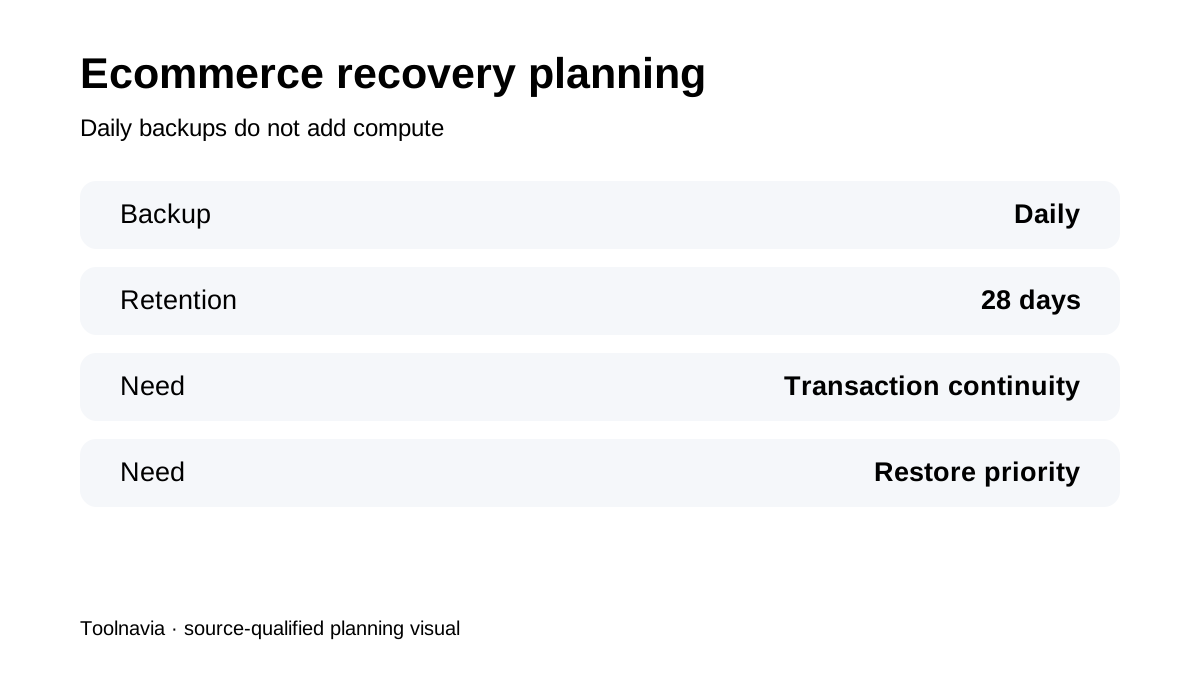
WPX creates automatic daily backups on a separate server and retains them for **28 days**. WPX's managed scope also covers server security, malware work, eligible migrations, support and one-time speed optimization, while the customer still owns application choices, credentials and business continuity. That protects against failed updates and application mistakes, but it does not increase CPU or PHP-worker capacity. For high-value stores, define how order/customer data created after the latest backup will be protected and how fast each store must be restored after an incident.
Five stores also mean five migration workflows
WPX requires a separate migration form for each website/store. Consolidating five existing stores therefore means up to five separate migration requests and validation cycles. Move the heaviest representative store first. Validate DNS, payment gateways, cron jobs, webhooks, cache exclusions, email integrations and checkout behavior before bringing over the remaining stores.
Five-year pricing rewards full utilization
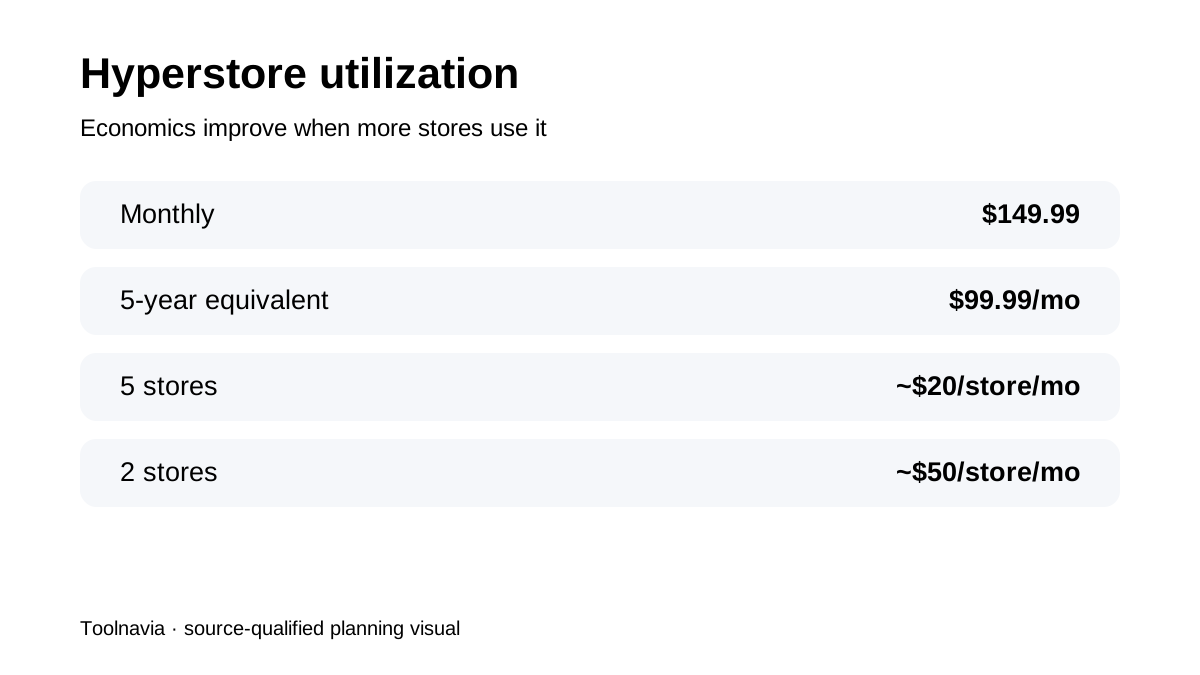
Hyperstore currently shows **$149.99/month** or **$99.99/month equivalent** with **$5,999.60 prepaid for five years**. At five stores, the five-year equivalent is roughly **$20/store/month** before your labor. At two stores, it is about **$50/store/month**. High utilization improves the economics, but it also increases the chance that simultaneous peaks share the same finite CPU/worker pool.
What current reviews reinforce
Harshil Barot, CloudsPress and Nicada Digital all frame WPX as a managed platform where support and simplified operations are part of the value, not just raw resources. For exact Hyperstore capacity, backups and migration mechanics, WPX's current cart and knowledge base control.
**Bottom line:** Hyperstore makes sense for agencies or operators who want up to five stores on one managed stack and can coordinate heavy work across them. The key question is not “Can it host five stores?” but “Can those five stores share 4 CPU and 80 PHP workers during their busiest overlapping moments?”