TOOLNAVIA / BUYING GUIDE
WPX Elite Resource Limits: Can 35 Sites Share 3 CPU + 105 Workers?
The short answer
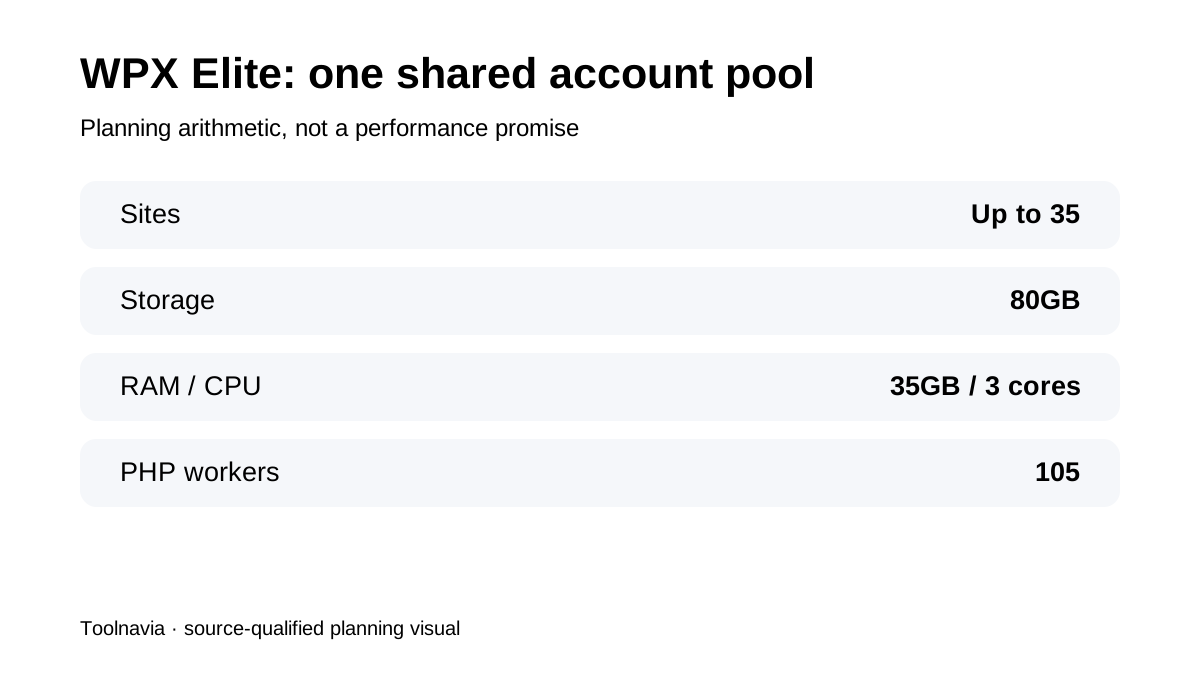
**Quick answer:** WPX Elite can be a rational agency plan when the portfolio is large but mostly moderate, measured, and operationally standardized. It does **not** promise 35 separately isolated slices. The current account-level pool is up to **35 websites, 80GB storage, 35GB RAM, 3 CPU cores and 105 PHP workers** for **$119.99 monthly**, or **$4,799.60 prepaid for five years** ($79.99/month equivalent). Buy it for a portfolio whose combined peaks fit that pool—not because “35 sites” sounds like a capacity guarantee.
At a glance
- Best for
- Measured portfolios of many moderate WordPress sites with standardized operations, off-platform backups and controlled simultaneous dynamic work.
- Price model
- $119.99 monthly or $4,799.60 prepaid five years / $79.99 equivalent
- Check first
- Buyers who need strict per-client isolation, guaranteed per-site resources, independent failure domains or unknown high dynamic concurrency.
The price is an account decision, not a per-site headline
Five-year Elite requires $4,799.60 upfront. If all 35 slots are useful, that is about **$2.29 per occupied site per month**. At 20 sites it is about **$4.00**; at 10 sites, **$8.00**. These are Toolnavia allocation calculations, not WPX prices or performance promises.
The monthly plan is $119.99, or about $3.43 per occupied slot at 35 sites. The five-year option lowers the effective rate by $40 per month, but ties up nearly $4,800. The break-even question is therefore operational: will the same portfolio and provider still fit for most of five years? Do not treat the five-year equivalent as a month-to-month checkout rate, and verify renewal terms before paying. Current independent plan reviews broadly corroborate the 35-site agency positioning and commitment tradeoff, while G2 adds market context; an older CloudsPress page illustrates why stale storage or price tables must not override current checkout.
What “35 sites” really shares
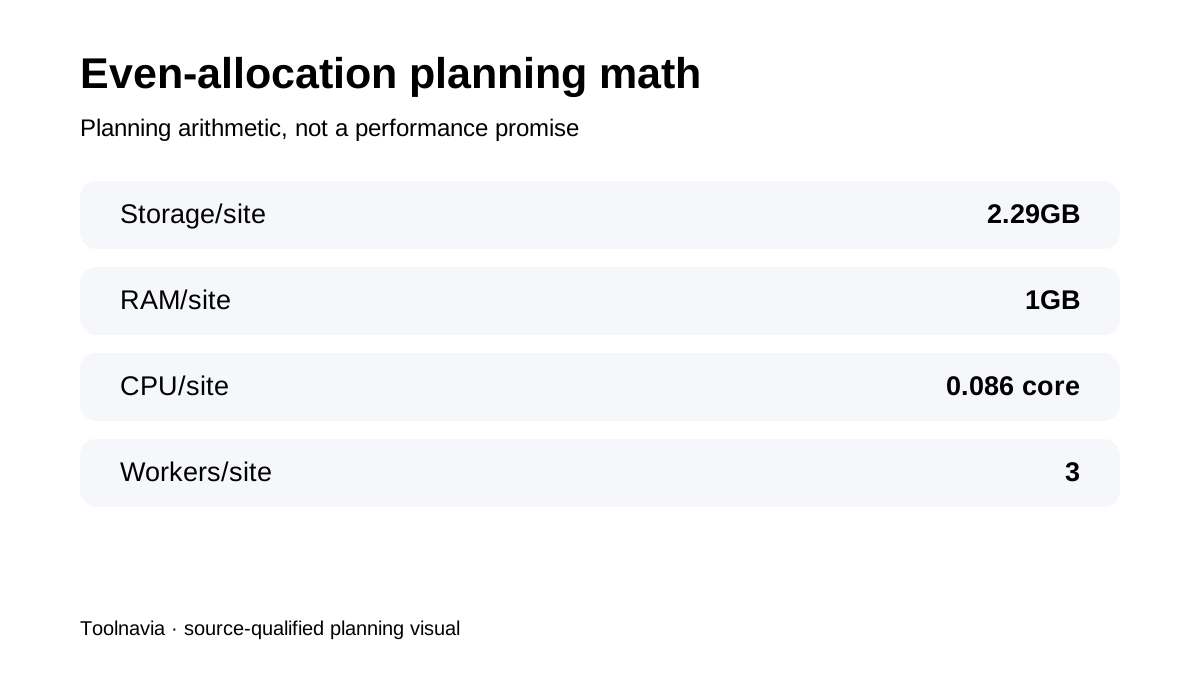
WPX publishes Elite resources at account level. It does not state that each website receives a dedicated 1GB RAM, three workers, or a fixed CPU fraction. If the pool were divided perfectly evenly across 35 occupied slots, planning arithmetic would be:
- **2.29GB storage per site** (80 ÷ 35) - **1GB RAM per site** (35 ÷ 35) - **3 PHP workers per site** (105 ÷ 35) - **0.086 CPU core per site** (3 ÷ 35)
That even split is deliberately artificial. A cached brochure site may need little dynamic compute while a membership site, WooCommerce catalog or scheduled import can consume far more. The useful question is not “Does each site get three workers?” It is “Can the portfolio's simultaneous uncached work stay inside one 105-worker, 3-core account envelope?”
Workers and CPU: model concurrency, not traffic totals
PHP workers handle simultaneous dynamic requests. A high monthly visitor count can be easy when most pages are cached; a smaller membership or checkout workload can be difficult when many requests bypass cache. The 105-worker number therefore cannot be translated into a visitor guarantee.
CPU is even easier to misuse. WPX lists three cores for Elite and says it contacts customers and helps optimize when usage exceeds the allocation rather than presenting a simple automatic cutoff. That support process is useful, but it is not unlimited compute. Poorly coded themes, plugins or heavy MySQL work remain restricted under the terms.
Before consolidation, measure peak uncached concurrency, cron overlap, imports, backups and admin workloads. Stagger maintenance tasks across clients. One noisy site can consume headroom needed by the other 34.
Storage concentration arrives sooner than site count
At a theoretical even split, 80GB leaves 2.29GB per site. Ten 5GB sites already consume 50GB; four 10GB sites consume another 40GB and exceed the plan before the remaining slots are used. Email, logs, caches and staging copies can also add pressure.
WPX staging consumes a site slot on WordPress plans, requires the database to stay under 1GB and total files under 5GB, needs available disk space and allows only one staging copy per site. An agency with 30 live sites and several concurrent staging projects can therefore reach slot or storage pressure without reaching 35 client sites.
Daily system backups retained for 28 days are useful, but WPX's terms still require independent backups and warn that restoration may not always be available. Concentrating many client sites in one account increases the operational impact of credential, billing or account-level incidents, so keep off-platform backups and document restoration ownership.
“Unlimited” bandwidth still has a boundary
Elite lists unlimited bandwidth, but WPX explicitly applies a reasonable-use limit at its discretion. Do not budget it as physically unbounded transfer. Large downloads, self-hosted video, repeated attacks or unusually heavy delivery can trigger discussion, CDN configuration or an architecture change.
For an agency portfolio, the practical benefit is avoiding a fixed 400GB Professional ceiling. The remaining question is whether the account's compute and storage—not its bandwidth label—become the first binding constraint.
Three portfolio stress tests
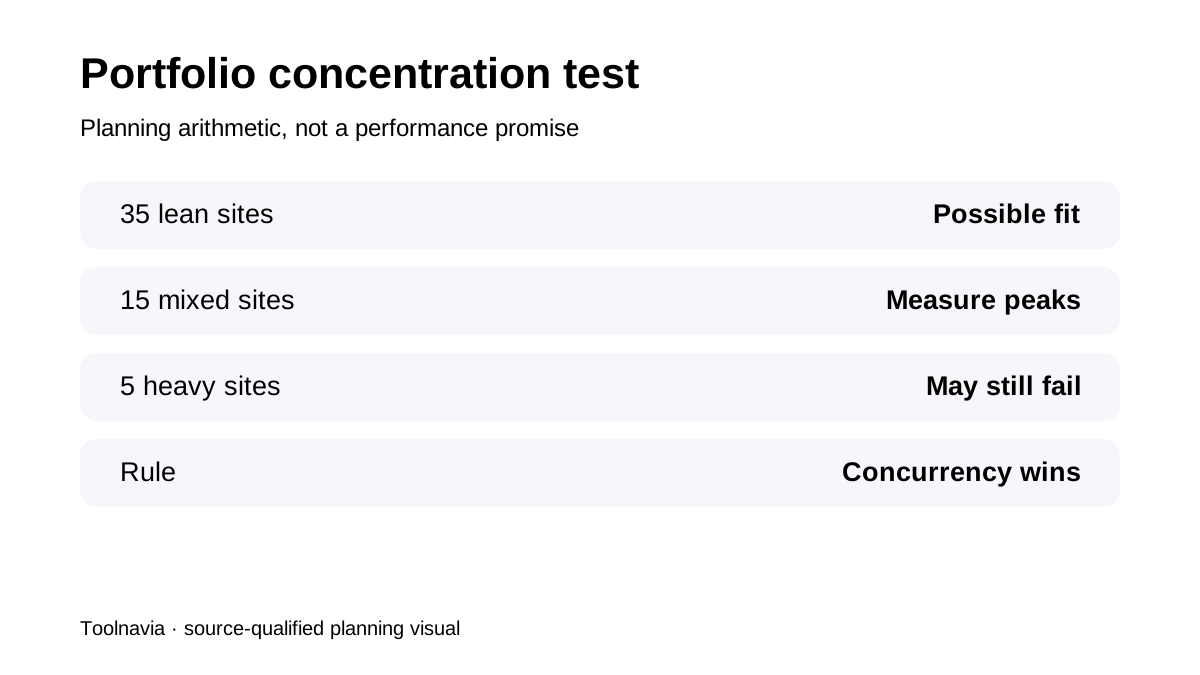
**Thirty-five lean brochure sites.** Elite may fit if most traffic is cached, total storage remains modest, staging is scheduled and client maintenance is standardized. Site count can be high because simultaneous dynamic demand is low.
**Fifteen mixed sites.** A few stores, memberships or learning systems can dominate the pool. Measure peak dynamic work and disk growth rather than assuming unused slots equal spare capacity.
**Five heavy sites.** Elite can still be the wrong architecture even with 30 empty slots. If two imports, checkout peaks and backup jobs overlap, the shared 3 CPU and 105 workers are what matter.
These scenarios are planning frames, not benchmarks. WPX publishes no universal visitor threshold for a portfolio like yours.
When to consider Agency—or separate accounts
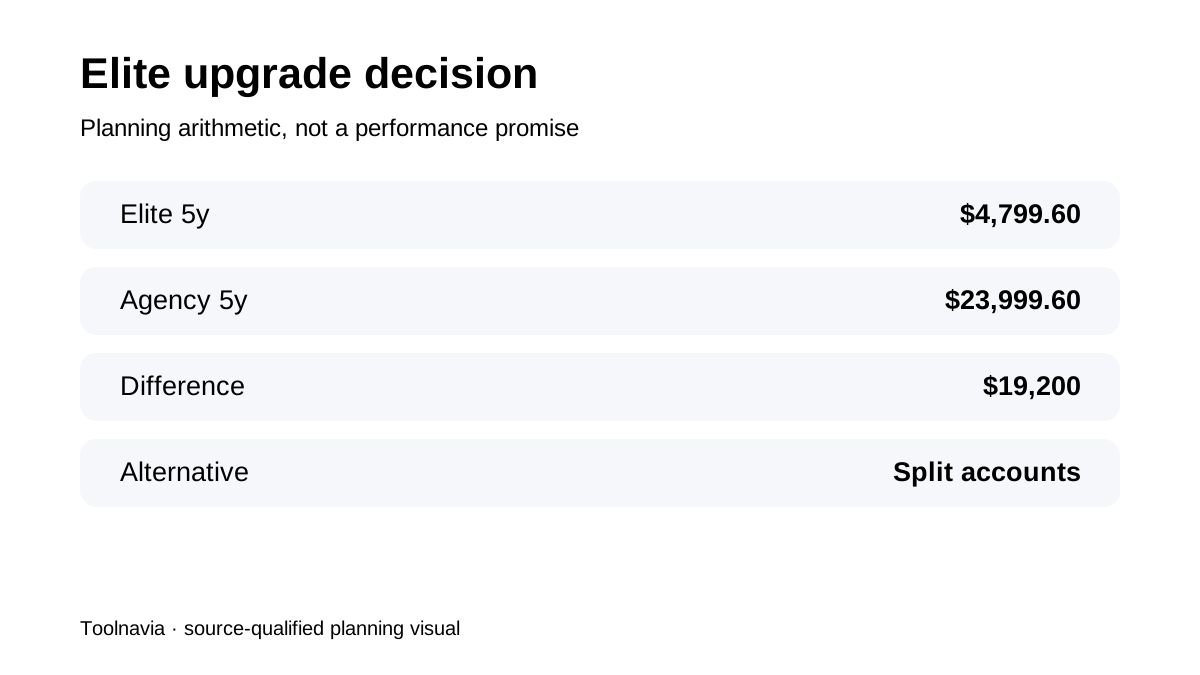
Current Agency lists up to 200 sites, 300GB storage, 100GB RAM, 6 CPU cores and 300 PHP workers at **$599.99 monthly** or **$23,999.60 prepaid for five years** ($399.99/month equivalent). It is not a cheap linear upgrade: the five-year cash difference versus Elite is **$19,200**.
Upgrade economics only work when the extra portfolio revenue, operational consolidation or resource headroom justifies that difference. Separate accounts or a different architecture may be safer when clients require isolation, different billing owners, region choices, regulatory boundaries or independent failure domains. The exact Agency offer is not the commercial CTA in this article; it is a capacity reference.
**Checkout checklist:** Before buying Elite, confirm the live checkout amount and term; inventory every site's files, database and email footprint; record peak dynamic concurrency; schedule cron/import/backup windows; count staging slots; verify reasonable-use handling with support; keep independent backups; and define the trigger for splitting or upgrading.
**Bottom line:** Elite is attractive when many moderate sites share an operational model and the agency can manage one pooled envelope. It is risky when “35 sites” is mistaken for 35 isolated hosting plans. Buy after measuring portfolio peaks and concentration risk, not after dividing the price by 35 alone.