TOOLNAVIA / BUYING GUIDE
Verpex Private Nameservers: Branding or a DNS Upgrade?
The short answer
Verpex Reseller15 can support a hosting brand with custom nameservers. Buying it does not, by itself, complete the registrar setup or prove a stronger DNS service. The useful decision is whether you can maintain the names, addresses, zones and client delegation consistently—not whether ns1 displays your company name.
At a glance
- Best for
- Agencies needing branded DNS with registrar ownership and maintained change control.
- Price model
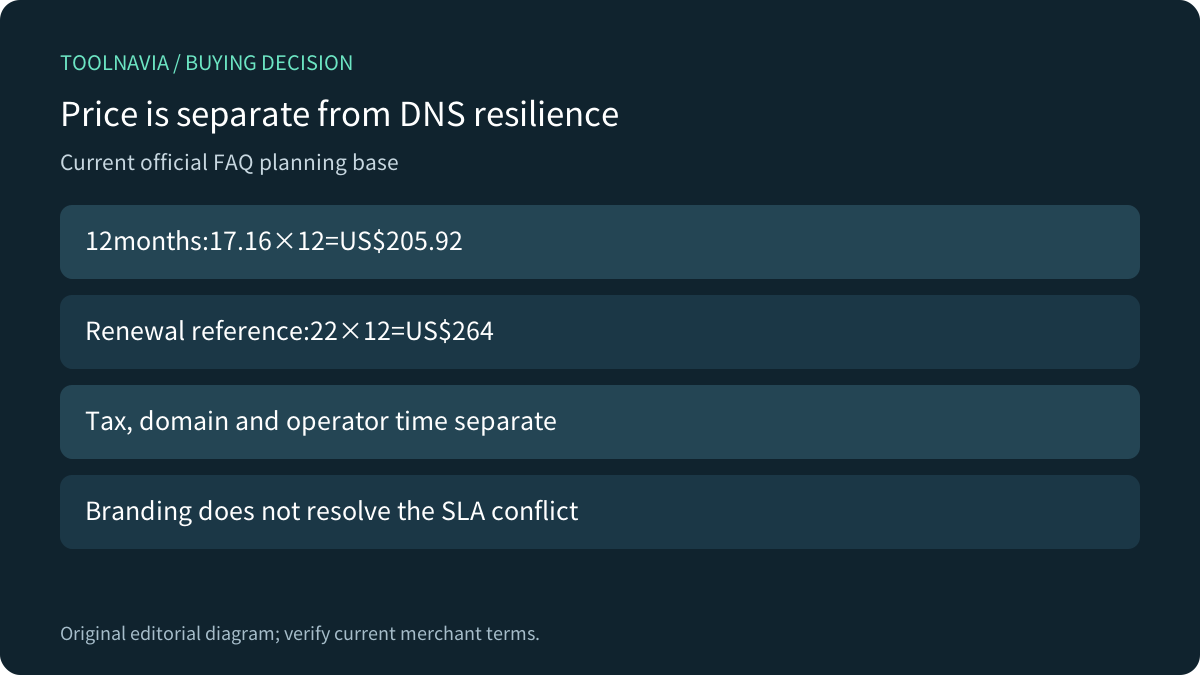
- FAQ:12months US$17.16/mo equivalent, $205.92 base; standard renewal reference$22/mo.
- Check first
- Provider ACLs and registrar setup still matter; official uptime figures conflict.
Confirm the entitlement and the actual operator
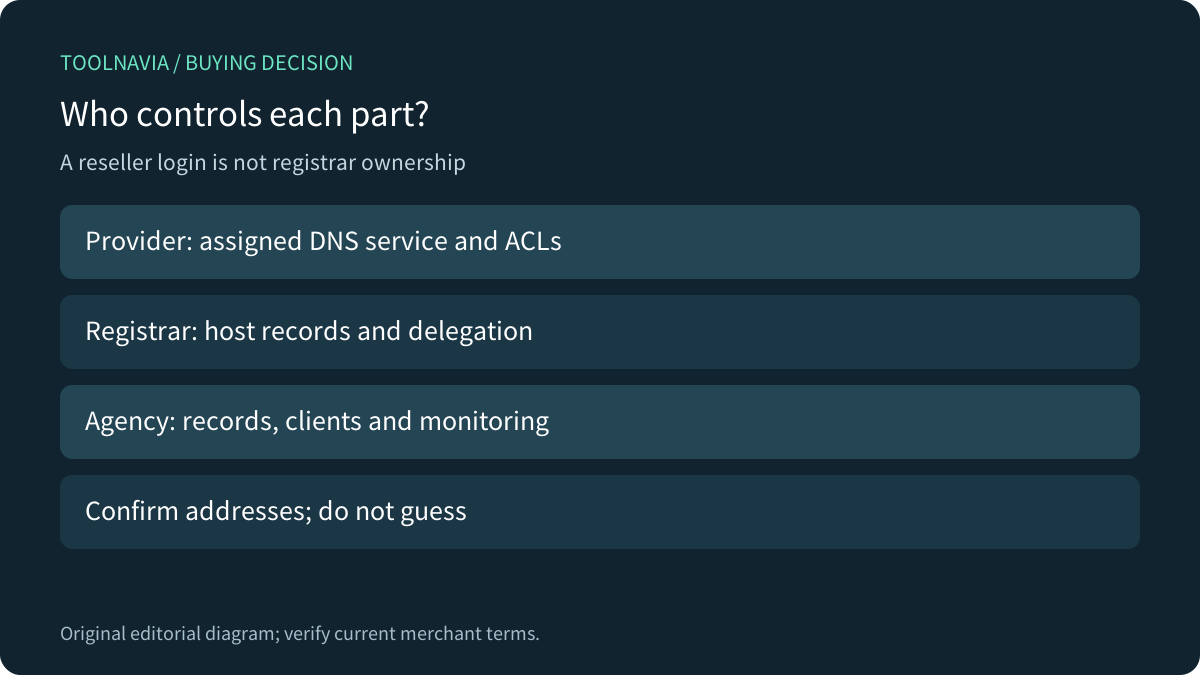
Verpex's current reseller page includes unbranded nameservers and free custom nameserver creation. Its technology page identifies cPanel with WHM for managing separate client accounts. That is a relevant starting point for an agency presenting its own hosting service.
cPanel's documentation adds an operational boundary: the hosting provider can enable or disable reseller interfaces and privileges. A generic WHM tutorial may show server-administrator controls you do not receive. Before purchase, ask Verpex to identify your permitted interface, supported nameserver hostnames and IP addresses, and who handles future address changes. Do not invent addresses from the website's public IP.

Separate four controls that look similar
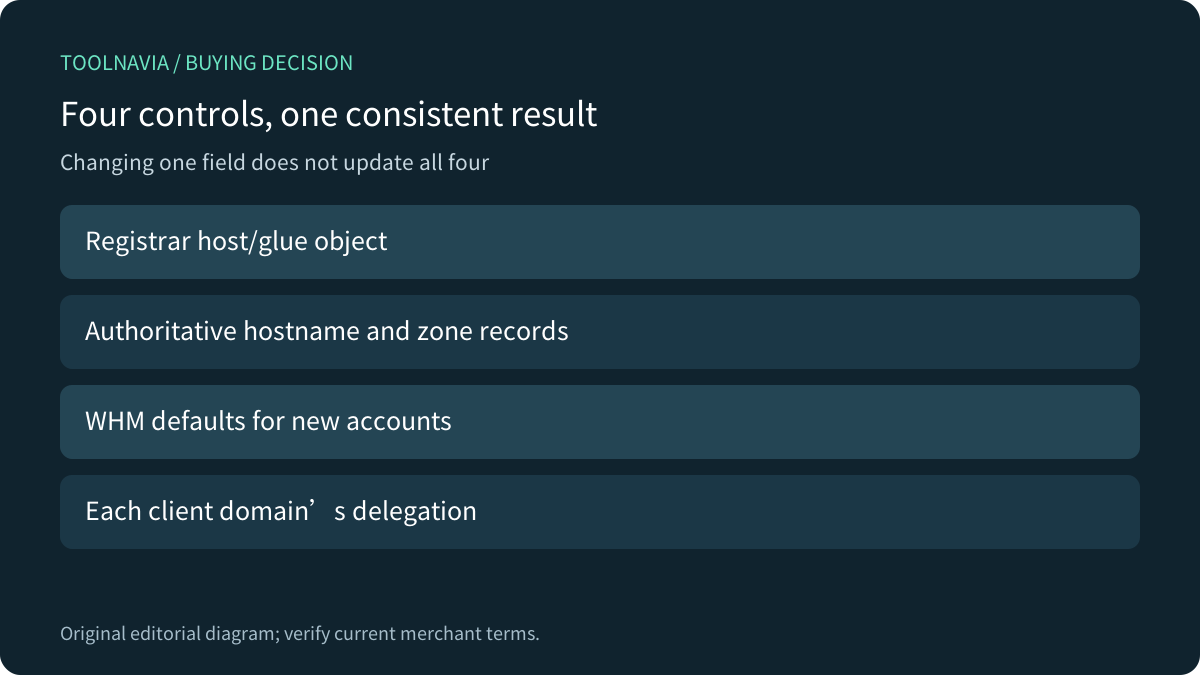
First, the registrar's host or glue object associates a nameserver hostname with an address at the parent level when needed. Adding an ordinary A record in your zone is not the same operation. HostGator explicitly distinguishes registering private nameservers from changing a domain's nameservers.
Second, the authoritative zone needs the corresponding hostname address records and the correct client records. Third, WHM nameserver defaults influence newly created accounts. Fourth, each client domain's registrar delegation determines which nameservers the outside world asks. Changing a default is not evidence that every existing customer's delegation changed.
Use a small inventory with one row per control: owner, hostname, current address, intended address and verification result. Keep it with the domain registrar information rather than assuming the hosting login controls everything.
Kualo's same-intent guide explains the circular dependency that glue can solve: resolving the nameserver's own domain may otherwise require asking that same nameserver first. Its specific four-hostname setup belongs to Kualo; do not copy that count or its IPs into Verpex.

Treat branding and resilience separately
Private labels can make customer-facing names consistent with your agency. They do not alone establish independent failure locations, DNSSEC support or anonymity from an infrastructure lookup. Ask how the actual authoritative service is operated and monitored; two names on a screen are not proof of two independent systems. Verpex's provider-selection guide treats white-label control and security as separate selection criteria.
There is also an unresolved official uptime discrepancy: that guide states99.99%, while the technology page describes99.9% with exclusions. This article promises neither figure. Obtain the applicable service terms before making an uptime commitment to your own customers; changing the nameserver label does not resolve the discrepancy.
If a domain already uses another DNS service, check what moving delegation would replace. Namecheap specifically warns that its PremiumDNS benefits do not continue simultaneously with delegation to private nameservers. That is its product rule, not a universal Verpex restriction, but it demonstrates why existing DNS features need an inventory.
Pilot a domain before moving clients
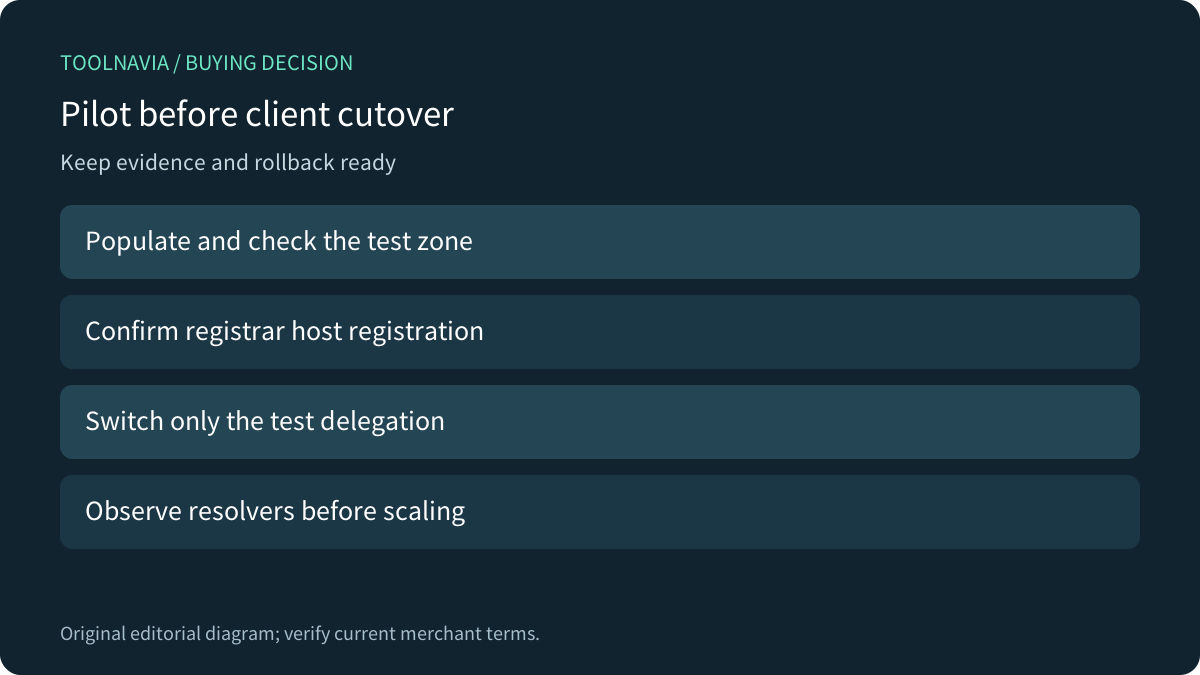
Start with a disposable domain or an authorized noncritical test domain. Have the registrar and Verpex confirm the host registration, zone records and assigned addresses. If DNSSEC is already involved, obtain a coordinated provider-specific transition plan before touching delegation.
Populate the test zone before switching. Check web, mail and required verification records against the intended authoritative service. Then change only the test domain's delegation and verify from more than one independent resolver. Record observed answers, not just a registrar success notification.
Namecheap quotes24–72hours for propagation and HostGator about24–48hours. These are provider estimates, not a universal outage period or guaranteed completion time. Keep the old service and rollback information available until the actual transition is verified. These are proposed owner-run steps; Toolnavia changed no domain or DNS record.

Budget the selected term and ongoing DNS work
The current Verpex canonical FAQ explicitly quotes Reseller15 at $17.16/month equivalent on a12-month term: $205.92 upfront base hosting arithmetic. It separately lists the monthly introductory rate as $19.80 and standard renewal as $22/month regardless of term. Twelve months at that renewal reference would be $264 before tax and extras. The general “up to64%” banner is not an exact Reseller15 discount.
Custom nameservers are described as included, but maintaining the branding domain, registrar access and change records still takes money or operator time. Do not count a full15-client capacity as guaranteed revenue, or assume a nameserver change transfers billing, customer support or every DNS feature. Verpex itself separates the hosting branding layer from billing software.

Buy after the ownership map is clear
Consider Reseller15 when the permitted controls and provider support are confirmed, the test domain resolves correctly and an operator owns rollback and future address changes. Keep ordinary provider nameservers or a separate DNS service when branding adds little value or you cannot maintain the extra dependencies.
After those checks, [review the current Verpex Reseller15 offer](https://clients.verpex.com/aff/?a_aid=toolnavia) and selected term. Toolnavia may earn a commission from eligible purchases. No DNS configuration, service-availability measurement or paid order was performed for this guide.